Bloomin’ Update 14: The Holly & The Ivy


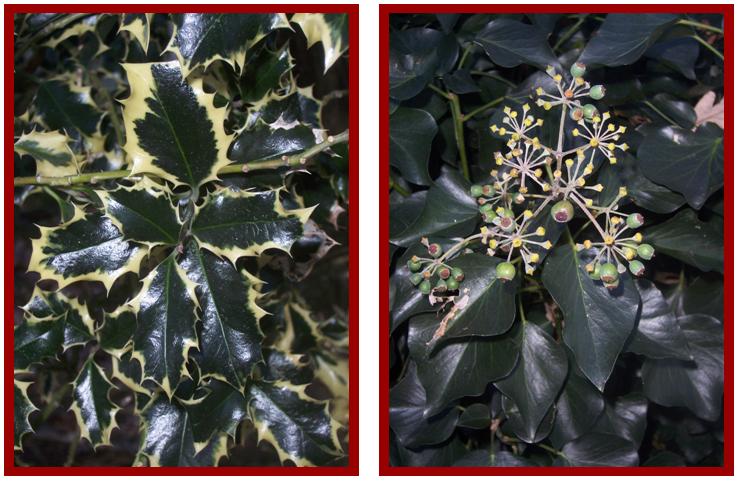
Like most people at this time of year, I have Christmas carols on the brain.  They’re everywhere: malls, supermarkets, non-stop radio stations — it’s hard not to hum a few bars.  That’s what I’m doing a lot of, especially with “The Holly and the Ivy.”   It’s a moving carol, especially when sung by a choir or by folks dressed up like eskimos. 

In my head, though, the song sounds something like this: “The holly and the ivy. Hmmm. Hmmm. Hmmm. Hmmm.”  I don’t really know the words — and this, my fellow holiday revelers, is the reason for this post.  My intention was to locate the lyrics and print them with pictures of, well, holly and ivy.  A simple, no-nonsense post —  until I began the research and uncovered a complicated history of the carol.

Continue reading

To All The Christmas Trees I’ve Loved Before


Part of the blogging experience is visiting other blogs –  for advice, for ideas, and in the case of this post, for inspiration.  I recently visited Visionary Gleam, where Jim Lewis posted “O Tanenbox, O Tanenbox,” a humorous and poignant look at his family’s Christmas tree tradition and the story of the ornaments. 

I am a bit of a Scrooge when it comes to this most wonderful time of year, a fact that seems to worsen as I age.  Jim’s well-written post, however, has left me thinking.  A lot. 

No matter how cynical I have become, the Christmas tree has always remained my favorite part of the holiday.  Now, as I drive around town and peek into the windows of my neighbors and see their decorated trees, I wonder about their stories – and I reflect on the ghosts of my own Christmas trees past – long past and recent past.

There’s a handwritten sentence in the baby book my mother started for me when I was first born.  There, in her cursive writing, is a brief sentence about the moment when the love affair began:  “2 1/2 years old .  Really knows what it’s all about . . . He says the tree has meatballs and a star.” 

Continue reading

Not-So-Wordlesss Wednesday: Homecoming


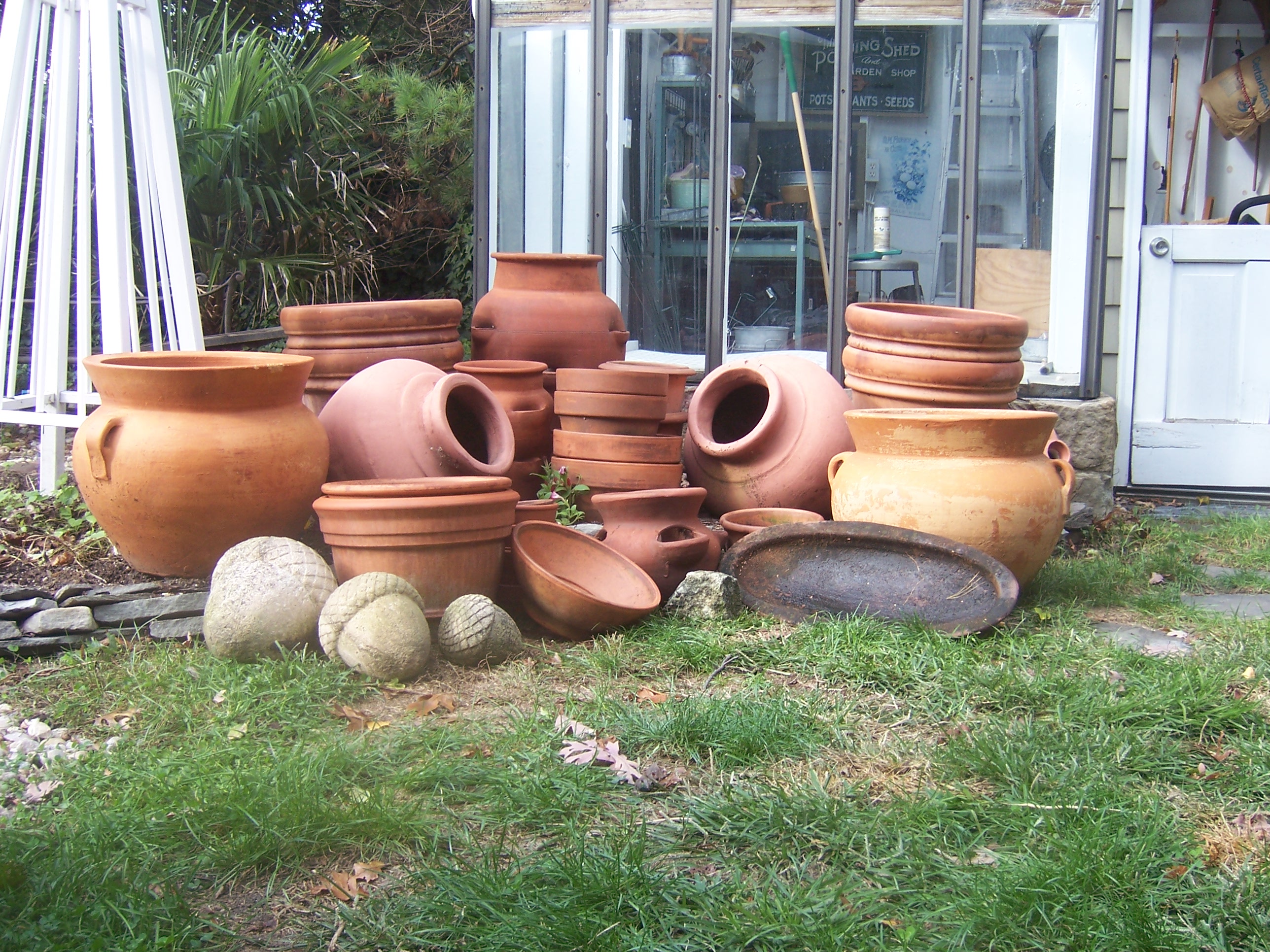
I returned home from my stay in the hospital, feeling much — MUCH — better.  Imagine my surprise when I looked into  the garden and saw all of the terra cotta pots lined up like the upstairs/downstairs servants on “Downton Abbey” greeting the arrival of the lord of the estate.

Actually, I had arranged them before the health hoopla for a post on my love of terracotta.  My idea was to call it a family portrait with some smarmy comment about it beging so hard to get everyone together for a family photo.  But with days and days spent in the hospital, as well as all of the doctors and tests, I had forgotten all about that photo shoot and that post.  Oh, well.  You know what they say about best laid plans.

In any event (and in my own warped mind), it was flattering to think that the terra cotta team thought as much about me as much as I do of them.  I really don’t know where this affection for terra cotta began.  I just know that I like the color, the feel, the texture, the variety, the warmth, the weathered age.  When I see them in the garden, I am reminded of sun-splashed Meditteranean vacations, where whitewashed walls are the perfect backdrop for terra cotta pots overflowing with red geraniums. 

Continue reading

Saving Canna — Part 1


Now that the Elephant Ears are out of the ground, it’s time to turn my attention to the Canna forest that is my yard.  The truth is, I never intended to have a Canna forest — things just got out of hand over the years as corms grew and became easy to divide, or I found new leaf patterns or bloom colors and I thought I needed to have three of each. 

I live in Zone 6 and I have tried to overwinter some Canna in the ground, but I have had no success.  I’ve mulched them and planted them along the south-facing side of the house, but to no avail.  So whether you have a few stalks or a forest, this is what you will need if you live in a northern climate and would like to save your Canna for future summers: garden clippers, shovel or pitchfork, stamina.

Step 1: For the sake of this demonstration, I dug the Canna first.  You could also trim the stalk and then dig out the corm.  Either way, pry up the plant, being careful to not damage the corm with your garden tool.


Step 2: Leave about 8″ – 10″ of stalk.  Actually, Canna can grow quite large, so for ease of trimming, it might make more sense to leave the corms in the ground, cut the stalks, and then dig out the plant.


Step 3: As sad as it is to do this job, there is a thrill each time I remove a corm from the ground.  See that white bulbous shape and the group of purple-tinged tips peaking through the roots?  That’s where next year’s growth will occur.  Ah — the promise of next year’s garden!  By the way, this is also a good time to remove any excess dirt.  Don’t divide the corms; that’s a task that’s safer to do in the spring when you unpack them from their hibernation location.     

Step 4: After the corms are out of the ground, I keep them in the potting shed for about a week.  The setting is warm enough for them to dry a bit before packing away, but not so hot that they cook.  Since I have several varieties, I group them in large plastic containers.  I also store them upside down — mostly because my gardening bible, Better Homes and Gardens Complete Guide to Gardening, recommends doing that.  I’m not sure of the reason, but I do as I’m told — and my gardening good book has never failed me. 

Next Post: Saving Elephant Ears and Saving Canna — Part 2.


Saving Elephant Ears — Part 1


With frost rapidly approaching, it’s time to remove my tender Elephant Ears and prepare them for winter storage.  My method is something that I have adapted over the years, and it’s based on what I’ve learned after saving dahlias and caladium.

What you will need: garden clippers, a pitchfork or shovel, old clothes, nerves of steel.

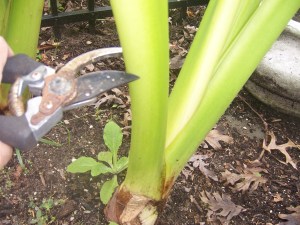
Step 1: The first thing to do is cut back the stems.  I try to leave about 8″ to 10″ of stem.  No matter how many times I have done this, I always feel a little guilty because the leaves have reached their fullest.  But, alas, all good things must come to an end.  Do not be surprised if there is a gush of water that pours from the stalk after you make your cut.
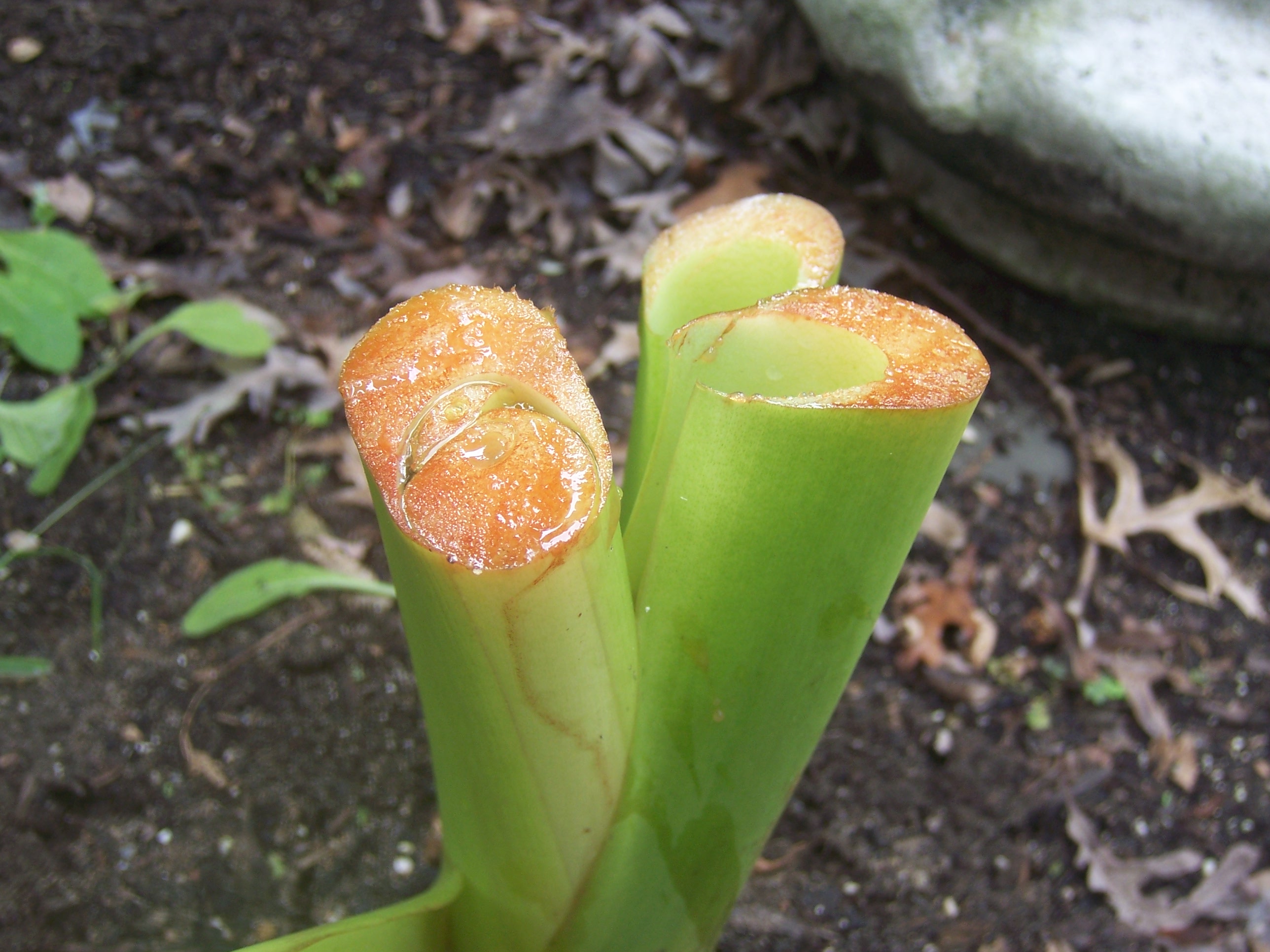
Step 2: After the stalks are cut, within minutes they begin to “bleed.”  If you decide to try this project, be sure to wear old clothes — the brown/red liquid will stain and it does not come out in the wash.  I learned this the hard way, and now I have my Elephant Ear cutting outfit.

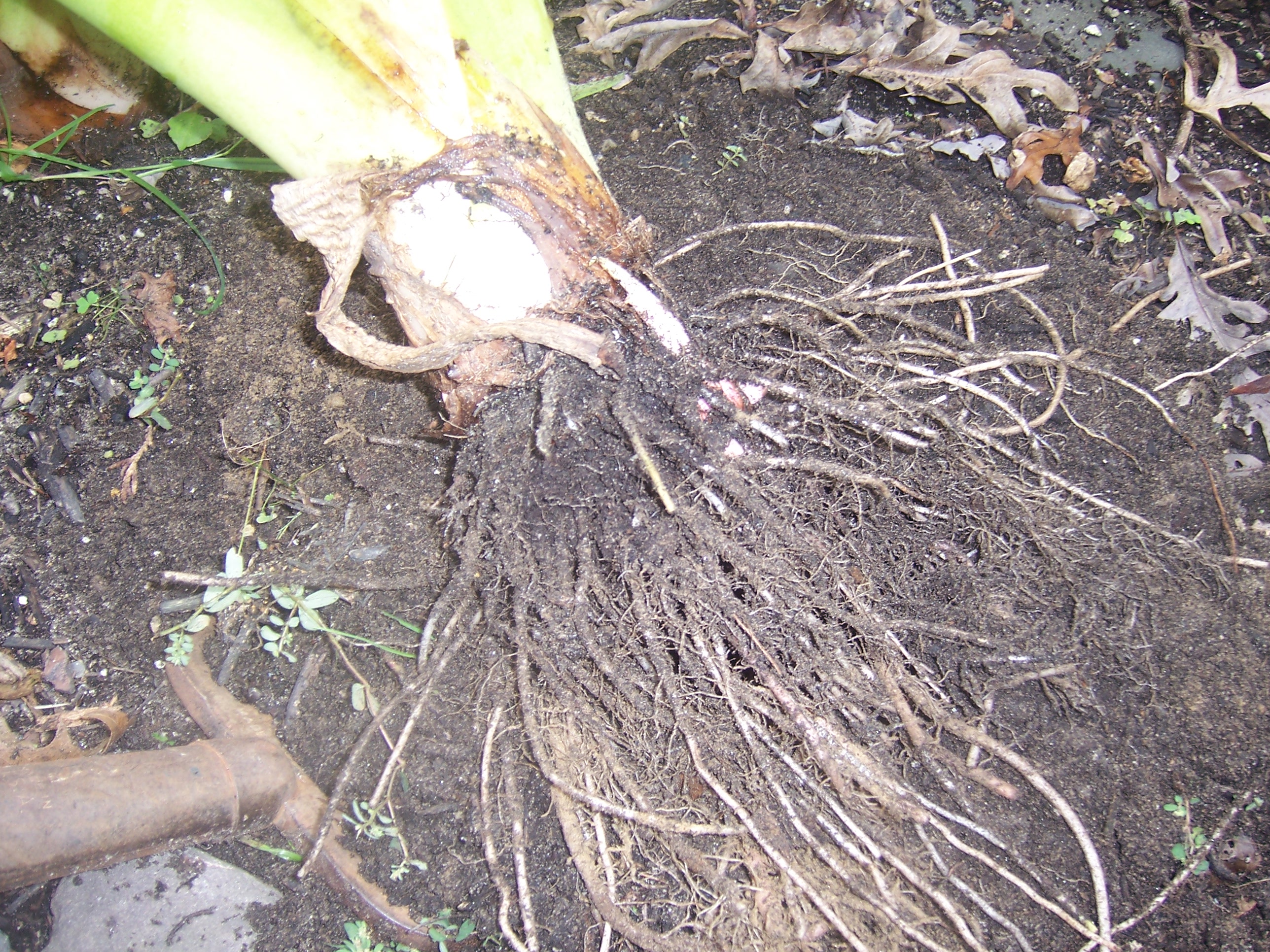
Step 3: Using the pitchfork, I carefully work in a circle, prying up the bulb.  Once it feels loose, I gently pull the base upward, revealing the bulb and the wild mass of roots.  At this point, I will shake off the excess dirt.  You may notice that your main bulb might have smaller bulbs attached.  Do not separate these at this time — that task will be much easier in the spring when you replant your bulb.

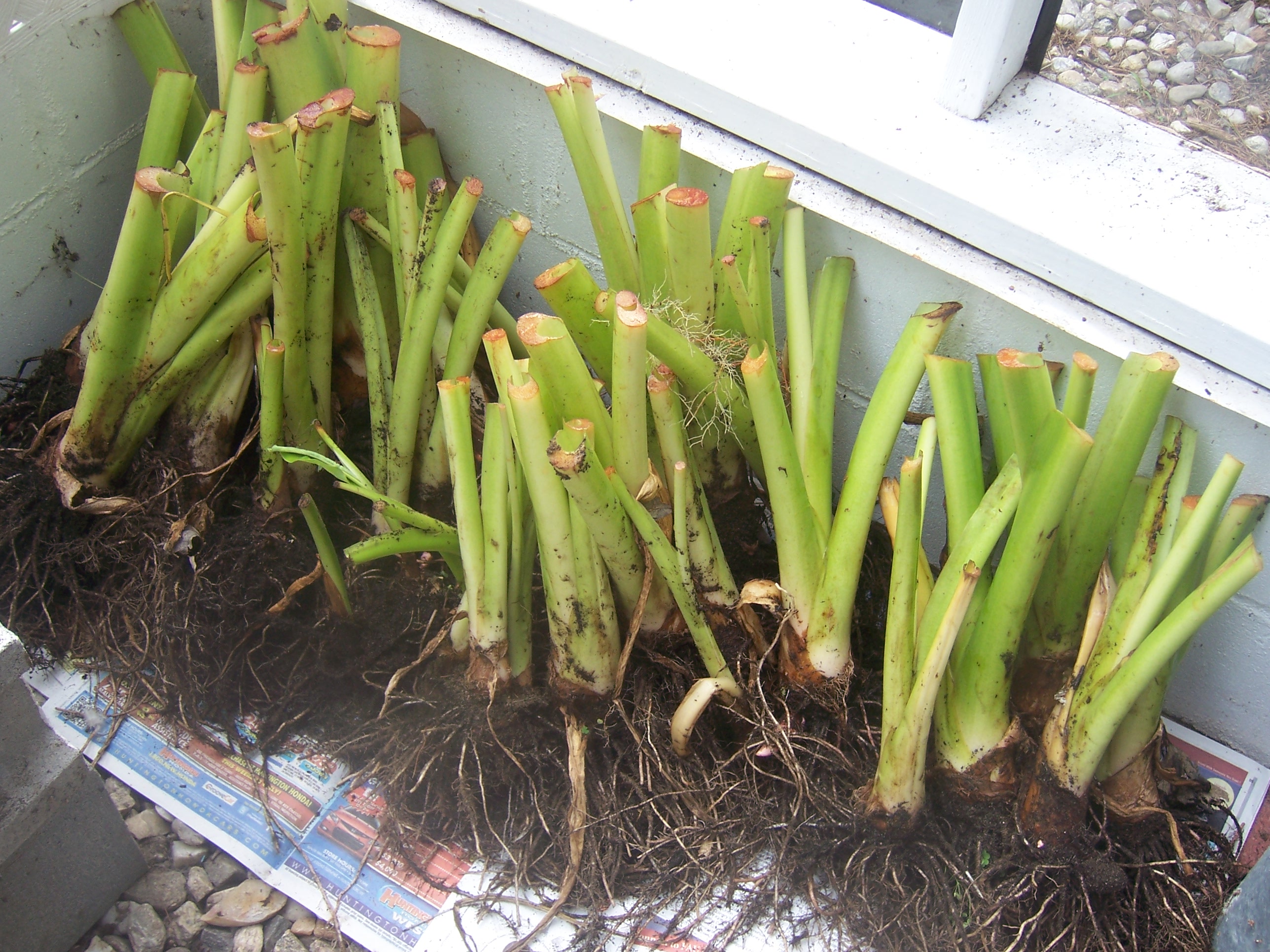
Step 4: Here we have pretty Elephant Ears all lined up in a row.  Once the plants are dug, I store them for a little more than a week in the potting shed.  It’s warm enough and dry enough for the bulbs to set before they are packed away.

Stay tuned for a future post on the final step.

Not-So-Wordless Wednesday: My Roots Are Showing


This is the end result of a day spent digging and removing Elephant Ears and Canna from the garden, and preparing them for their long winter’s nap.

It’s probably my least favorite day in the garden, and each year, I dread its arrival.  The chill in the air is my signal that, “It’s time.”  Armed with a pitchfork, clippers, and nerves of steel, I apologetically approach each plant.  I want to say, “Believe me, this is going to hurt me a lot more than it hurts you.”  I want the plants to understand that my actions are for their own good, so that they may live to see another summer.  But in the end, I fear that they’ll see me as a Viking, pillaging and ransacking their cozy beds.

Gardeners, I think, must have a bit of masochism in their blood.  Who else would try to trick Mother Nature by planting wrong-zone plants, nurturing them into blooms, and then hacking them down, ripping them from the ground, and storing them over the winter — only to start the process all over again in the spring?  Oh, to be content with zone-appropriate material!

Continue reading

Bloomin’ Update 5: Hot Colors & Cool Thoughts


Hot colors in the heat dome.

The newscasters and weather forecasters are having a field day with the heat wave.  They’re frying eggs on the pavement and baking cookies in cars and they have a new term, “heat dome,” to describe the blistering weather pattern.  The urgency in their voices reminds me of “The Twilight Zone” episode where the Earth is moving closer to the sun.  These are the same people, mind you, who whip up winter hysteria when snow is predicted.  It seems that no matter what Mother Nature throws at us, she’ll never make everyone happy.

I must admit, though, I am enjoying the heat dome — or as I call it, summer.  Yes, it’s hot, and yes, I’m spending lots of time quenching my thirsty plants.  For lots of reasons — too many to get into here  —  I like the warmth.  I like the casualness of the season.  And I like the time spent in the garden, because the days of the heat dome are numbered. 

In honor of this sentiment, I would like to share a few hot colors from around the yard, as well as a few cool thoughts to remind us of what was and what will come.

My reward for saving Canna corms each autumn.

The potting shed.

  Continue reading