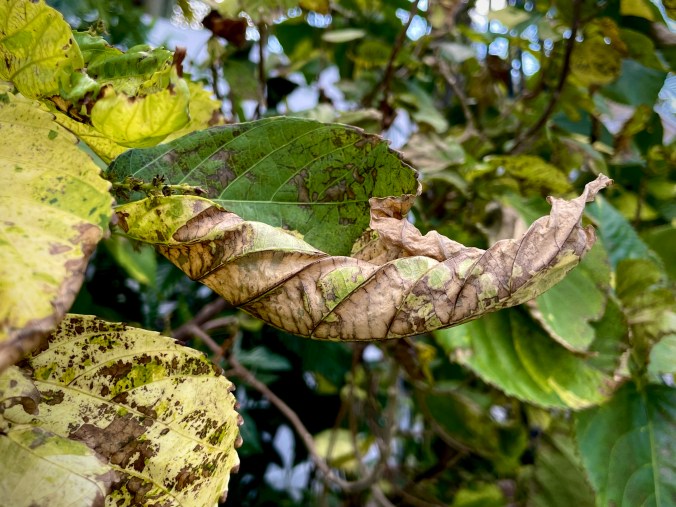
Nothing burns like the cold.
George RR Martin wrote those words as part of the prologue in one of his Game of Thrones books – and all I could think about were my plants wailing these same words, as a record-breaking cold front moved down the Florida peninsula and into the Caribbean.
Overnight temperatures hovered just above the freezing mark and wind chills dipped into the mid-20s, making South Florida feel colder than an air-conditioned Publix on a summer’s day.
Many of my northern friends scoffed at me each time I mentioned how cold it was in South Florida. I get it, I really do. I remember, not so fondly, those frigid January and February days. It’s one of the reasons February was always my least favorite month. The icy cold made the shortest month feel like the longest.
By Florida standards, though, this was cold – especially for plants. In northern gardens, plants have three seasons to prep for winter’s icy return. In southern portions of Florida, however, there’s a 12-month growing cycle – and there’s no season for bracing. It’s always warm until it’s not.
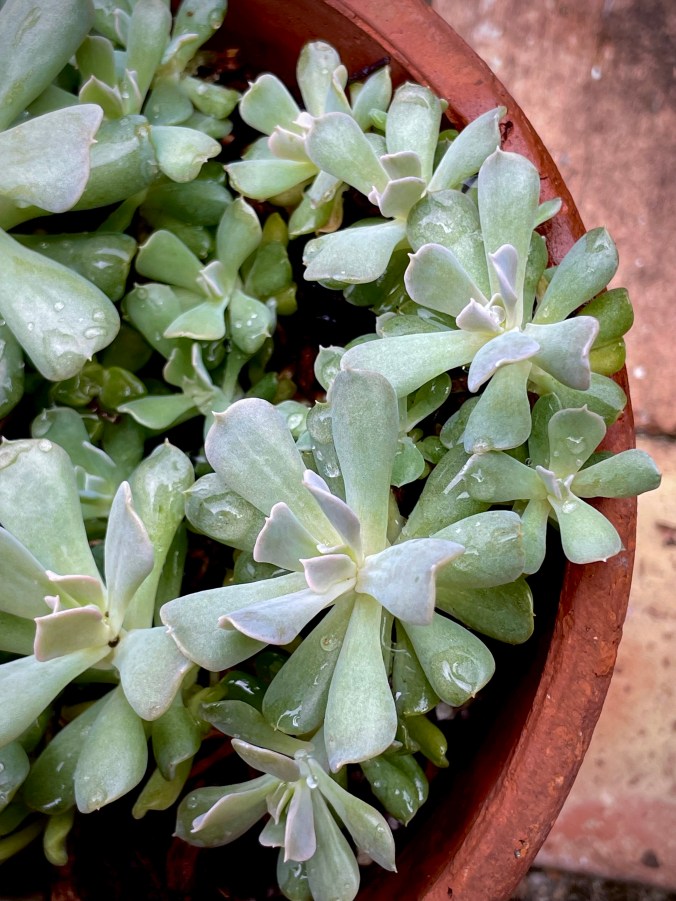
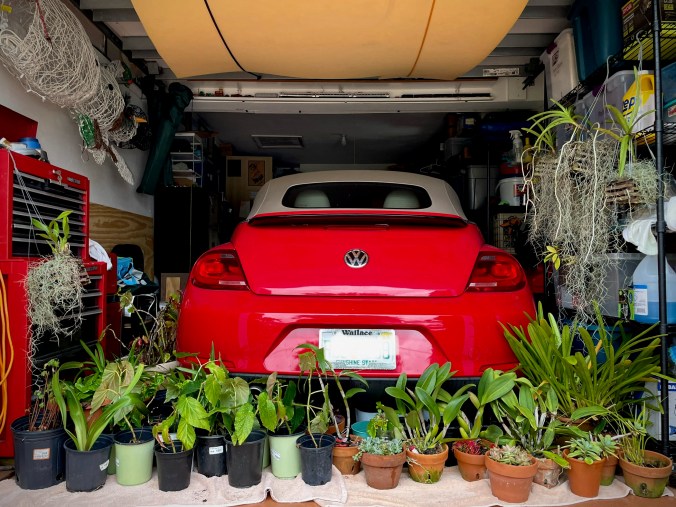
Prior to the front’s arrival, I moved all of the delicate and tender potted plants –orchids, succulents…
and newly rooted propagations, like dwarf jatropha trees and angel wing begonias —
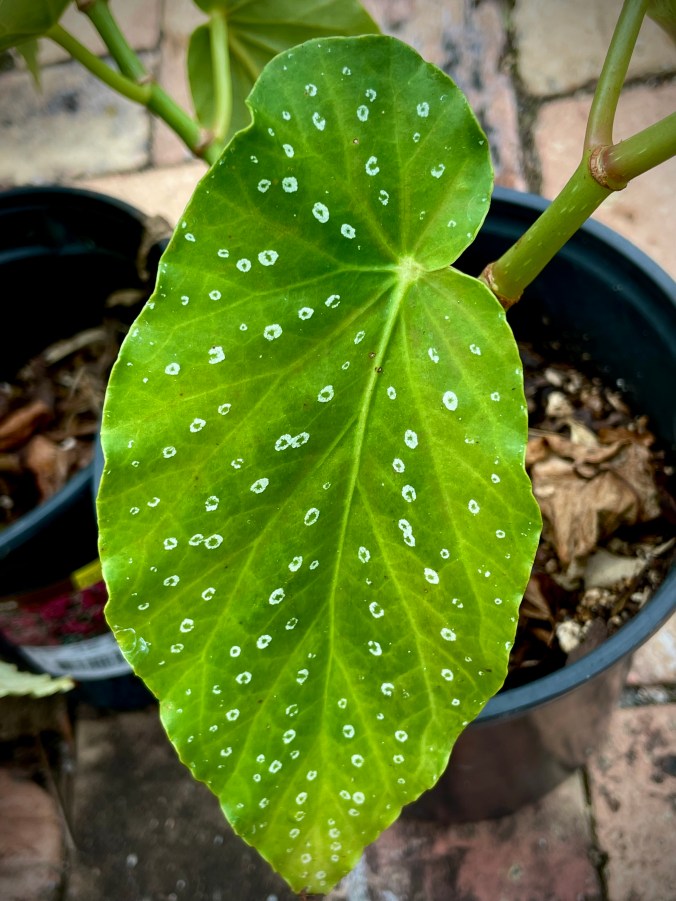
into the garage.
Orchids tied to trees or anything planted in the ground were on their own. Yes, I could have covered them, as I did a few years ago, but this was then…
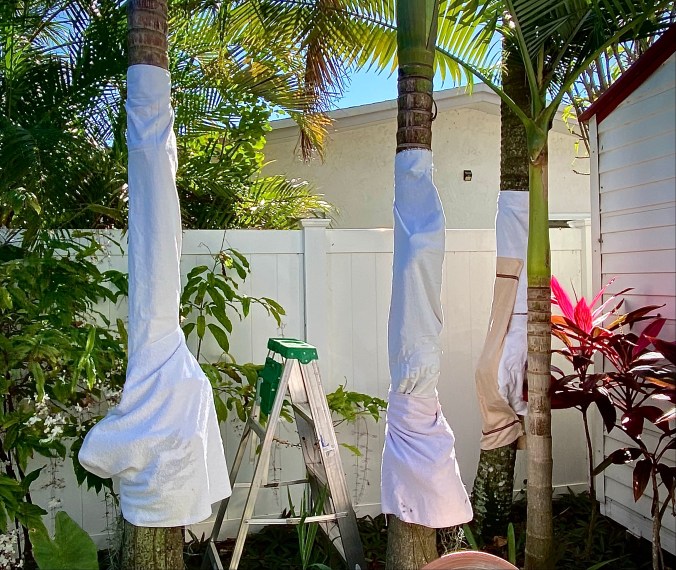
Prepping for a cold front two years ago.
… and this is now. The gardener that I am today is tired and still cares, but not as strongly as I used to. As far as I was concerned, it was time for the plants to put on their big girl leaves and to shiver their timbers. If they didn’t make it, it was a sign to redo some landscaping and to shop for replacements.
After several days and nights – yes, iguanas fell from the trees, some killed by the cold – temperatures warmed enough for me to bring everything outside again. As I walked around the yard, I noticed that the leaves on some of the plants showed signs of cold burn.
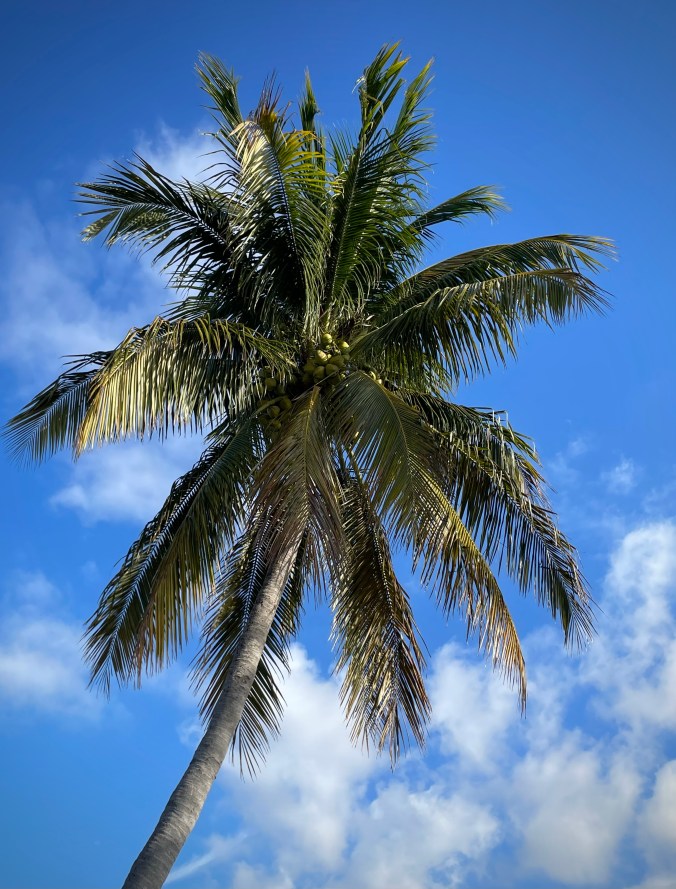
The tips of several palm fronds were tinged with brown. In time, these fronds will fade from green to yellow to crispy brown, and then fall. It’s all a bit sacrificial… they did their job in keeping the heart of the palm warm and alive.
The green and white variegated patterns of Java White copperleaf had dulled and browned.
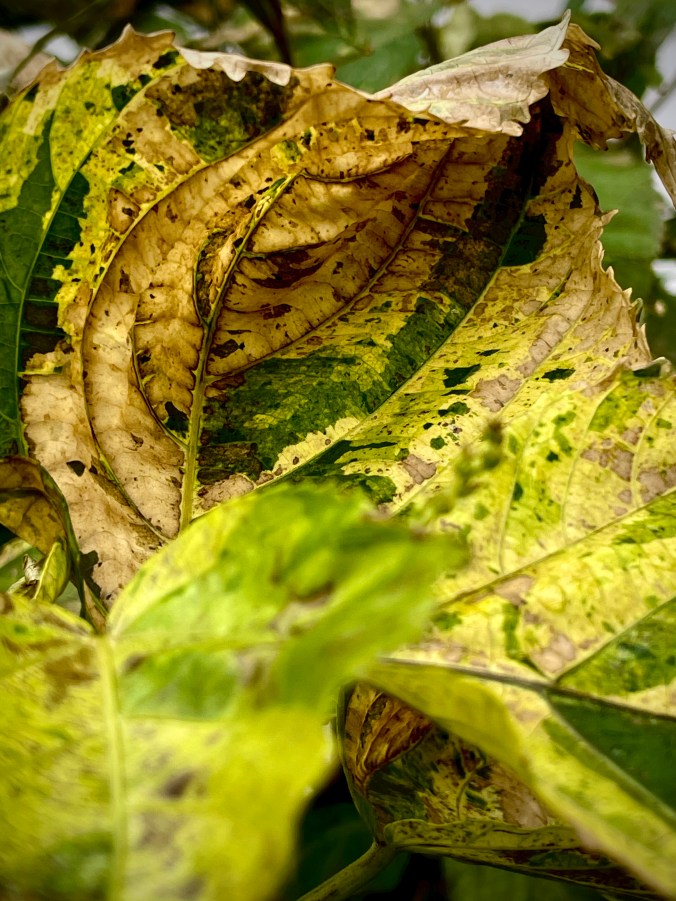
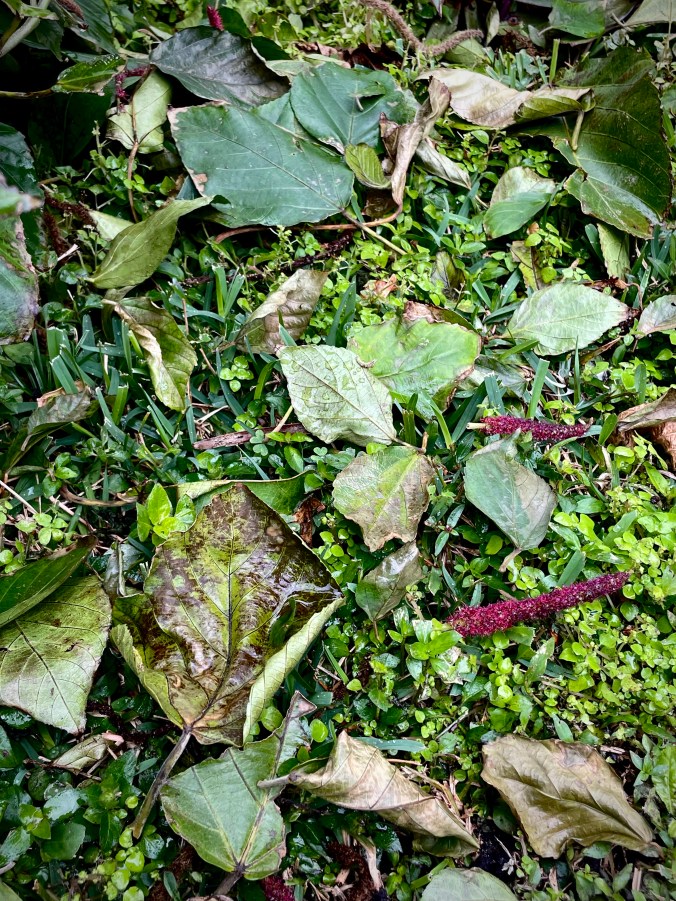
By far, the plant that took the hardest hit was the chenille shrub. Leaves that had once been lush and green just days before had withered and curled.
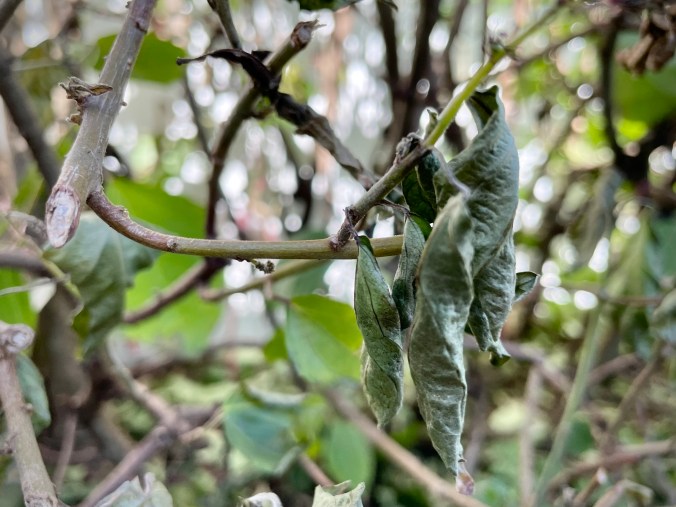
Then, they browned.
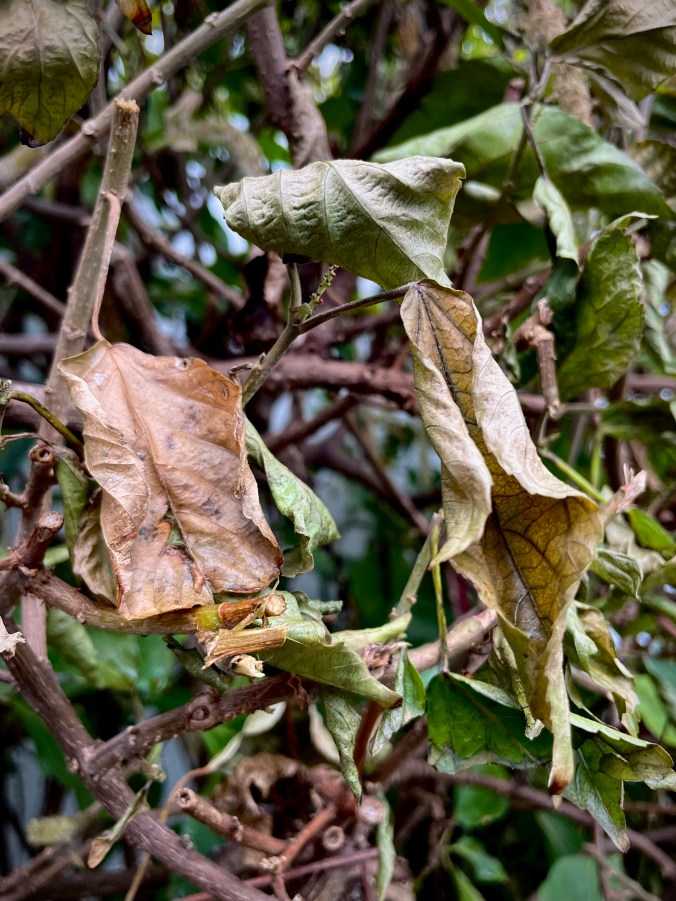
Ultimately, the leaves littered the ground, like trampled confetti.
I shouldn’t be able to see the white fence through the chenille shrub.
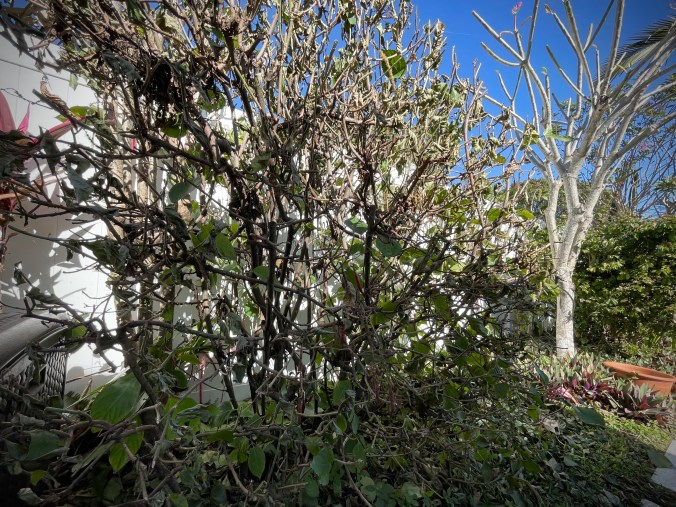
I wrestled with what I should do. Should I prune the plant back to stimulate new growth… or should I just hope that new leaves will appear along the branches? Ultimately, I decided to keep it well-watered and to take a wait-and-see approach.
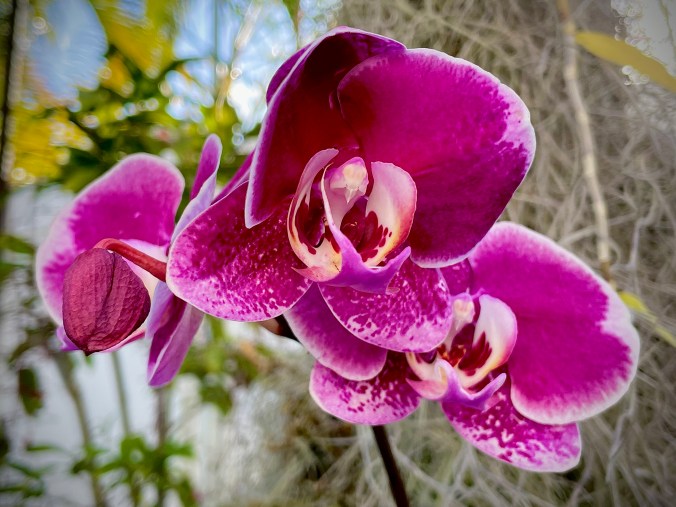
While waiting to see, though, I was struck by the plants that seemed to weather the weather. While I can’t tell if unopened orchid buds on the plants tied to palm trees aren’t damaged, this one managed to hold onto its flowers.
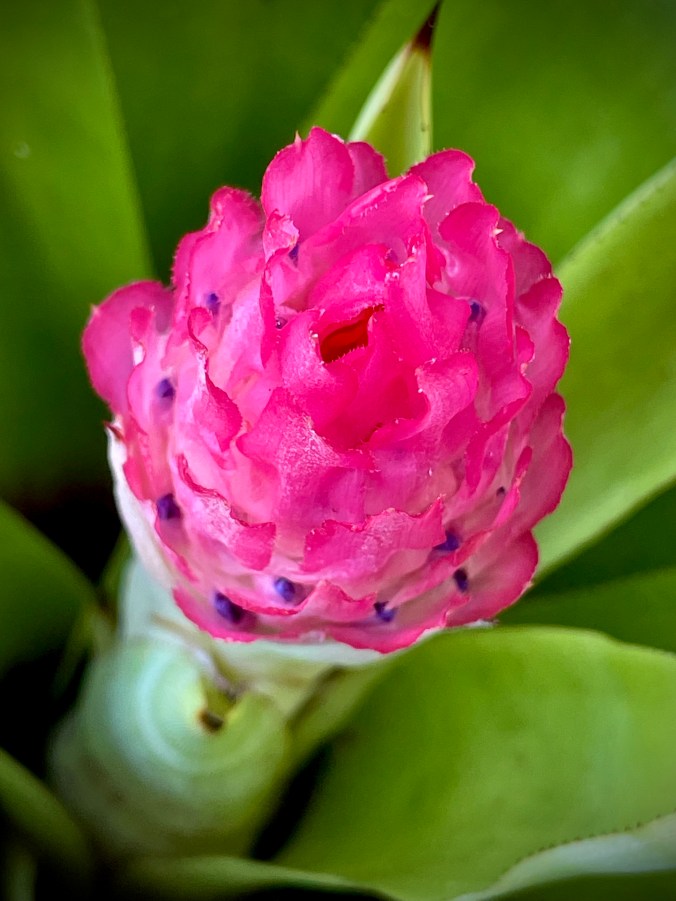
Meanwhile, this newly emerging bromeliad appeared to have laughed at the cold.
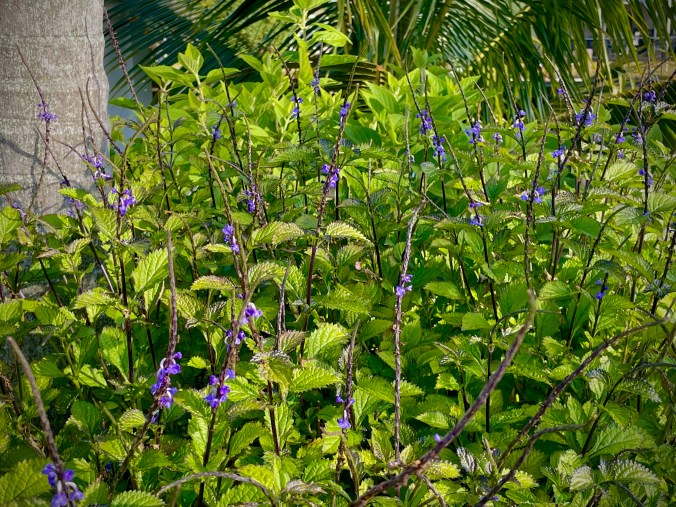
Florida natives, like blue porterweed (foreground) and American beautyberry (just behind the porterweed), did remarkably well.
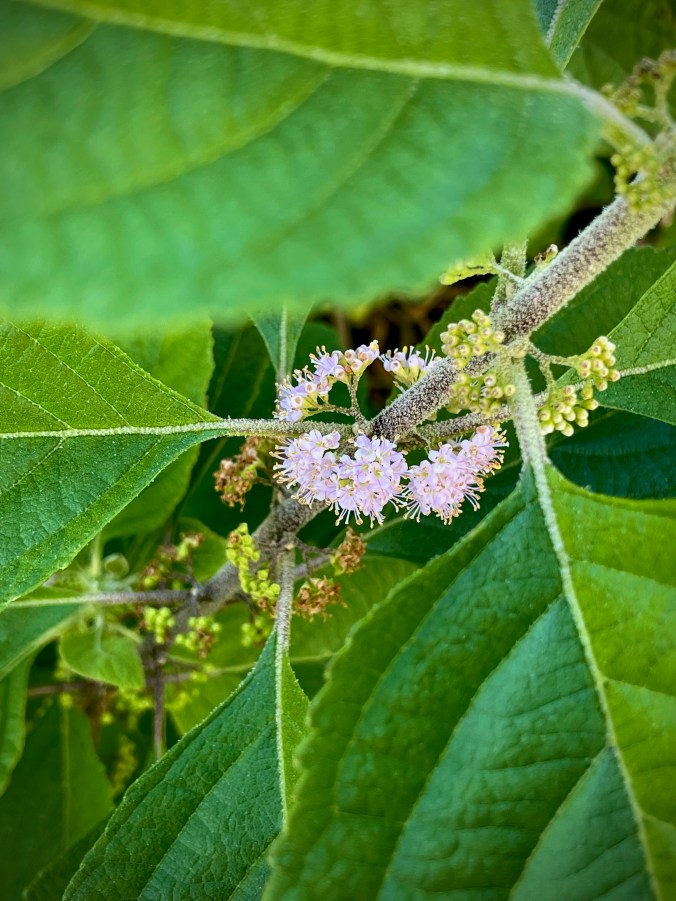
The delicate American beautyberry flowers didn’t even flinch — and will eventually transform into clusters of purple berries.
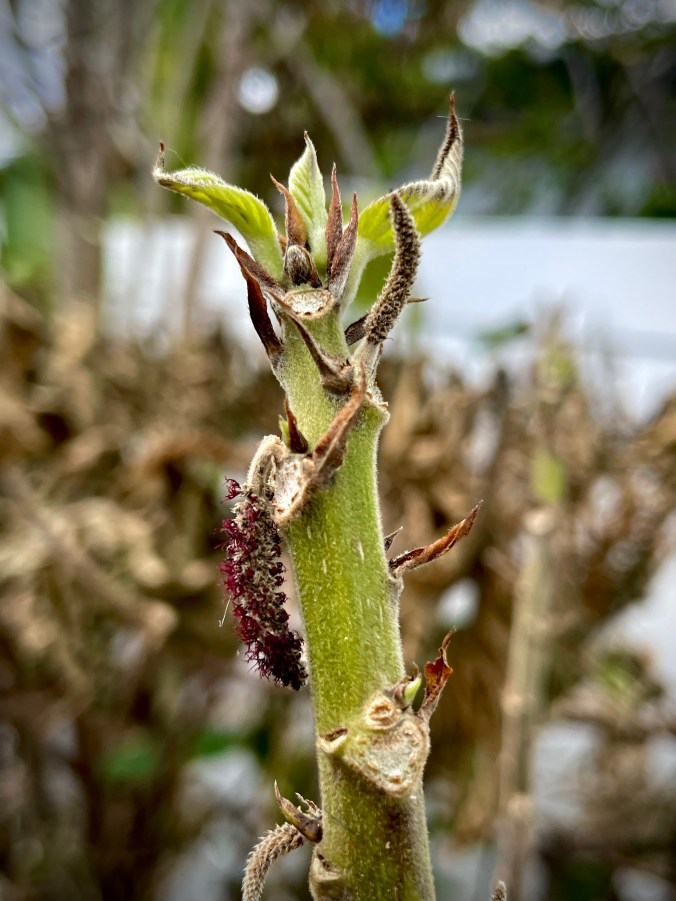
Nevertheless, I was worried about the chenille plant. Each day, I’d walk by it, examining it for new growth and dumping buckets of water around its base. Then, this appeared at the tip of one of the upward growing stems.
Just before posting this, I did another inspection of the chenille plant and spotted this speck of green on one of the lower branches.
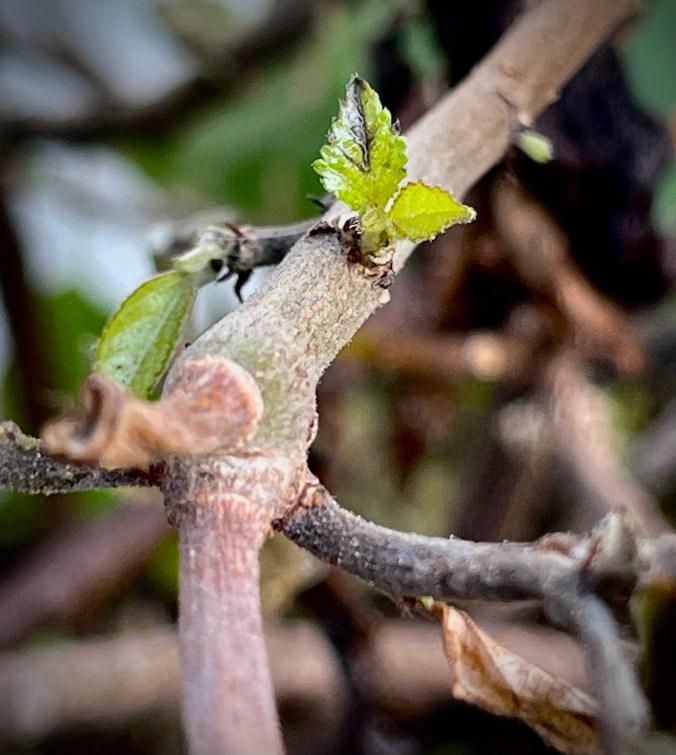
As I stepped away and adjusted my eyes, I couldn’t help but notice small specks of green on many of the lower branches — leaves that would eventually fill in and prevent me from seeing the white fence behind it.
It’s a wonder what a little bit of green can do to a gardener’s soul.
It was hope.

My intention was to keep this post strictly about plants, but as I wrote about the cold weather in Florida, I couldn’t help but think of winter… really think about this winter.
While meteorologically this winter has been one of the coldest, it has also been just as cold politically. Not a day has gone by when ice or ICE hasn’t controlled the daily headlines.
When that thought ran through my mind, I reflected on the events in Minnesota, specifically the murders/executions of Renee Good and Alex Pretti at the hands of ICE agents, who were just following the orders of this regime, which then turned to lies and smears to coverup the crimes. Like many of you, I was horrified and sickened and angry. God, was I angry.
And then I thought of the Minnesotans… tens of thousands, hundreds of thousands… bundled up in winter gear, taking a stand in bitter temperatures… their message of resistance filtered through a frosty fog of breath and spreading across the country.
It occurred to me that hope isn’t always green, as I wrote in this post. This winter — the winter of our discontent — hope was wrapped in layers of wool and down coats, scarves and hats and ear muffs, gloves and mittens and boots.
I just want to thank you for giving me that hope… and may that hope continue to grow throughout our seasons, no matter where we live.
 Nitty Gritty Dirt Man