Now that the Elephant Ears are out of the ground, it’s time to turn my attention to the Canna forest that is my yard. The truth is, I never intended to have a Canna forest — things just got out of hand over the years as corms grew and became easy to divide, or I found new leaf patterns or bloom colors and I thought I needed to have three of each.
I live in Zone 6 and I have tried to overwinter some Canna in the ground, but I have had no success. I’ve mulched them and planted them along the south-facing side of the house, but to no avail. So whether you have a few stalks or a forest, this is what you will need if you live in a northern climate and would like to save your Canna for future summers: garden clippers, shovel or pitchfork, stamina.
 Step 1: For the sake of this demonstration, I dug the Canna first. You could also trim the stalk and then dig out the corm. Either way, pry up the plant, being careful to not damage the corm with your garden tool.

Step 2: Leave about 8″ – 10″ of stalk. Actually, Canna can grow quite large, so for ease of trimming, it might make more sense to leave the corms in the ground, cut the stalks, and then dig out the plant.
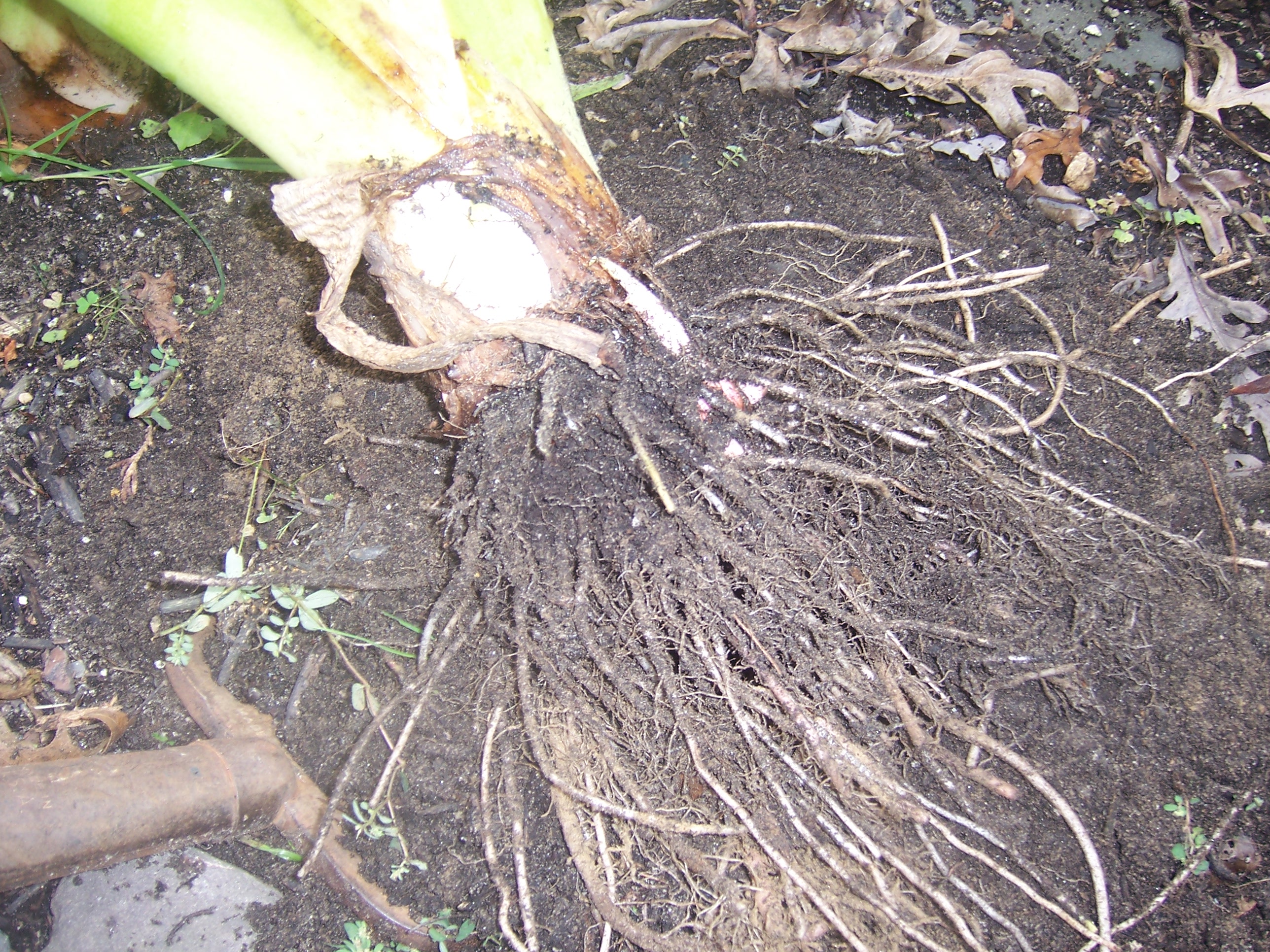
 Step 3: As sad as it is to do this job, there is a thrill each time I remove a corm from the ground. See that white bulbous shape and the group of purple-tinged tips peaking through the roots? That’s where next year’s growth will occur. Ah — the promise of next year’s garden! By the way, this is also a good time to remove any excess dirt. Don’t divide the corms; that’s a task that’s safer to do in the spring when you unpack them from their hibernation location.
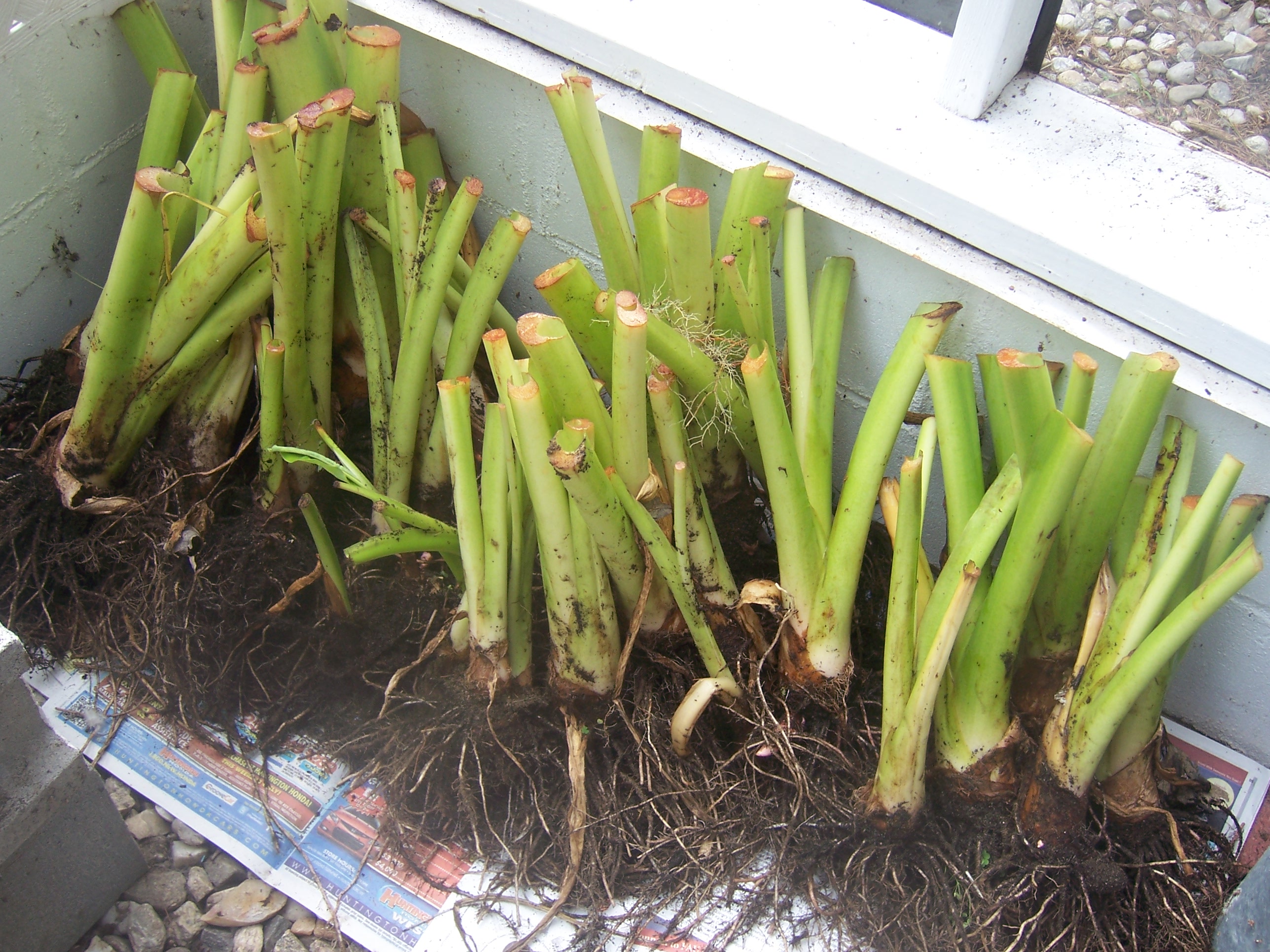
Step 4: After the corms are out of the ground, I keep them in the potting shed for about a week. The setting is warm enough for them to dry a bit before packing away, but not so hot that they cook. Since I have several varieties, I group them in large plastic containers. I also store them upside down — mostly because my gardening bible, Better Homes and Gardens Complete Guide to Gardening, recommends doing that. I’m not sure of the reason, but I do as I’m told — and my gardening good book has never failed me.
Next Post: Saving Elephant Ears and Saving Canna — Part 2.
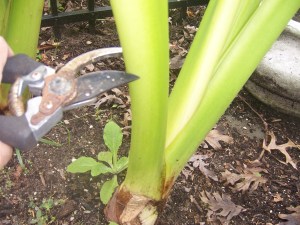 Step 1: The first thing to do is cut back the stems. I try to leave about 8″ to 10″ of stem. No matter how many times I have done this, I always feel a little guilty because the leaves have reached their fullest. But, alas, all good things must come to an end. Do not be surprised if there is a gush of water that pours from the stalk after you make your cut.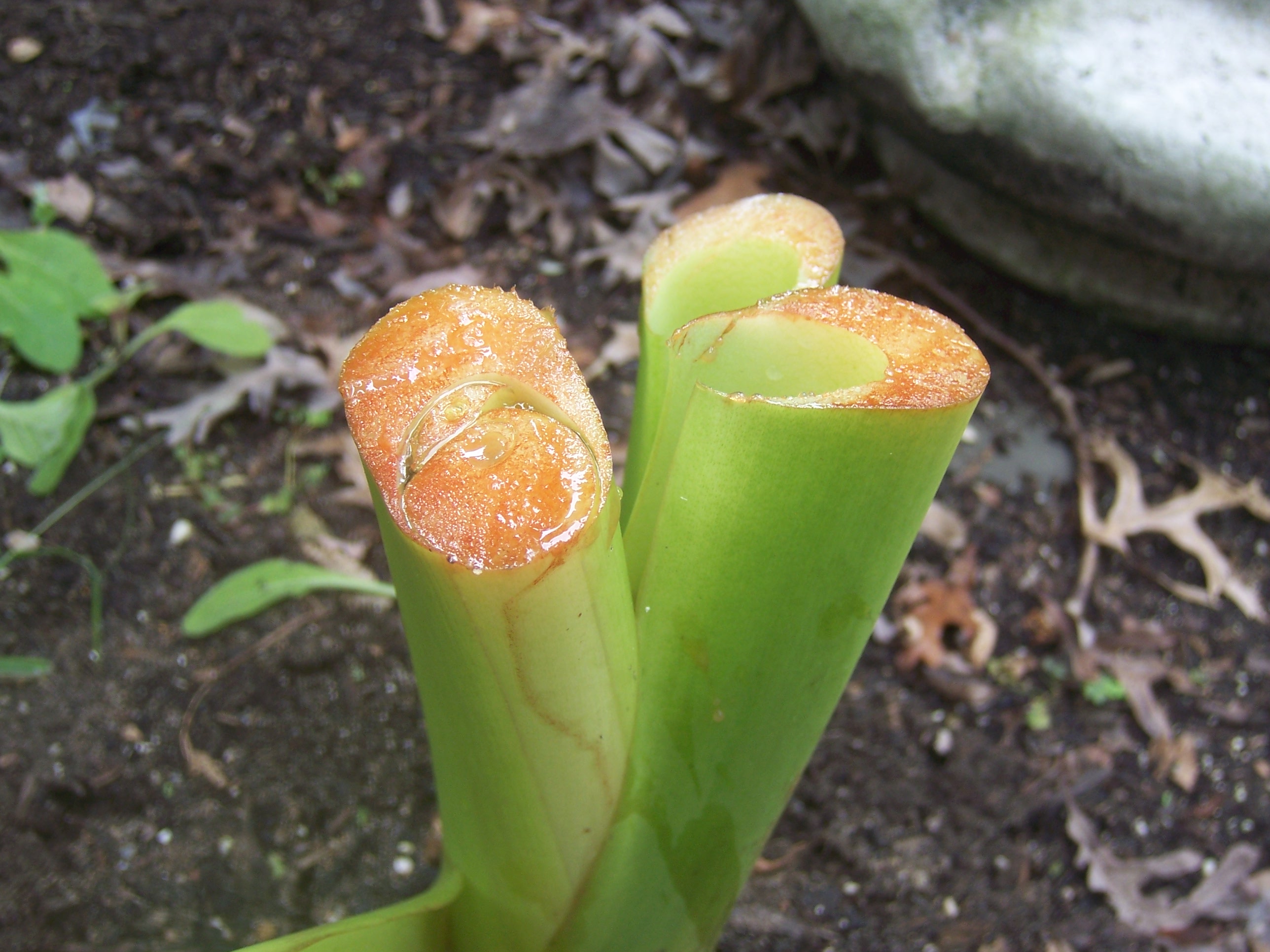
 Nitty Gritty Dirt Man