What I Did On My Summer Vacation


The short answer is that I did a lot of sweating this summer, as I’m sure many of you did. The heat and humidity did a number on my ambition to get outside and do anything productive in the yard – and, as a result, anything productive on this blog.

Instead, Joe and I hid from the sun as much as possible, staying inside, behind lowered shades, where we took advantage of the time to read three incredible novels. (I read the books aloud to Joe. That’s something we began decades ago on road trips, something that became a daily exercise during COVID, and something that we’ve kept going today.)

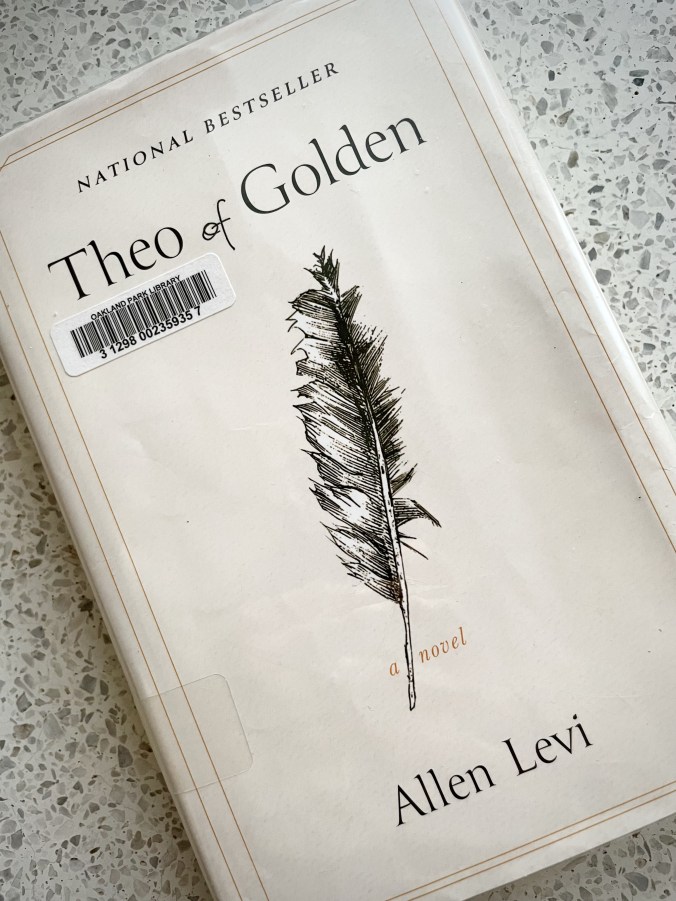
Two friends, Michele and Marie, recommended Theo of Golden, by Allen Levi.  It’s the sort of book that stays with you long after the last sentence is finished. I think it’s one of the most moving books I’ve read in a long time, exploring themes of quiet generosity and kindness and the importance of human connection. Considering the state of the world and the country these days, I think it’s the sort of book we all need in our lives right now.
I first learned of The Murder at World’s End, by Ross Montgomery, on several YouTube book review channels. The readers/hosts of the shows described this as an entertaining surprise and fun British mystery that could easily go unnoticed in the genre if not for word of mouth. So, I’m spreading the word on this locked-room mystery with a wonderful cast of characters, humorous dialogue that keeps the story moving, and a historical backdrop. It’s a truly entertaining, can’t-put-down read.

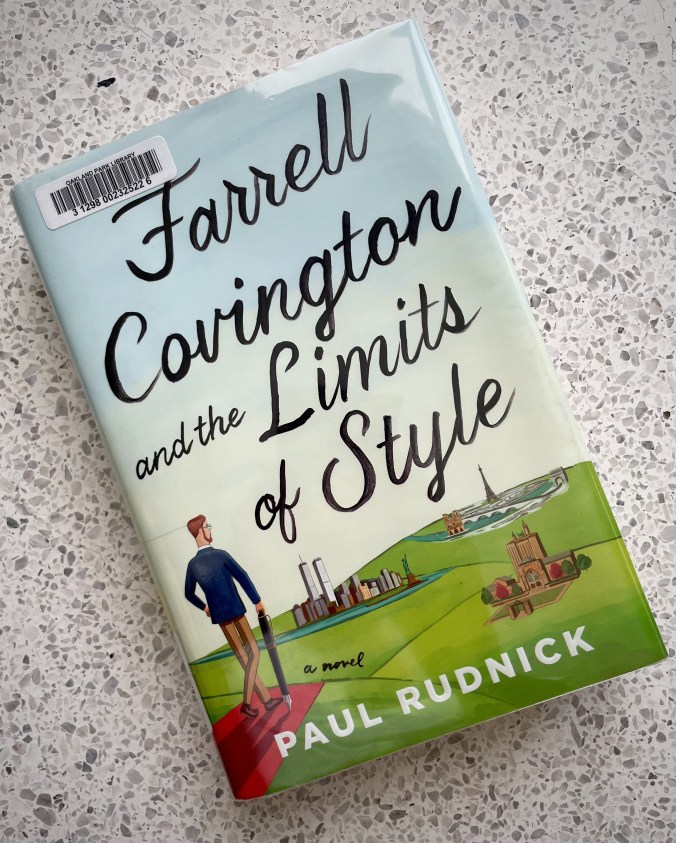
As I was perusing the new books at my local library, I spotted Farrell Covington and the Limits of Style, by Paul Rudnick. Normally, my local library will place a rainbow sticker on the spine of an LGBTQ+ novel. For some reason, this book was overlooked – so it’s not immediately apparent that it’s gay subject matter, increasing the likelihood that non-LGBTQ+ patrons may pick it up. No matter who reads it, though, the novel is like a walk through history, as it navigates the relationship of a gay couple and their circle of friends and politics over decades. It had drama, joy, humor, sadness – all of the human emotions that bind us together, no matter who one loves.
The lawn, though, didn’t care about our reading habits or the heat. It continued to grow and, as a result, needed constant mowing. Once a week, I dressed down in my lawn-mowing attire: blue bathing suit, faded blue golf shirt that’s never seen a golf course but has seen years of gardening stains, iPod set to my ‘80s playlist, wide-brimmed hat, and glaucoma sunglasses. (I don’t have glaucoma, but it’s my best option to keep the unrelenting sunlight from burning my corneas.)

On these mowing days, I was a hot mess by 9:00 am — and one morning, my very spry, thirty-something neighbor came walking by in his fashionably matched black shorts, black t-shirt, black sneakers, and air buds. My neighbor wasn’t sweating.

We smiled and waved to one another. He had calories to burn and I had a lawn to mow… and that lawn, I noticed, was looking more and more like a field of weeds. Had my if-it’s-green-it-can-stay lawn policy backfired? Am I reaping what I had not sown?

Well, sort of.
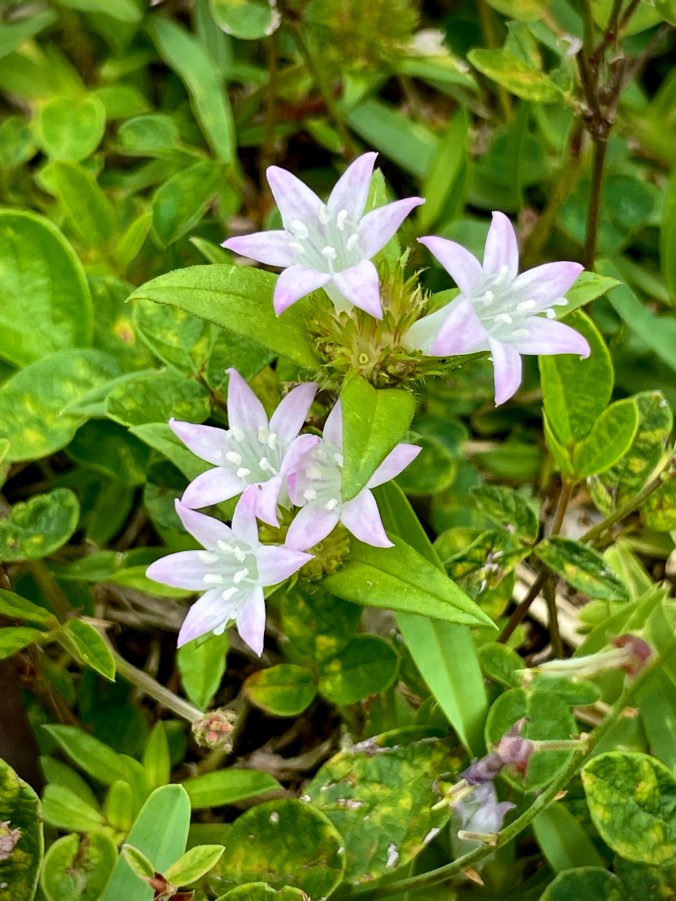
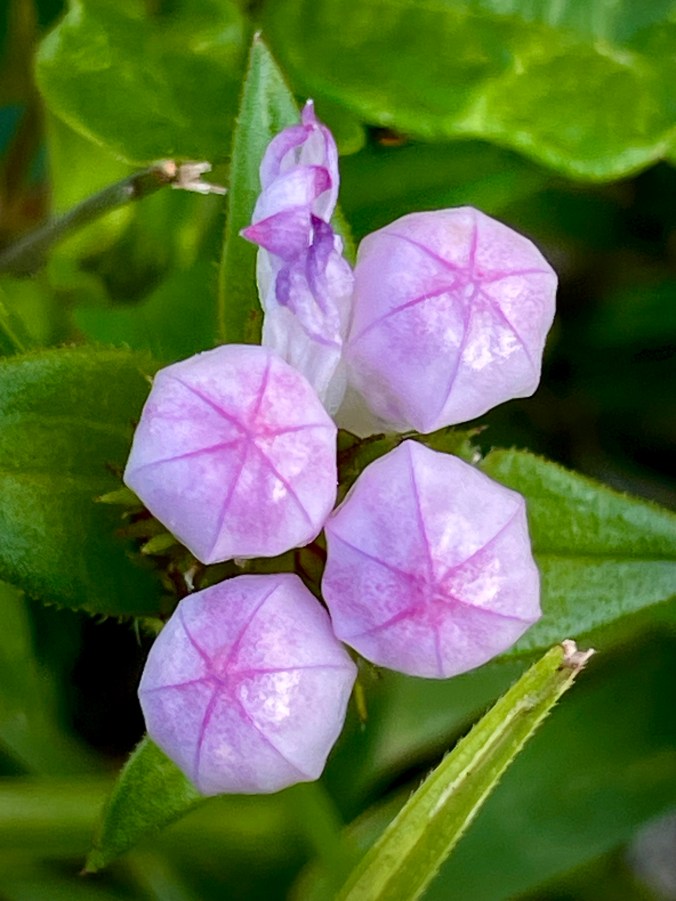
Florida Snow.

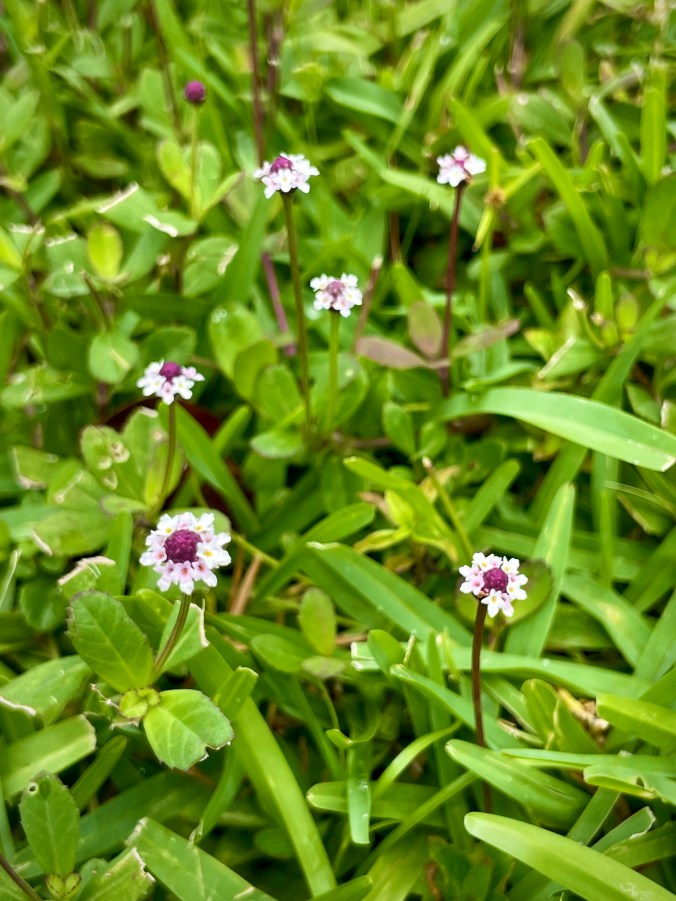
I really don’t know the names of the weeds in my yard, other than Florida Snow (pictured above and at the top of this post in its blossom stage), Richardia grandiflora, which blankets my lawn with pale lavender or white flowers. It’s also known as Largeflower Mexican Coneflower – and despite the locations in these two informal names, this low-growing, creeping plant is a South American native, introduced to Florida as an ornamental groundcover.

And cover the ground it has. Florida Snow and so many of the other weeds in my lawn have taken over. Swaths of weeds have become empires, intermingling at their edges – some are easily mown, while others have a tendency to pop up after the lawn mower passes, forcing me to do another pass.

I now knew my mission. Armed with the app, iNaturalist, on my phone, I decided to take stock of my weeds, to learn their names and their characteristics, and then to decide if they are worthy of my lawn policy.
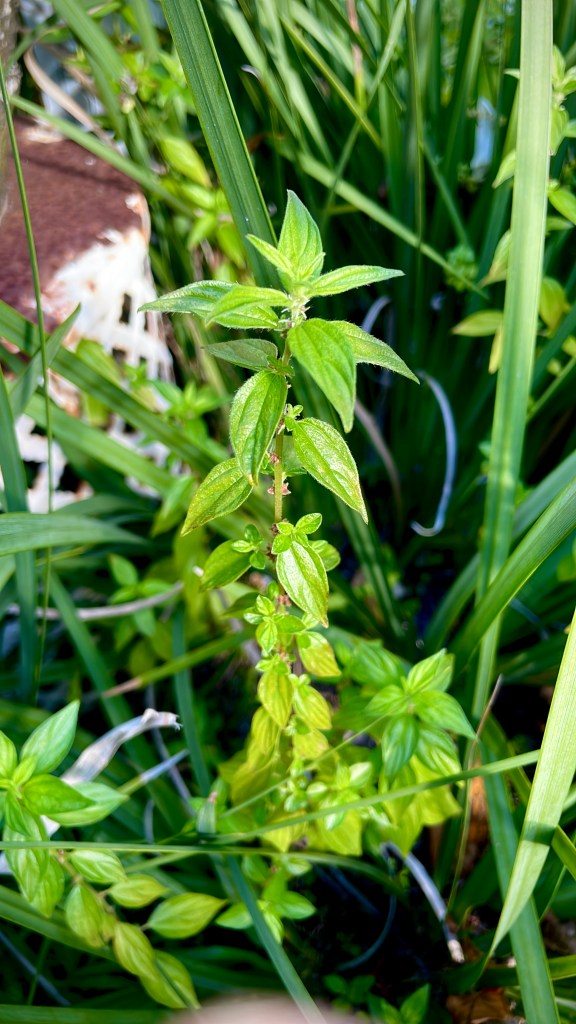
Ceylon Pouzolzia.

 Ceylon Pouzolzia (Pouzolzia zeylanica), an invasive species, is a native of tropical and subtropical Asia and northern Australia, where its leaves and roots are eaten or used for medicinal purposes. In my yard, however, it’s relentless, growing through shrub beds and weaving its way through the branches on its quest for sunlight.

It also has a somewhat deep growing, orange-colored taproot or tuber and pulling this out has become a game for me. I dig my fingers below the soil level until I can grab onto the top of the root and slowly work the plant out of the ground. If I can’t get the whole thing, Pouzolzia comes back with more stems. If I remove the whole weed… nothing but satisfaction and glory!
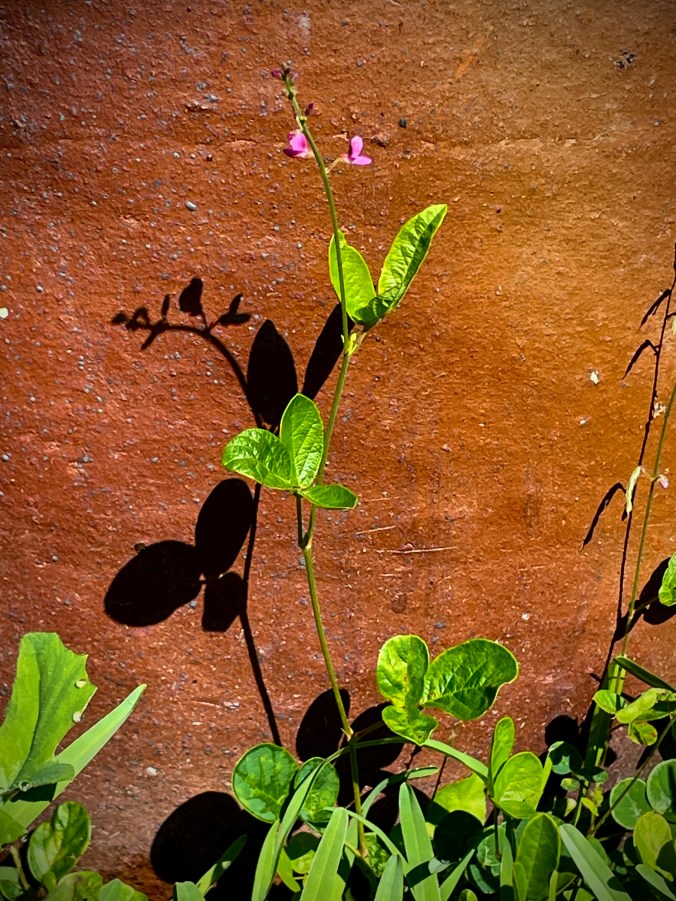
Creeping Beggarweed.

My least favorite of all of my weeds is Creeping Beggarweed (Desmodium incanum), another invasive species. Native to Central and South America, Creeping Beggardweed knows no bounds in my yard. As its name implies, its runners creep and weave their way through the lawn and beds, until the stems end in small magenta flowers.

It’s impossible to pull Creeping Beggarweed by hand, since its runners do one of two things – break or pull up plants that have grown over the runners.
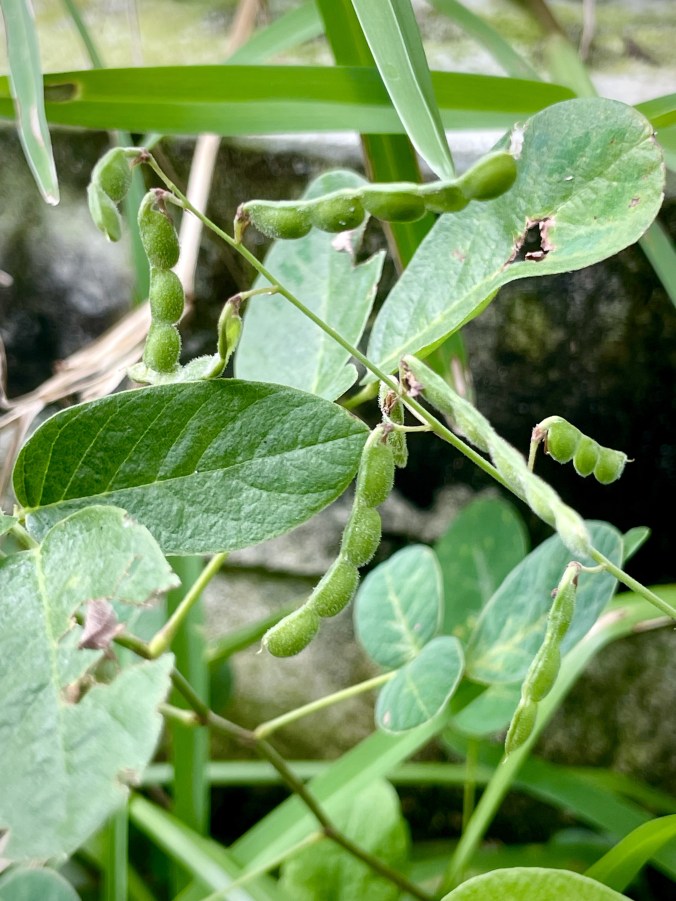
The sticky seeds of Creeping Beggarweed.

Even more frustrating are the sticky seeds (pictured below) that silently hitch a ride on my lawn-mowing clothes, sneakers, and skin, as well as the lawn mower’s blades and wheels. In caring for my lawn, I inadvertently spread the weed. (By the way, I’d also recommend keeping pets away from the sticky seeds. They can wreak havoc once attached to fur.)

Since researching Creeping Beggarweed, I’ve learned that it’s a part of the legume family and can help fix nitrogen levels. Still, that’s not enough for me to say, “Welcome. Make yourself at home.”

On the other hand, I would certainly say those words to Turkey Tangle Frogfruit (Phyla nodiflora), an actual Florida native. I’m not sure how it reached my yard, but I’m happy that it found a home here. Frogfruit has small white-to-pink flowers with purple centers that seem to float above the low growing, evergreen mat. Pollinators love it and it’s easy to manage with mowing. As I’ve learned more about it, I’m tempted to dig up some clumps and plant them in some of the beds as a groundcover.
Turkey Tangle Frogfruit.

 This is really just the start of my weeding assignment. There are so many more weeds to explore – and I think I’ll save that for a future post. (Speaking of future posts, my anxiety also amped up throughout the summer, primarily because of the current State of the Nation and the approaching midterm elections. I’ve tried to keep it in check, but it’s just below the surface. I may also explore this in a future post – whether or not I do, I encourage all Americans to utilize their right to vote.)

In the meantime, I haven’t reached the point of ripping up my entire lawn to create a wildflower meadow. I don’t think the city code enforcer who drives down my street several times a week would allow that. He and the city tend to like a neatly mown lawn, no matter what weeds are growing in it.

I also don’t think I’ve reached the point of chemical treatments to curtail weed growth. It actually doesn’t make economic sense to me, especially if animals, people, and wind can spread seeds from neighboring lawns that aren’t treated.

For now, then, it’s hand-based containment of the worst offenders. At best or at worst, I’ll have a bio-diverse lawn – and that’s something that makes the pollinators of the garden very happy.

And that’s the sort of happiness I’m holding onto.

Garden Secrets & Giveaway Revealed!


The Cape Cod Garden. (Photo courtesy of “Garden Secrets of Bunny Mellon.”

It was a writer’s dream, come true.

Continue reading →

Bloomin’ Update 61: Seeing Red, White, Purple, & “Green”


I can’t think of a better way to celebrate the arrival of spring than with a display of vibrant colors, a site for eyes sore from the dreary grays of winter. Even South Florida, often accused of not actually having a change of seasons, wants to get in on the spring act.

Continue reading →

A Tale Of Two Women (And A Book Giveaway Treat)


This story of two women begins in 1961. That was the year Rachel “Bunny” Mellon, the daughter of the founder of Warner-Lambert and the Gillette Safety Razor Company and wife of banking heir Paul Mellon, hosted an August picnic for some close friends at her home on Cape Cod. Two of the guests were President and Mrs. Kennedy.

Continue reading →

History, Herstory, Our Story — And Giveaway!


Enjoy the interview with the author, and see below for giveaway details.

Enjoy the interview with the author, and see below for giveaway details.

Very often, when gardeners walk through the well-tended garden of another gardener, the first impulse is to notice the plants, the textures, the play of color from one bed to the next. Quickly behind that assessment is the acknowledgement — and admiration — for the work and thought that went into creating their garden paradise.

It’s that thought which makes The Victorian Gardener (Shire Publications), by Caroline Ikin, such a fascinating book. Written with Ikin’s keen eye for detail and passion for all things Victorian, the book is a tribute in both words and photos to the men — and eventually the women — who made gardening their life’s work, who tended some of the most famous estate gardens in the world, and who did much of the work with their hands, muscles, and brains.

I recently had the chance to speak with Ms. Ikin, whose previous book, The Victorian Garden, was also featured on this blog.

The garden staff propagated and potted thousands of bedding plants each year. Photo courtesy of The Garden Museum/London.

The garden staff propagated and potted thousands of bedding plants each year.
Photo courtesy of The Garden Museum/London.

NGDM: This is very exciting for me, since you mentioned you were working on this book in our earlier interview promoting The Victorian Garden. In that interview, you mentioned how drawn you were to the Victorian time period — the people, the technology, the role of women. Did anything surprise you in your research for The Victorian Gardener?

CI: It is astounding just how dedicated these young men were in the pursuit of their chosen career. To become a gardener they had to work their way up through the ranks of the profession, moving from garden to garden to gain experience and often living in very basic accommodations. They were expected to study in the evening, keep detailed journals of their progress, learn Latin, bookkeeping and geometry, and never really had any time off as the glasshouse vents had to be opened whether it was a weekday or a weekend.

It was inspiring to research the lives of the pioneering women gardeners who enrolled in training courses and overcame prejudice to gain employment as gardeners alongside men. However, my admiration of this achievement was tempered by the fact that many of these women abandoned their fledgling careers after a year or two to get married, forsaking their hard-won vocation so rapidly.

Photo courtesy of The Garden Museum/London.

Photo courtesy of The Garden Museum/London.

NGDM: At first glance, The Victorian Gardener appears to be a history book — or a tribute — to Victorian gardeners and their contributions to gardening today. I must tell you, though, that as I read your book I felt I was reading more of a family tree than a history book. I felt a very strong connection to the men — and eventually the women — who toiled in the garden. Was that your goal when you set out to write this book?

CI: There has been a lot written about gardening and garden design, but very little about the history of the gardening profession. I wanted to research the lives of the people who toiled behind the scenes to create such spectacular gardens for their employers and learn how they accomplished so much with the resources available to them at the time. It took a lot of dedication to become a gardener in the Victorian Era and there was opportunity to be grasped by the most ambitious young men. The faces looking poignantly out of the old photographs hint at untold stories and it was this history I wanted to explore.

Female students learn the art of pruning at Studley College, 1910. Photo courtesy of The Garden Museum/London.

Female students learn the art of pruning at Studley College, 1910.
Photo courtesy of The Garden Museum/London.

NGDM: In our previous interview, you mentioned that the class structure and social conventions of the Victorian Era would prove too limiting for you. For many Victorian women who gardened, that seemed to be true as well — but as a male reader, I must say I was very impressed with the dedication that these gardeners displayed for their craft.   What do you think they could teach us about gardening? What do you think they would think of gardening today?

Apprentices and experienced gardeners are pictured together. Photo courtesy of The Garden Museum/London.

Apprentices and experienced gardeners are pictured together.
Photo courtesy of The Garden Museum/London.

CI: The Victorians recognised the value of apprenticeship where experienced gardeners would pass on their skills to the next generation. Their methods were based on trial and error, learning from experience and working with nature. Victorian gardeners did not always understand why their techniques worked; they just knew that they did.

When scientific discoveries demystified the nature of botany and processes such as photosynthesis were understood, the gardening profession was elevated to a new level and training courses were established to teach gardeners not only the practical skills necessary to grow plants, but also the science behind the practice.

A multi-bladed shears advertisement from Gardening Illustrated, 1879. Photo courtesy of The Garden Museum/London.

A multi-bladed shears advertisement from Gardening Illustrated, 1879.
Photo courtesy of The Garden Museum/London.

Just as we do today, Victorian gardeners had to embrace new technology and innovative gadgetry, and experienced gardeners seemed remarkably adept at distinguishing the useful from the worthless. It is no surprise that basic tools such as the trowel and the rake have been in use for centuries with no change to their design.

Although the working conditions of gardeners have improved since Victorian times, it is still a profession where you have to start at the bottom and work your way up, learning all the time from other gardeners, studying books on botany and plant propagation, gaining experience in gardens with different types of soil and climate, working long hours and on weekends.

I think a Victorian gardener time-travelling to a garden in the twenty-first century would recognise a lot of what he saw, and would be disappointed to see that, despite advances in science and technology, there was still no effective way of getting rid of slugs, that weeding was still done by hand, and that water was carried around in a watering-can.

Photo courtesy of The Garden Museum/London.

Photo courtesy of The Garden Museum/London.

NGDM: As in your previous book, the artwork and collection of photos is astounding! When it comes to putting it all together, how difficult is it for you to narrow down your selection?

CI: I was very fortunate, as I was with my last book, to have access to the extensive collection of archive images at The Garden Museum in London. Although there are many group photographs of Victorian gardeners posing with the tools of their trade, it was quite tricky to find portraits of named gardeners, as few were recorded for posterity in this way, which reflects their status in society. It was also very difficult to find enough colour images to satisfy the publishers – all these remarkable photographs are, of course, in black and white.

Musical comedy star Marie Studholme, 1903. Photo courtesy of The Garden Museum/London.

Musical comedy star Marie Studholme, 1903.
Photo courtesy of The Garden Museum/London.

NGDM: Two photos in the book jumped out at me — and they’re both of women. One has a woman in full Victorian attire — as if she were going to a garden party — while pushing a lawn mower. The other features a trio of women in men’s clothing. When you’re in your own garden, what’s most comfortable for you to wear?

CI: I love that photograph of the women gardeners at Kew, looking rather defensive in their breeches and boots. The staff at Kew were put in a tricky position when they took on these first women gardeners as there was no precedent for female gardening attire – women would not dare to show their ankles, let alone don a pair of trousers! The voluminous skirts of Victorian fashion were liable to squash the plants, and frills and lace were hardly practical for digging, barrowing and muck-spreading. The decision to allow women to wear the same clothes as men may seem like a radical act of equality, but I suspect it was made out of necessity and a lack of other options.

The idea of wearing a shirt and tie and a three-piece suit for gardening does strike me as uncommonly impractical, not to mention uncomfortable – I prefer jeans and a T-shirt and a sunhat (I’m very much a fair weather gardener, I’m afraid).

Breeches, boots, and aprons on the female students at Glynde School, 1910. Photo courtesy of The Garden Museum/London.

Breeches, boots, and aprons on the female students at Glynde School, 1910.
Photo courtesy of The Garden Museum/London.

The Giveaway:

What gardening clothing or garden tool could you not live without?

If you would like to win your own copy of Caroline Ikin’s The Victorian Gardener, please leave a comment about the garden clothing or garden tool you could not live without. For a second chance to win, please visit the Nitty Gritty Dirt Man Facebook page, and answer the same question there.

Entries should be received by Friday, May 16.  A winner will be announced on Sunday, May 18.

Thanks for participating — and Happy Mother’s Day!

How To Have Your Own “Secret Garden”


Secret Garden

This post begins and ends with a gift.

Just prior to the Christmas holiday, a very dear coworker of mine, Lorraine, presented me with a silver-wrapped package tied with a string of sparkling stars.  She explained that when she saw this item, she thought of me.  It was whimsical, she said, and she thought — or at least hoped — that I would understand.

Her only instruction was to open it on Christmas morning.

And so I brought the present home and placed it under the tree and stared at it, wondering what sort of whimsy was hidden beneath the silver foil paper.

Continue reading →

The Writes Of Autumn


Sun Dial

“I cannot endure to waste anything so precious as autumnal sunshine by staying in the house.”
— Nathaniel Hawthorne, The American Notebooks

Now that the new school year has started, reading — both books and blogs — is one of those joys that get pushed aside.  But I’ve decided to make the effort.  That’s why I picked up Colm Toibin’s The Testament of Mary, a short book that tackles a very big subject: the latter years of the Blessed Mother.

In between her recollections of her actions during her Son’s life, there was one passage that jumped from the page, a paragraph that captured me at this change of seasons.

“I do not often leave the house.  I am careful and watchful; now that the days are shorter and the nights are cold, when I look out the windows I have begun to notice something that surprises me and holds me.  There is a richness in the light.  It is as if, in becoming scarce, in knowing that it has less time to spread its gold over where we are, it lets loose something more intense, something that is filled with shivering clarity.”

Why was Mary staying in the house?  Why was light so important to her?  Could it be that Mary suffered from Seasonal Affect Disorder, also known as SAD?  I know I do.  When the sun goes down, my SAD goes up.

Continue reading →

Victor Victorian: Garden Style Fit For A Queen


At this time of year, as the garden tumbles into autumn colors in preparation for its winter sleep, it’s difficult to not search out garden photos — whether of my own garden, the gardens of other bloggers, or especially gardens of the past.

It’s in those old photos, the kind that give a peek into a moment in time, that the questions start to swirl.  What plants did they select and why?  Where was the best spot to view the garden?  What were the scents and aromas?  The sounds?  Who tended the beds?  What tools did they use?

The Victorian Garden

Enter The Victorian Garden (Shire Publications), a fact-filled and image-rich book by Caroline Ikin.  Beautifully crafted, the book not only offers a clear explanation of Victorian garden style and history, it also celebrates the Victorian gardeners and their innovations — accomplished through Ikin’s skill at bringing readers along as she steps through the garden gate.

Recently, I had the chance to ask Caroline Ikin about her book, the Victorians, and life in her own garden.

Continue reading →

Gnome Sweet Gnome: A Talk With Dr. Twigs Way


Gnomes

When I received Gnomes as a gift in 1976, it ignited my imagination.  I not only loved the total appearance and creativity of the work, but Wil Huygen’s words and Rien Poortvliet’s illustrations reached out from the pages and carried me into a secret, fantastical world.

Nearly 40 years later, the book has that same hold on me — and more.  I revisited the book while cleaning out a bookshelf.  Just flipping through the pages brought me back to the wonder I felt as a 13-year-old boy.

Continue reading →

Book Review & Giveaway: “What A Plant Knows”


Peony

For many gardeners, the reasons for gardening come down to stimulating and satisfying our own senses: the scent of a summer rose, the feel of a freshly mowed lawn under your toes, the sound of morning songbirds, the taste of a homegrown tomato, or the sight of the saturated color of the season’s first peony bloom.

But are our senses the only ones being stirred in the garden?  According to a remarkable video and an equally remarkable book, the answer is “no.”  Our senses, it seems, are in good company with the senses of our plants.

Continue reading →