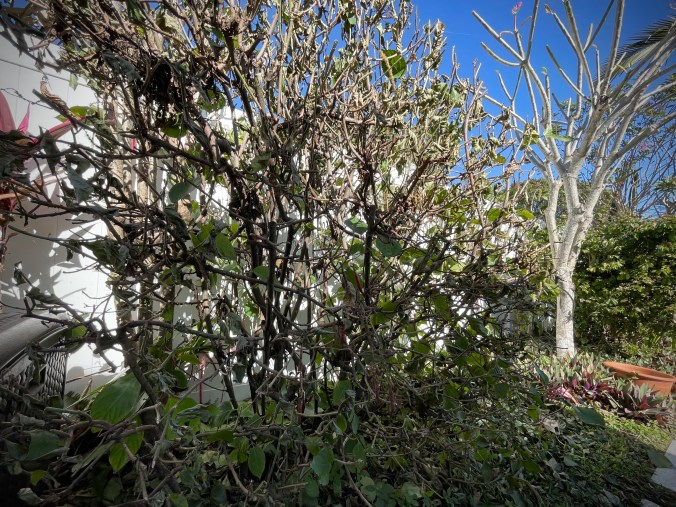
There’s a lot to be said for doing nothing. The older I get, the more I try to embrace that ethic in the garden. There seems to be so much else to worry about these days, do I really need to add garden worries onto the heap?
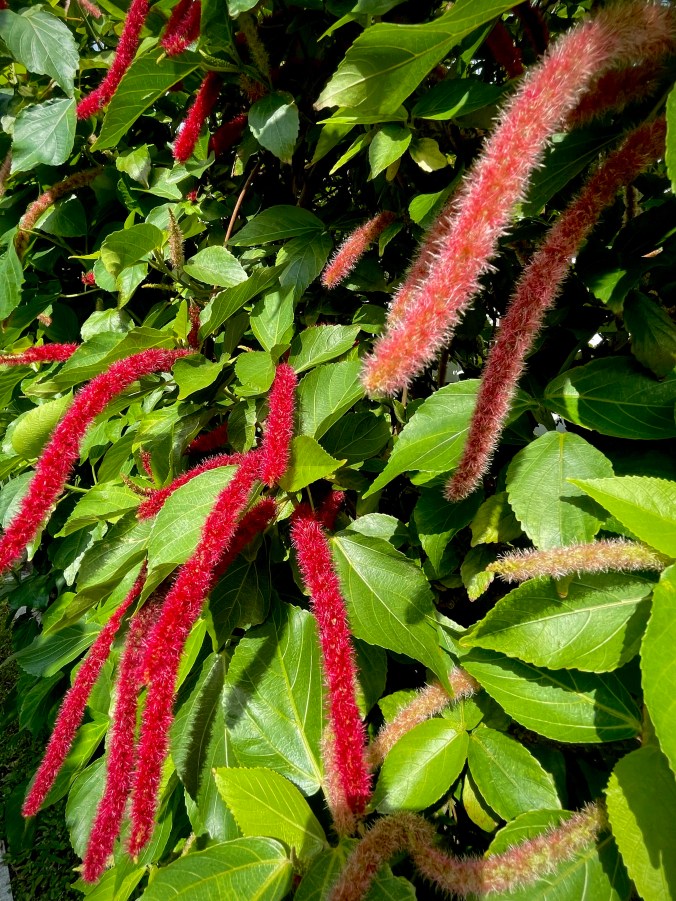
This was my approach after this winter’s record-setting cold severely burned and damaged the chenille plant (above). After several days and nights of frigid temperatures, every leaf dropped, revealing a tangle of bare branches.
My impulse was to do a harsh pruning, to encourage new growth – but hadn’t the plant already suffered enough trauma? I decided to do nothing… and I’m glad I did… or didn’t… or… never mind. You get the idea.
Here is that same chenille shrub today.
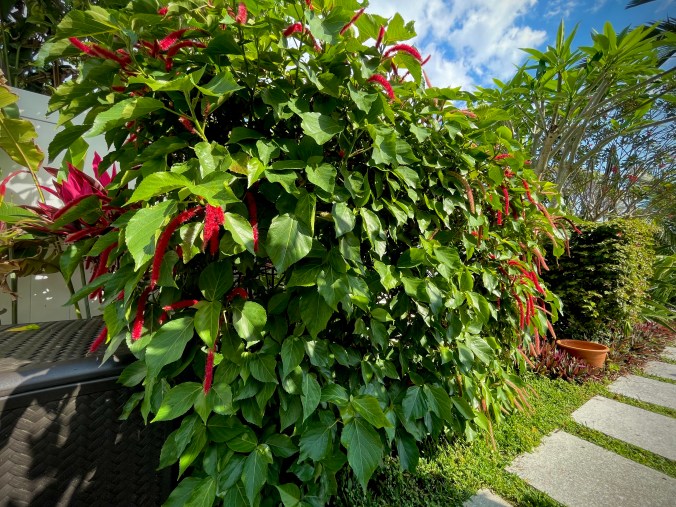
The warmer weather has pushed flower production into overdrive.
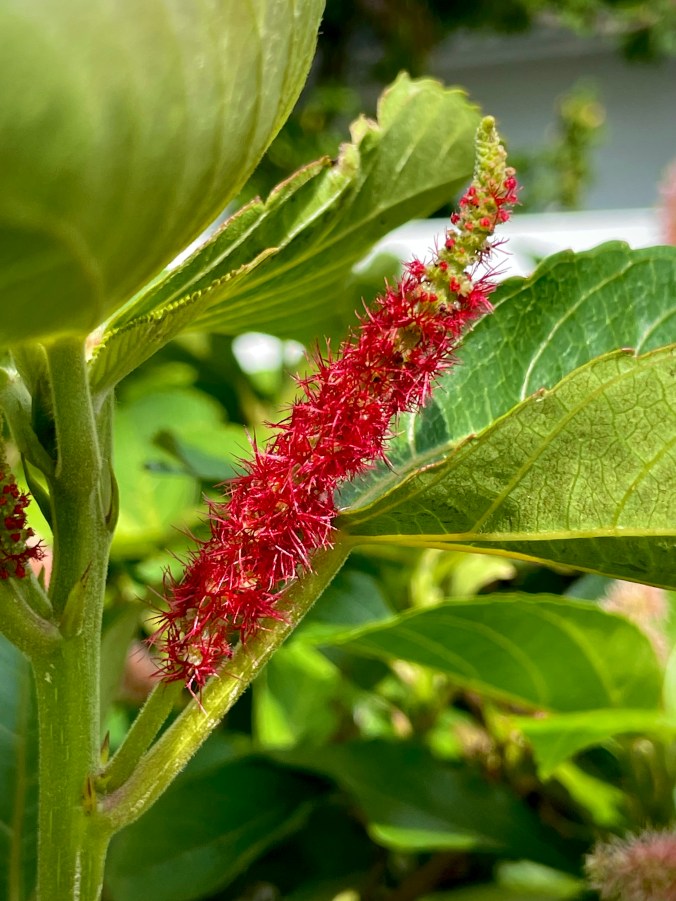
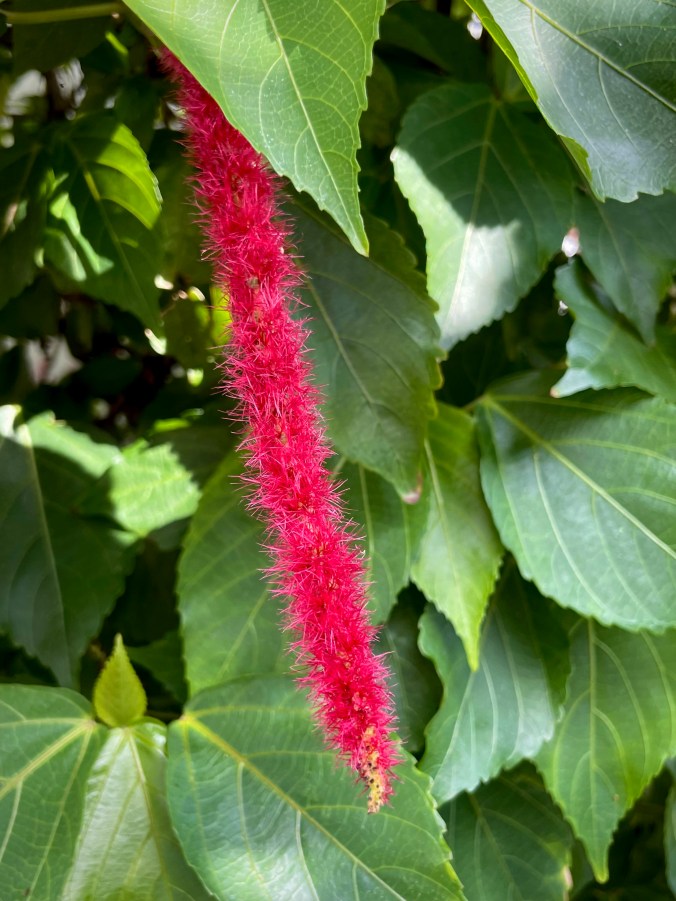
When I first purchased the plant, I had no idea there were two varieties in one pot. I now have a dusty rose variety (on the right side of the photo below) intermingling with the red one.
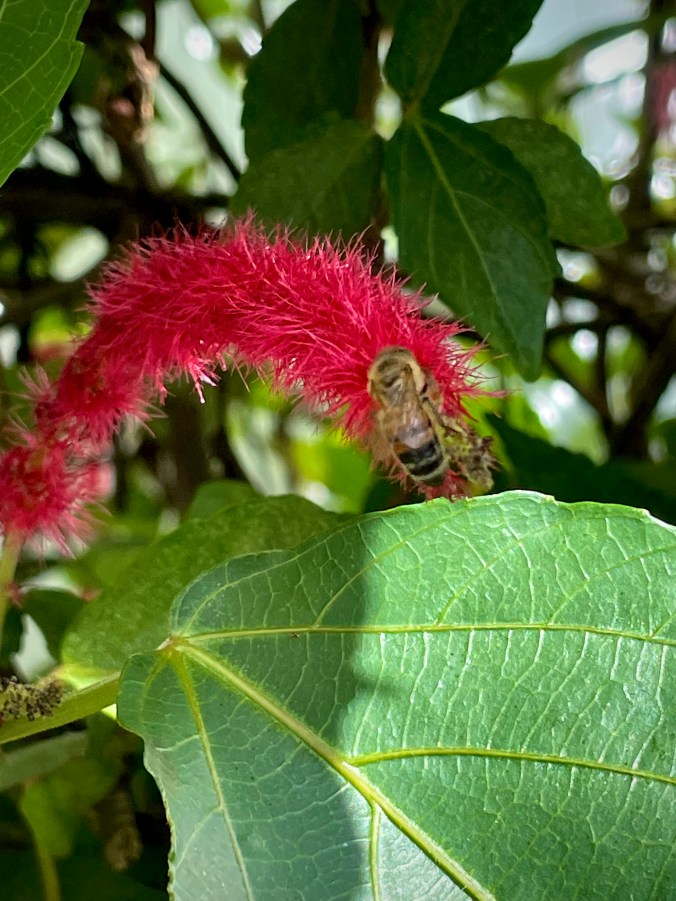
Even the bees are happy I did nothing, which seems to be an affront to their busy-as-a-bee motto.
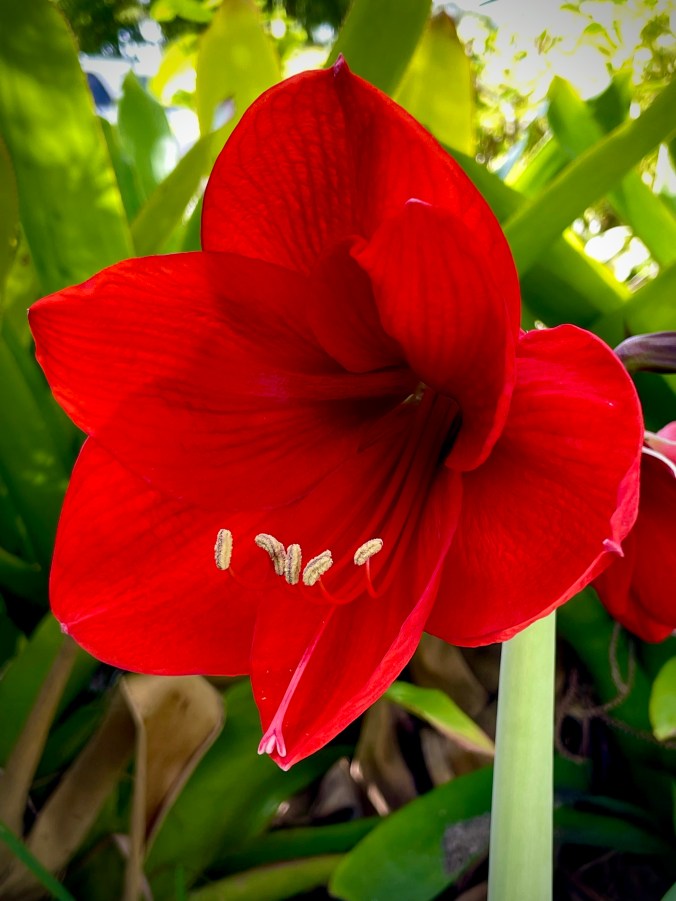
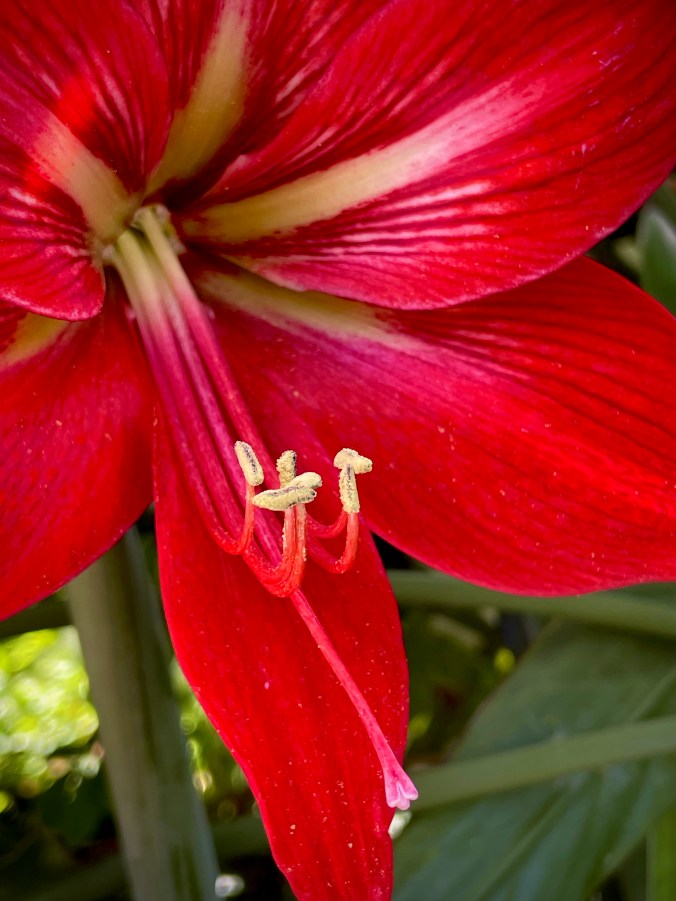
Also turning my head in recent weeks… amaryllis.
I’ve had this red one for, I’m estimating, 15+ years. I have it in a pot and this blooming cycle is the first one in several years, I think because I kept moving the pot around the yard. This year, I think I found its happy place.
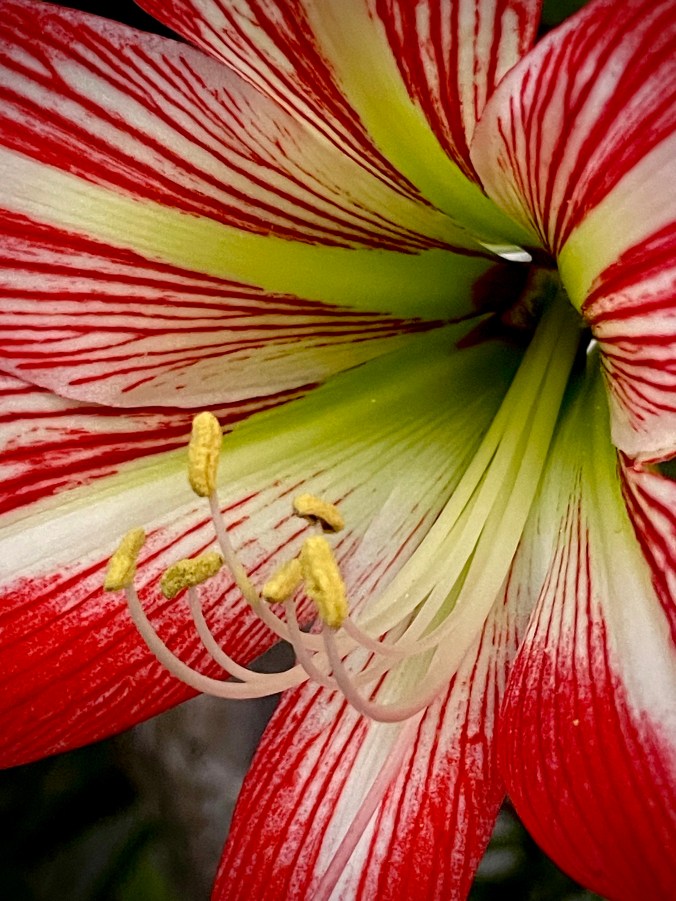
This candy cane striped variety was purchased at a local box store several years ago, heavily discounted after the holiday season. Buying cheap is just as important as doing nothing.
Unlike the amaryllis above, this one and the one following are planted in the ground. I’m contemplating moving them all — after the flowering cycle — to a place of honor in the front yard.
This other red variety, also a post-holiday discounted purchase, has strong markings that I think are a nice complement to the bright red.
Meanwhile, orchids continued to put on a display.
This is Dendrobium loddigesii, a sort of deciduous orchid, with long stems that dangle downward and are covered with leaves. These leaves eventually drop off and a flower bud appears at each node.
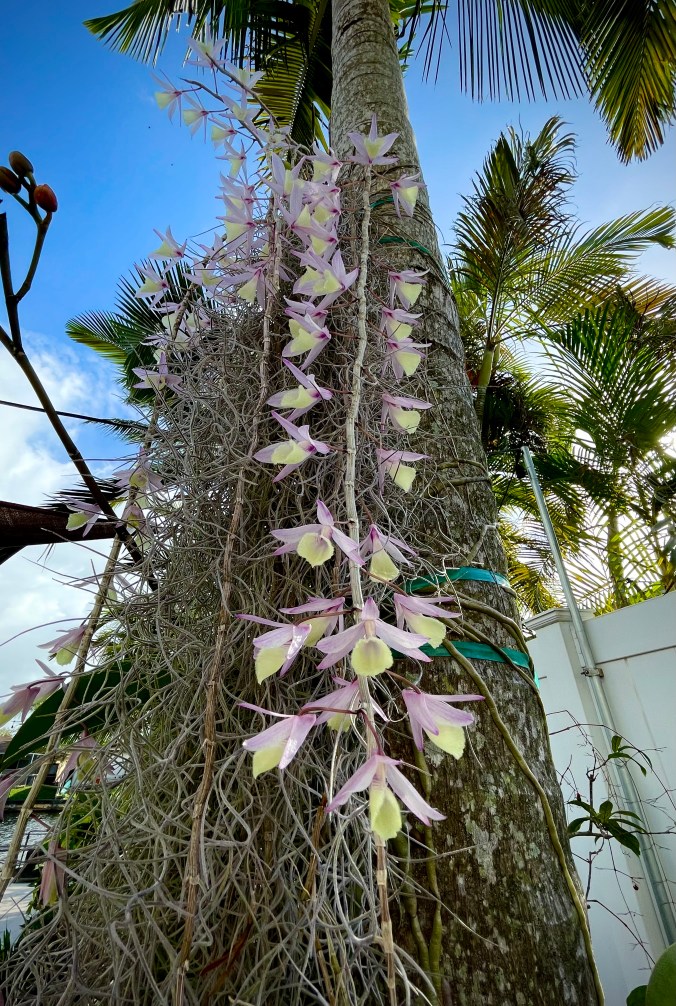
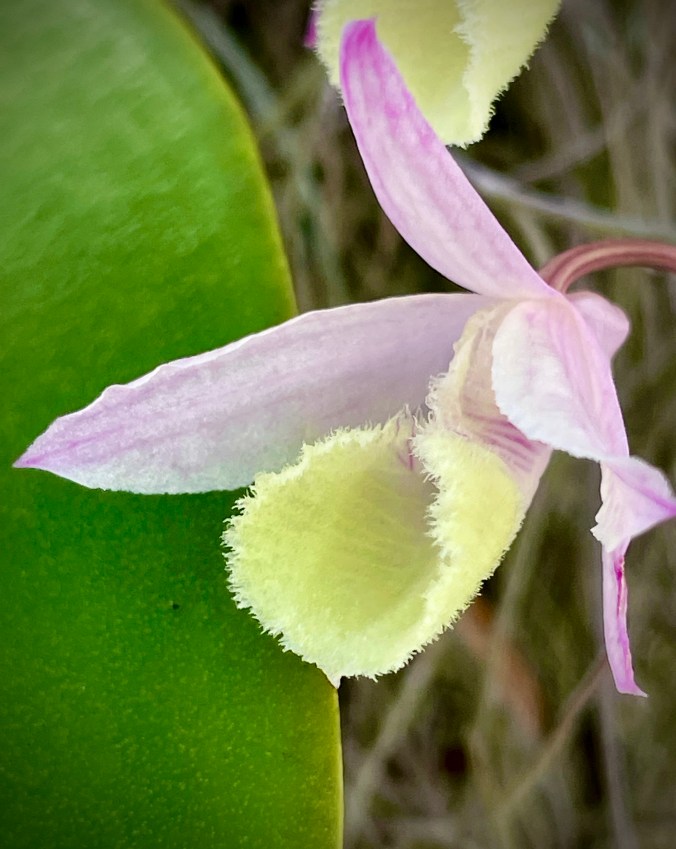
Although I love hotter colors in flowers, I appreciate these pastels, especially as I zoom in to see the soft, feathery edges.
Finally, Blc. Robert’s Choice “Dee” was part of a package of orchids — less expensive than buying a full-grown plant — I purchased through Amazon during Covid. About the only thing I needed to do was be patient, which I’m adding next to buying cheap and doing nothing.
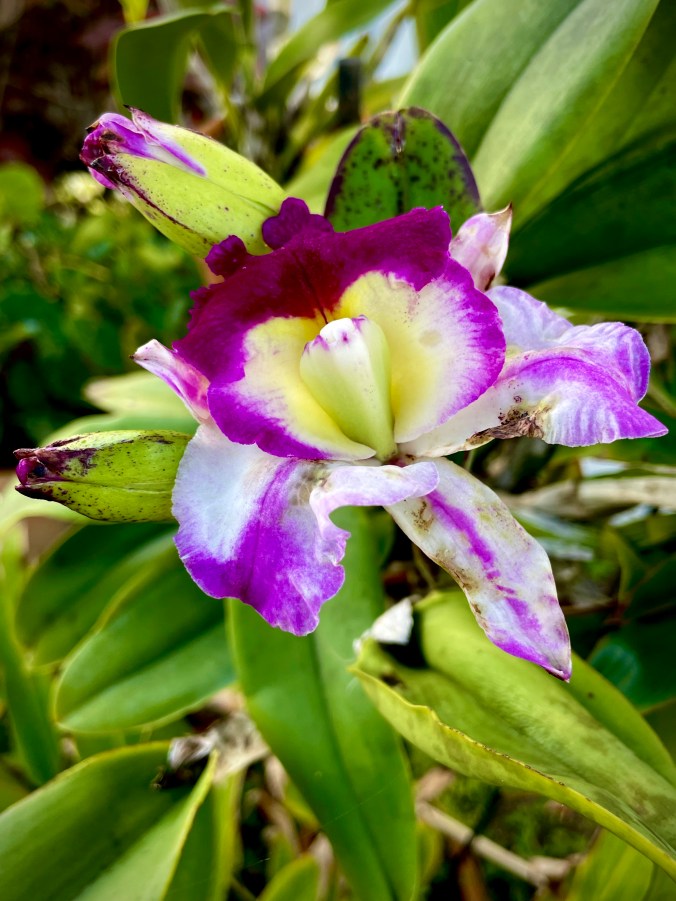
This is Dee’s first flower. My concern, though, is the discoloration on the leaves and buds, some of which appear on the orchid’s petals. I’m not sure if this is a fungus and I’m also not sure if I should do something, anything, or — as you can probably guess — nothing at all.
Until next time…


My only comment to this post is a 😊
Hello Janis… If I made you smile, then my mission was accomplished. 🙂
Did you ever save your Amaryllis bulbs when living in NY? If so, did they bloom again? I love them so much but always toss them after the holiday season. I’m thinking I can do better by these beauties.
Lovely photos!
Hi Michele… The orchid that I’ve had for 15+ years is from when we lived in NY. I was a holiday gift and came with a white pot. I would travel with it to my school office, where it would bloom — and then home for the summertime. In other words, please don’t toss them after the holidays. They’re an easy bulb and they just want to be loved. 🙂
An amazing collection Kevin – they are all such beauties and enjoy the extra sunshine.
Hello Flavia… Thank you. The older I get and the more I look around my garden, I think all I need are lots of the same three or four plants that are truly easy and unattractive to iguanas. 🙂
Oh wow! Iguanas! I’d love to see them in your garden, so you have lots? 😲
I’m happy to share them with you… but, yes, I have lots. They’re invasive and they’re voracious eaters. When we first moved to Florida and before we had a garden here, they were a conversation piece. Herds of them could be seen dining on the lawn. Then, we planted a garden — and we really saw how much they can eat. Even plants they should not have eaten, they ate — and I’ve had to learn what works best… but what works best for me, may not work best for my neighbors. Because they have no predators (other than very cold weather, which is rare here), their numbers have swelled and they’re eating everything and crossing into neighborhoods where iguanas never existed (they tend to stay near neighborhoods with water). I may have to revisit this topic in a future post.
It would make for a very interesting post, Kevin. Gee, I thought our kangaroos were ravenous nibblers!