Bloomin’ Update 30: Night Fever


I know.  I know.  This was supposed to be the on-the-road post, the one where I post a picture and you write the caption and Joe and I drive back to New York.  The car, though, had other plans and is now sitting in a repair shop — which means the you-do-the-writing post will have to wait.

As will we — waiting for our car and for the arrival of Saharan dust.  Yes, you read that correctly.  A cloud of Saharan dust is making its way to South Florida.  Forecasters say the most noticeable effect will be a milky, hazy sky — nothing blue about it.  All I know is that it’s a little something extra to make the heat feel hotter.  I guess you could say it’s a dry heat, and how often can that be said in Fort Lauderdale?

So what should a couple of disheartened travelers do on a clear, dust-free night?  Take a walk, of course. 

Continue reading

Bloomin’ Update 29: How To Read A Palm


Based on readers’ comments from the previous post, I thought I would delve deeper into the wonders of Cocos nucifera, or the coconut palm.  Many northern gardeners had commented that either they had never really considered the seed-quality of a coconut or had never seen one sprout. 

Continue reading

I’ve Got A Lovely Bunch Of Coconuts


Florida?  In summer?  Are you nuts?

If you’ve read any previous posts, you already know the answer to that question.  But in this case, there is a reason to the madness.  In a nutshell — a coconut shell, that is — South Florida will someday be our new home.  About one month before Hurricane Andrew arrived in 1992, Joe and I purchased a house.  Each year since, we have traveled to Fort Lauderdale several times a year to do the most relaxing of vacation activities: yard work.  And as we go about our palm tree trimming and bundling and bagging of debris, we do a lot of planning and dreaming.

Continue reading

Bloomin’ Update 27: Let’s Go For A Walk


I read somewhere – and I apologize to whoever said it because I cannot credit you – it’s a shame that so many gardeners keep their gardens locked up in their backyards. How nice it would be if the garden could be in the front yard for everyone and anyone to enjoy as they walk by. 

That was my thought as Joe and I walked around the neighborhood on this first day of summer, strolling by our neighbors’ homes to get a peek and to be inspired by what was blooming.  This is what we found.

To start the walk, we had to pass our Lace Cap Hydrangea. The flowers remind me of speckled Easter eggs.

This would be a close-up of the “lace” in the Lace Cap.

Across the street, we spotted a small bouquet of Dianthus.

Just up the street, another neighbor had Daylilies blooming everywhere.

Another neighbor had cluster upon cluster of Roses spilling over a rock retaining wall.

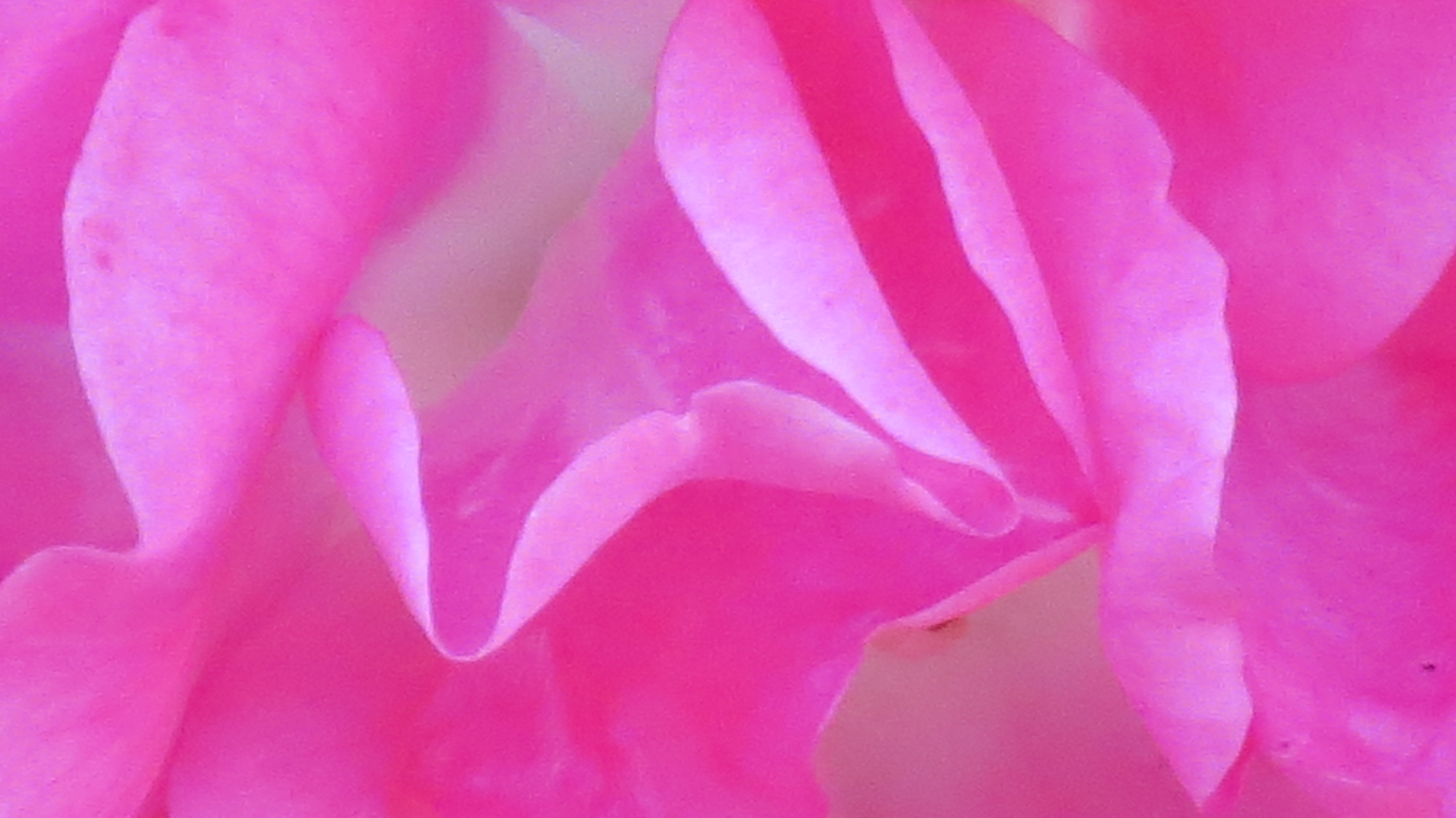
I couldn’t resist a closer look at the ruffled petals.

This Daylily seemed to scream, “Look into my eye.” So I did.

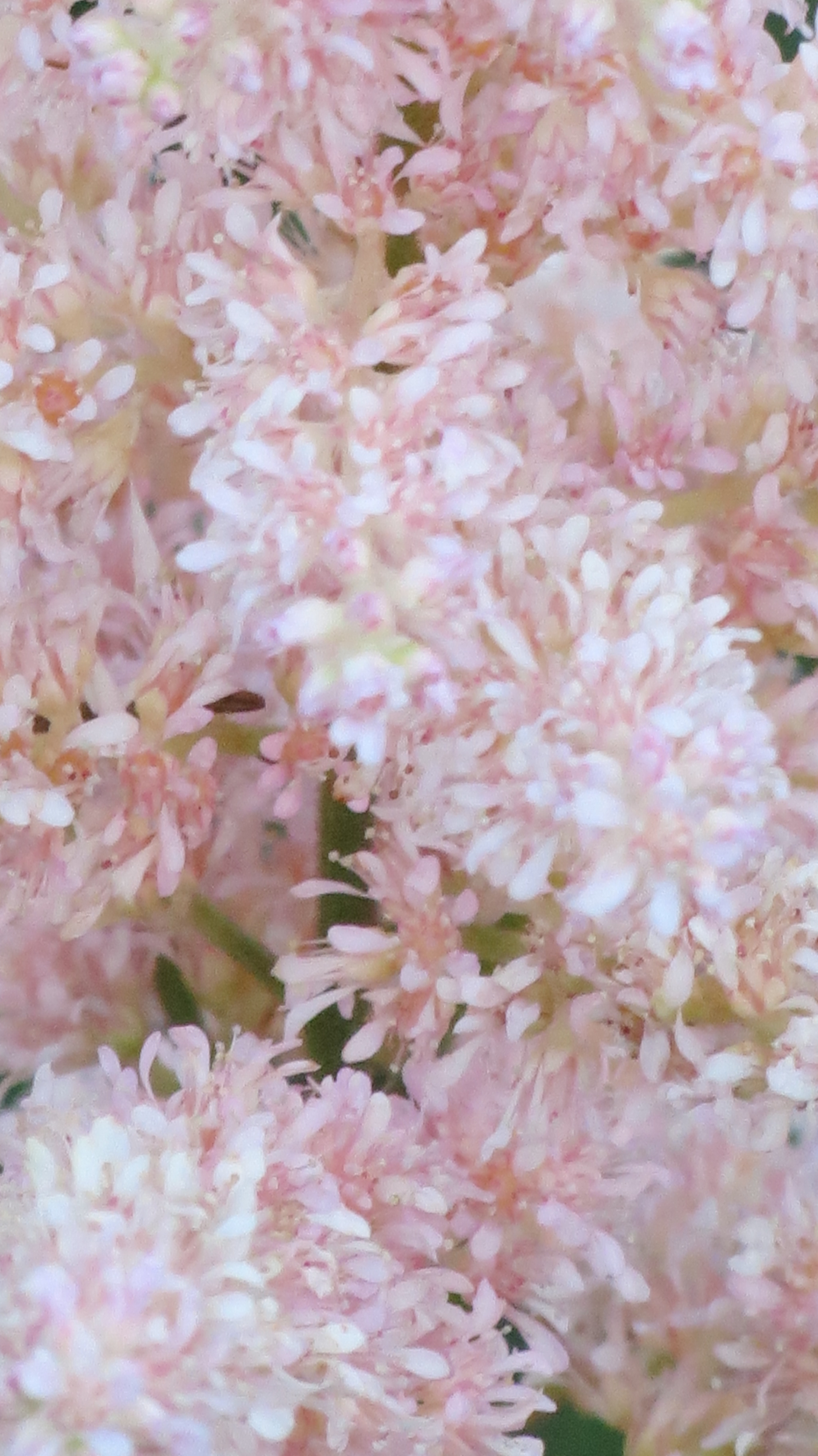
Around the corner, there were beds of Astilbe in full bloom.

Up close, the pink clouds reminded me of cotton candy.

Around another corner, we discovered a bed of Yarrow growing around a curbside mailbox.

Imagine our surprise when we spotted a bed of Cactus — in flower — a few houses away. The owner, Helen, came running out and offered us a clipping, and then showed us the rest of her front yard garden. We made a promise to return again for a tour of the backyard — a new neighborly friend.

When we returned home, there was time to stop and smell the Lavender.

Happy Summer!

Who’s Your Daddy? I Am!


It’s Father’s Day weekend here in the States, and I have daddy issues.  You see,  I do not have children of my own, so fatherhood and this holiday are like an exclusive country club from which I have been barred.  This doesn’t go to say that I don’t know what it’s like to care for and nurture something, because I do.  It’s just that my children aren’t – well, they’re not human.

Continue reading

Bloomin’ Update 24: May Day And Night


May days are a wonder in the garden.  It seems that each day there is something else budding, blooming, or fading away.

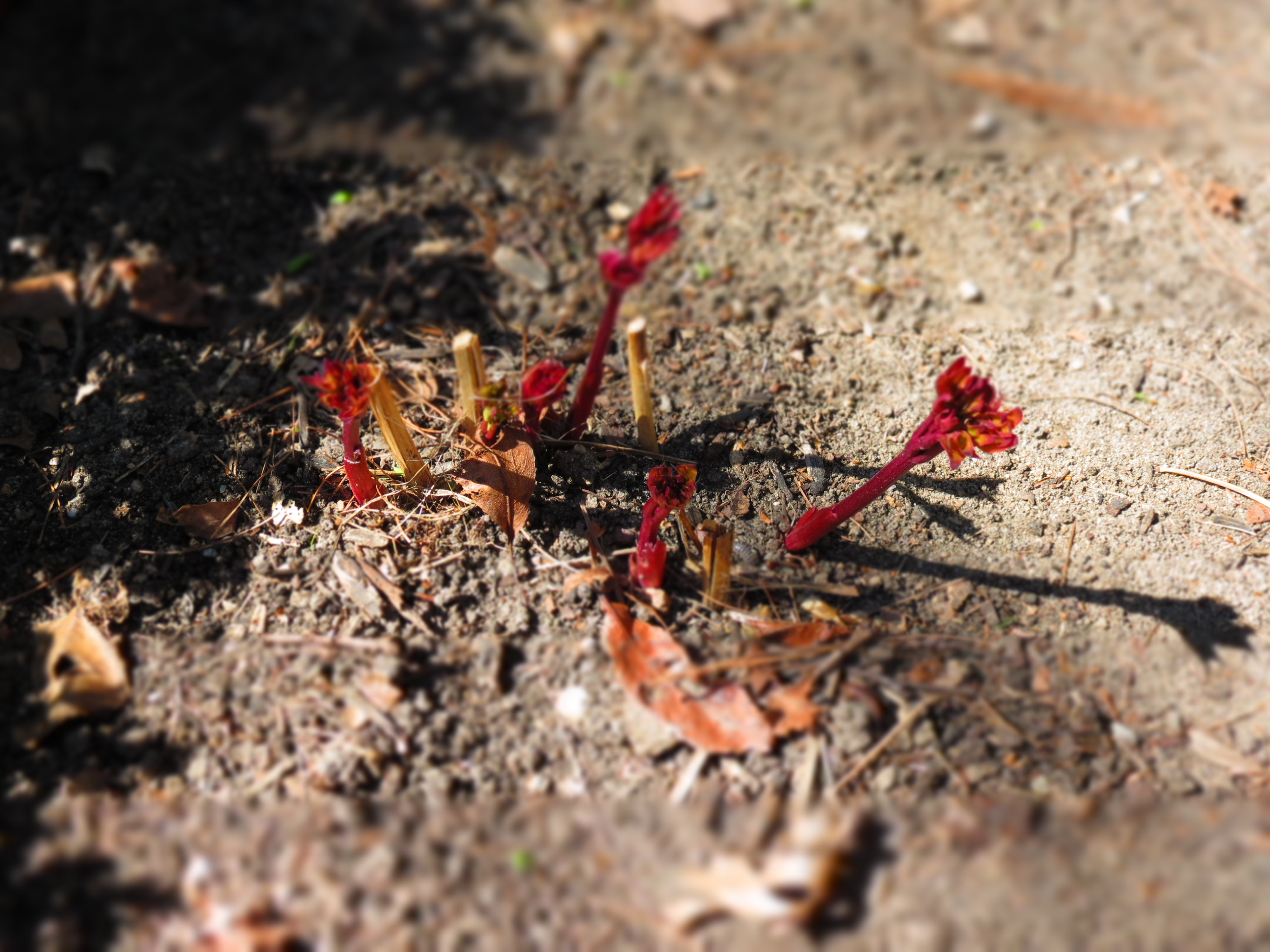
A few posts ago, I featured the gradual blooming of the first peony.

Continue reading

I Canna Believe It’s You!


Once the Elephant Ears were cleaned and planted, it was time to turn my attention to Canna.  Like their large-leaved companions, Canna are also over-wintered in brown paper bags filled with peat moss and then stored in the cement bunker at a steady, cool temperature.  (One year, I stored them in the garage, which was too cold and too moist.  The result was a smelly, mushy mess.)

For this demonstration, I’ll use my absolute most favorite Canna, “Black Knight.”  The leaves are big and bold and bronzy red, with hot red blooms.  And the rhizomes, well, they’re meaty.  That’s right.  Meaty.

Continue reading

100th Post: Water For Elephant Ears


Attractive, aren’t they?

The last time I saw my Elephant Ears, they were clipped back, packed into peat moss, and stored in a cement bunker.  With the very warm April temperatures, I couldn’t resist opening up their winter palace.  But unlike Geraldo Rivera and Al Capone’s vault, I found my treasure.

 1. After a long winter’s nap, the stems, leaf remnants, and roots have withered from tropical green to paper bag brown.

2. To clean each bulb, I shake off the excess peat moss and dirt.  Then, it’s time to husk the dead leaves, stems, and roots. 

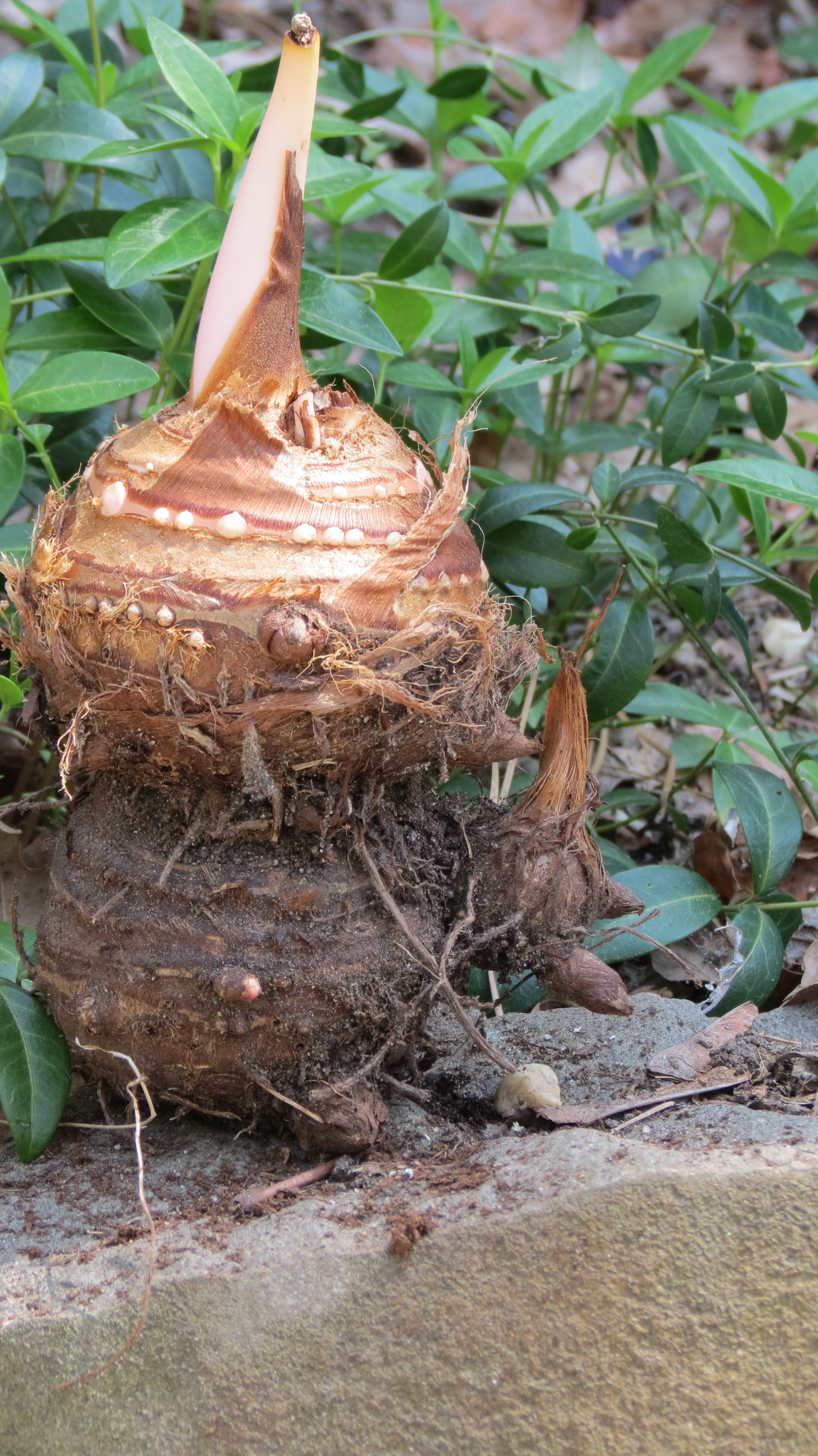
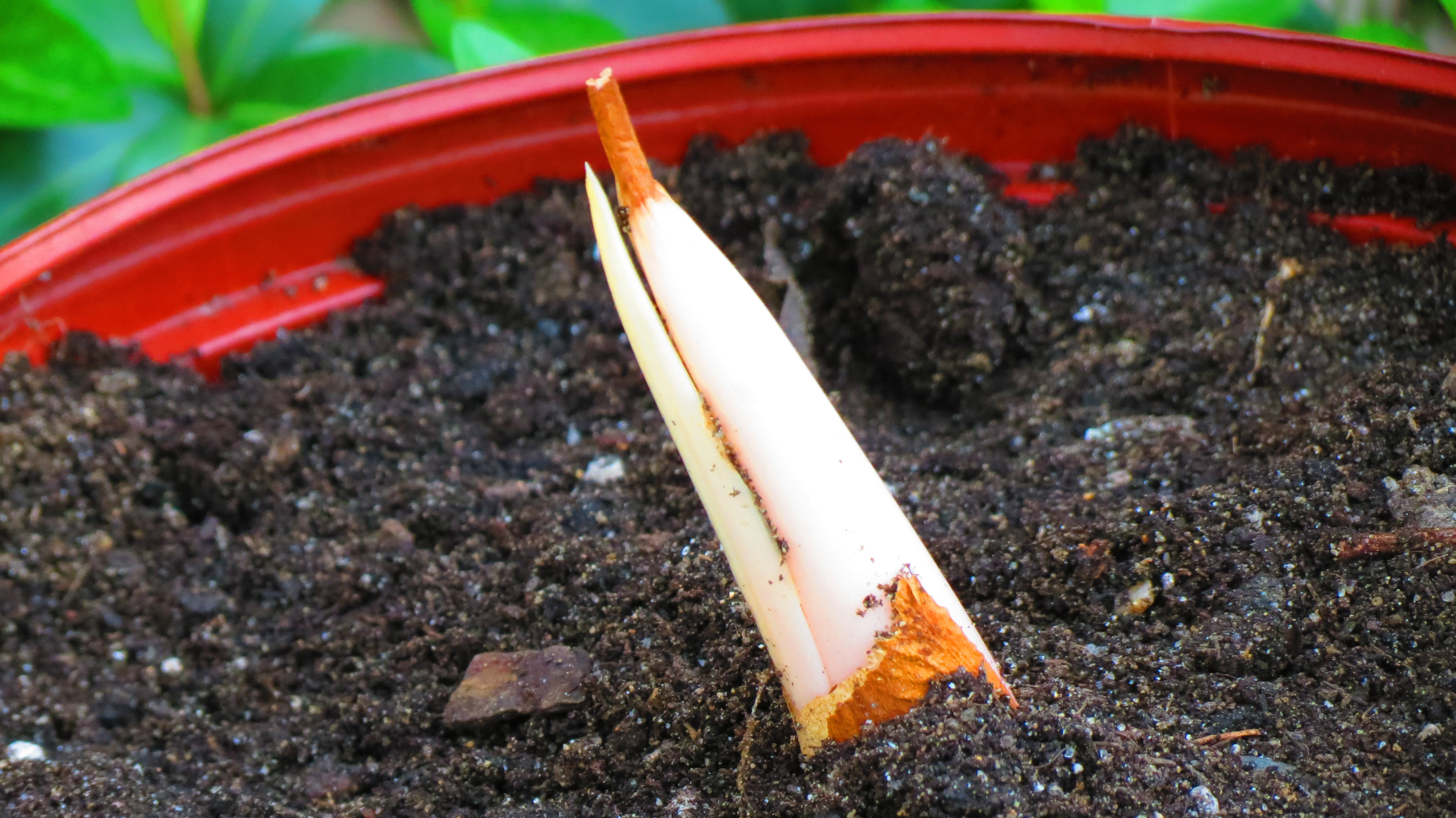
3. It takes a little effort, but once cleaned, there is usually a pinkish shoot at the heart of all that brown – the promise of new growth.

4. Some bulbs may still have healthy looking roots.  These I leave on – might as well give the bulbs a head start once they’re planted. 

 5. This Elephant Ear collection began years ago with the purchase of one bulb. Over time, smaller bulbs developed, like the one pictured here (toward the right), and these can eventually be separated, either manually or on their own.  I’ve also learned that the bigger the bulb, the larger the leaf.  But the smaller bulbs also have value – they can be kept in pots and moved around the garden as filler.
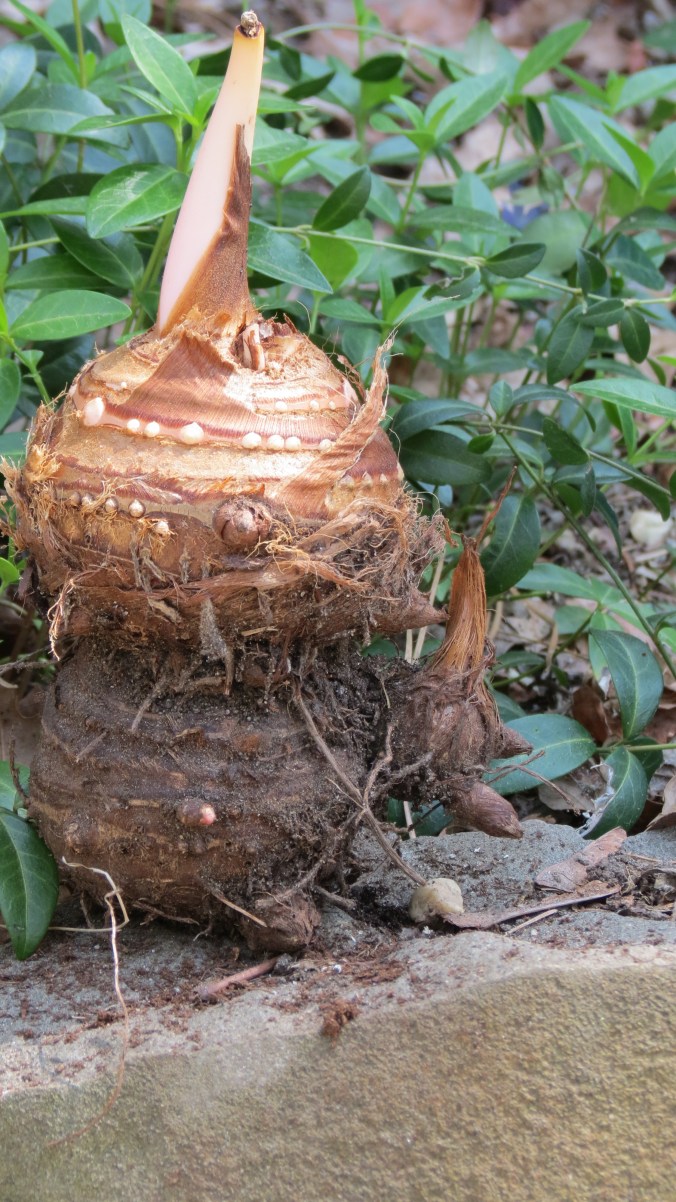
6. To plant the bulbs, the toughest part is choosing the right sized pot.  I add some potting soil to the pot, settle the bulb into place (shoot side facing up, of course), and then fill until the crown is just below the surface. 
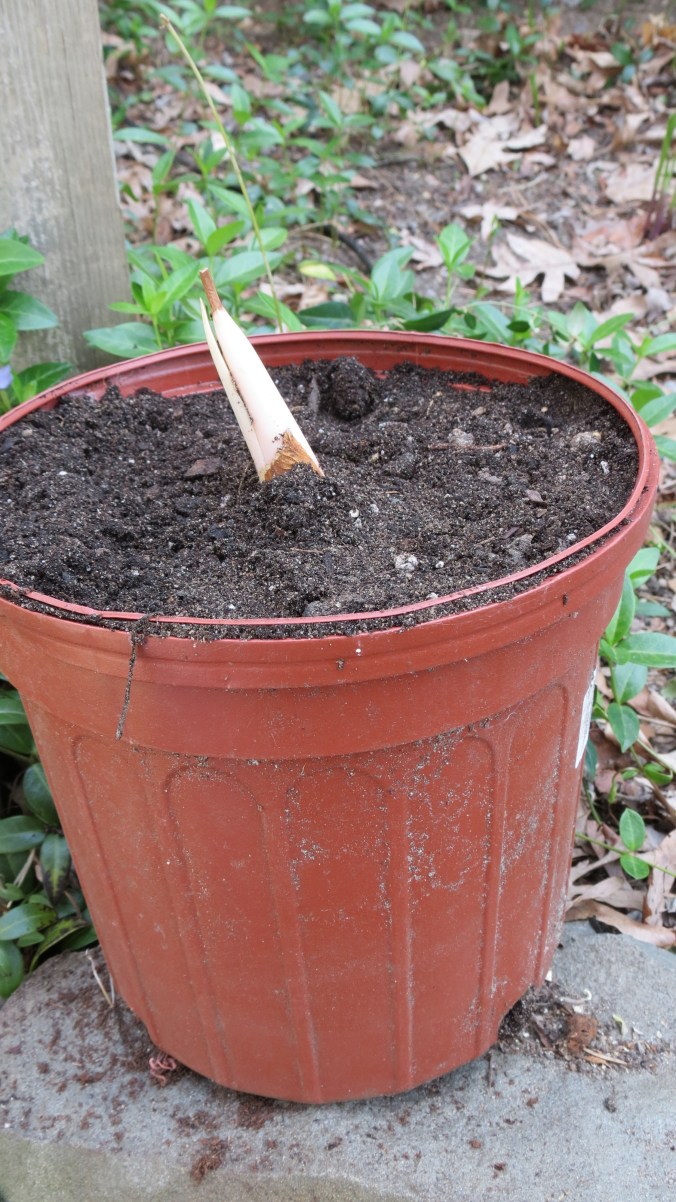
7. I’m sure I make more work for myself by first potting the Elephant Ear bulbs.  With the pots, however, I feel I have more control over the plants.  If there should be a frost, I can move the collection indoors.  If a bulb fails to bloom, I won’t have an empty area in the garden.

8. Once planted, I place the pots in a sunny location and water daily.  These are tropical, and they thrive on heat and moisture.  Once they develop leaves, it’s into the garden they go – usually to a partial shade location.

A special thank you to Elaine from Ramblings from Rosebank for suggesting that I post a few photos of Elephant Ears in their glory days of summer.  


Next Post: I Canna Believe It’s You

Hosta La Vista, Baby


Today, I became a man.

Today, I channeled my inner Schwarzenegger, and tackled a division of Hostas – or rather, Hosta division.

The thought occurred to me that the Hostas in the front bed were getting quite large and needed to be divided.  Actually, that thought occurred to me years ago –and Joe has reminded me of this each season.  I always fell back on it’s just not the right time of year to divide – but the shelf life of that excuse was long exhausted.

Continue reading

Bloomin’ Update 21: Down The Rabbit Hole


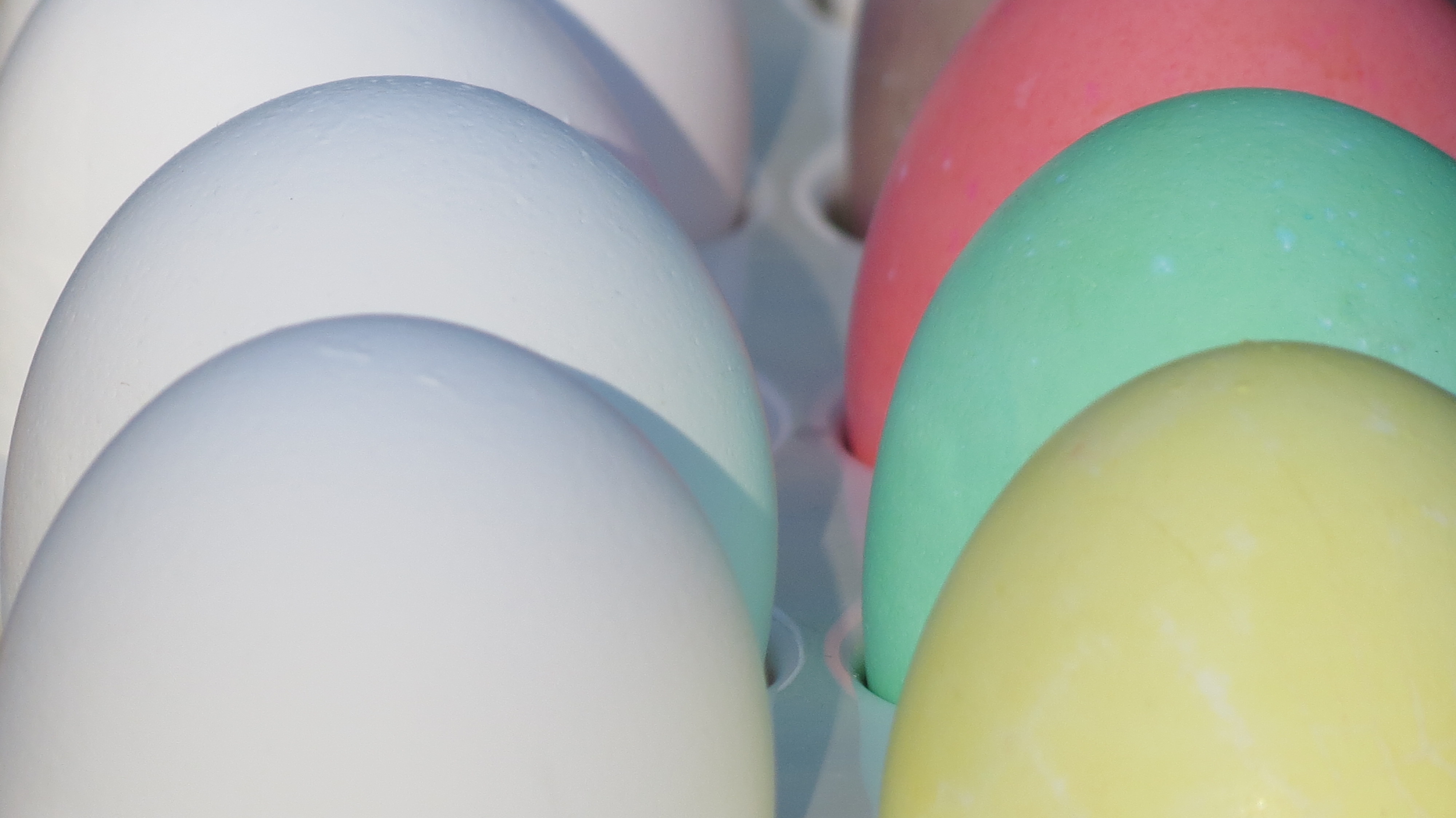
I was all set to do a before and after photo spread, starting off with white and colored eggs in the spirit of the Easter holiday, and then segue into a series of photos about my pre- and post-Spring clean-up.

Before: The implied knot garden.

My raking , though, became more of an excavation as I uncovered plants that I hadn’t seen in some time — and my imagination kicked in.  Suddenly, I was a space explorer hovering over an unchartered alien world, boldly going where no man had gone before.  Or, in keeping with the season, I was Alice down the rabbit hole — and the garden grew curiouser and curiouser.

An oasis of peony.

The Valley of Lily of the Valley.

A view of Hosta Heights.

The edge of the Great Boxwood Forest.

The Spiderwort Wood, or as the local tribes call it, Tradescantia.

The Great Desert was once a colorful jungle. What happened here?

The unfurling tendrils of the Ferocious Ferns are poised to snag an unsuspecting wanderer.

When I came to, I was back in my garden, rake in hand and surveying my work . . .

After: The implied knot garden.

. . . still unsure about where I had been.  But at least I have the photos to prove that it was a real place. 

Happy Passover.  Happy Easter.