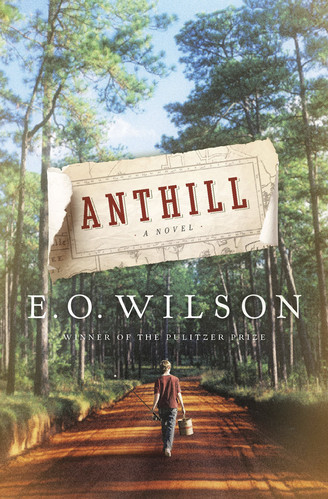
Book Review: Anthill Antics In Alabama


A few weeks ago, I saw an excellent review of a new book, Anthill, by E.O. Wilson.  Still, after reading the review, I wasn’t sure if I wanted to get bogged down in a book about ants and an environmentalist.  That’s what I thought until the other day, when I visited my local library and saw the title on the new book shelf.  Clearly it was calling me, and I took a chance.  I’m glad that I did.

The novel traces the life of  Raff Cody, an inquisitive, eco-friendly young man living “on the Gulf Coastal Plain, on the fringe of the North American subtropics,” also known as Alabama.  Throughout his boyhood, Raff is completely enamored of an undeveloped piece of pristine Alabama land.  His commitment to his environment follows him through high school into college, then onto Harvard Law and into corporate America. 

What is truly stunning in Mr. Wilson’s first work of fiction is the care the Pulitzer Prize-winning author takes in describing and celebrating the rich biodioversity that often comes into conflict with developers.  While most of the book follows the efforts of Raff to preserve his piece of the planet while balancing his corporate responsibilities, one section can stand on its own as an impressive piece of writing.
Continue reading →

Yankee Doodle Gardeners


In a previous post, I compared my father taming the wilds of his suburban yard to that of the colonists first arriving in the New World.  It’s an interesting idea, when you stop to think of the immense responsibilities facing those early Americans.  Imagine – an entire continent to landscape, the creation of a national identity for a fledgling nation.  Someone should probably write a book about it.

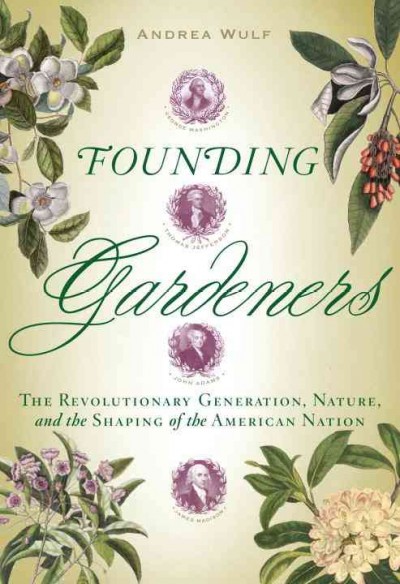
Fortunately for us, Andrea Wulf has.  Her recently published Founding Gardeners has been well-received by critics, and rightly so.  It is an impressive work that takes an in-depth look at the great figures who shaped a young nation – and she does this by weaving moments in early American history with the beliefs and philosophies of our Founding Fathers, most of whom were avid gardeners, botanists, landscapers and farmers.   In fact, they were as passionate about the idea of the United States as they were about seed exchanges and experimenting with new agricultural methods.

Rich in historic detail, each chapter is devoted to a revolutionary, starting with George Washington.  Her insight and descriptive style paints a new portrait of the men we’ve only considered to be statesmen, generals, or lawyers.  As readers, we are treated to each man’s creation of their personal gardens, such as Mt. Vernon and Monticello.

Continue reading →