The short answer is that I did a lot of sweating this summer, as I’m sure many of you did. The heat and humidity did a number on my ambition to get outside and do anything productive in the yard – and, as a result, anything productive on this blog.
Instead, Joe and I hid from the sun as much as possible, staying inside, behind lowered shades, where we took advantage of the time to read three incredible novels. (I read the books aloud to Joe. That’s something we began decades ago on road trips, something that became a daily exercise during COVID, and something that we’ve kept going today.)
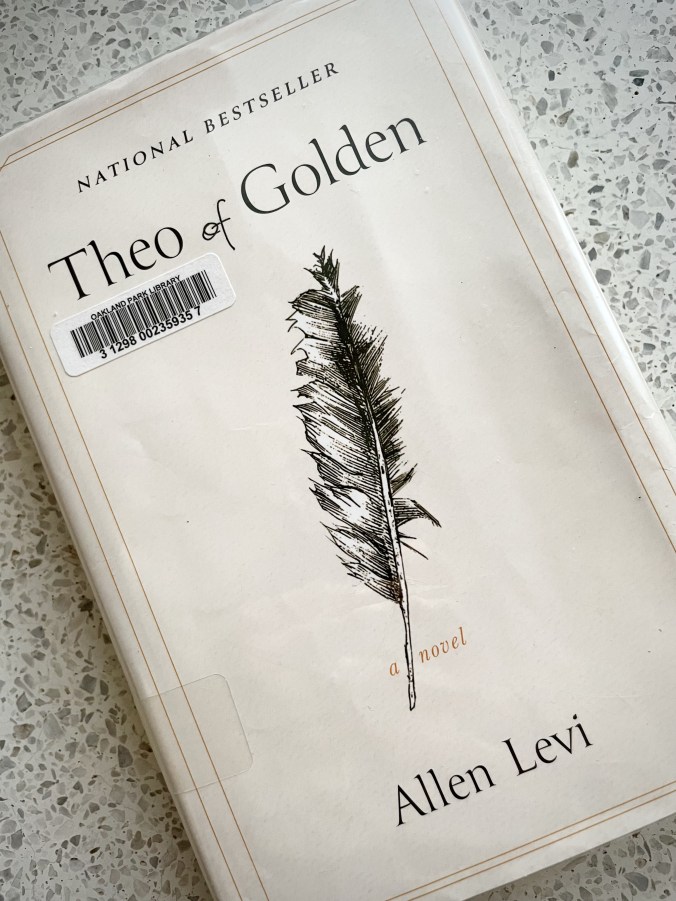
Theo of Golden, by Allen Levi, is the sort of book that stays with you long after the last sentence is finished. I think it’s one of the most moving books I’ve read in a long time, exploring themes of quiet generosity and kindness and the importance of human connection. Considering the state of the world and the country these days, I think it’s the sort of book we all need in our lives right now.
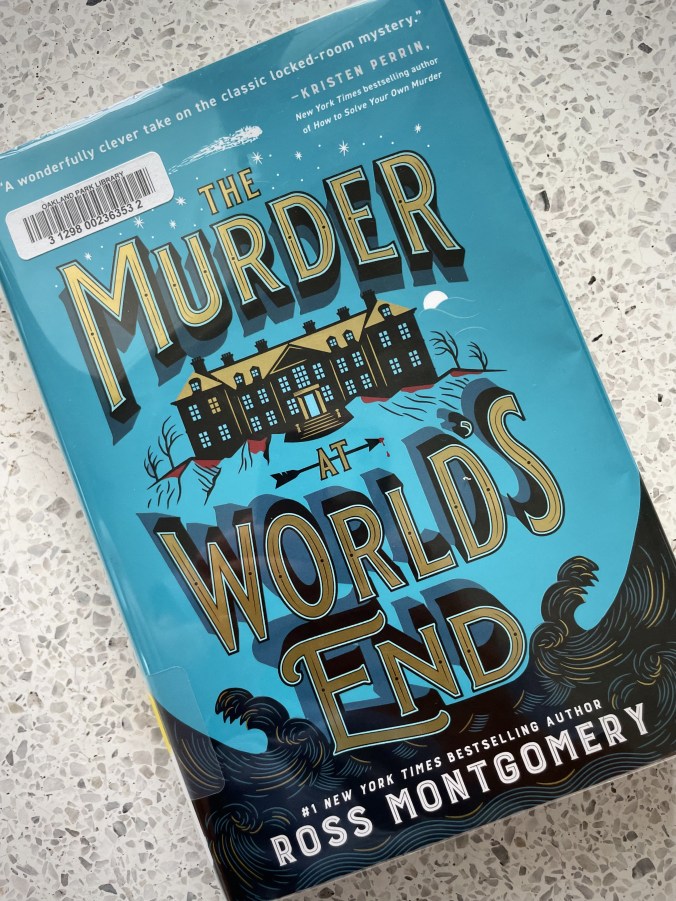
I first learned of The Murder at World’s End, by Ross Montgomery, on several YouTube book review channels. The readers/hosts of the shows described this as an entertaining surprise and fun British mystery that could easily go unnoticed in the genre if not for word of mouth. So, I’m spreading the word on this locked-room mystery with a wonderful cast of characters, humorous dialogue that keeps the story moving, and a historical backdrop. It’s a truly entertaining, can’t-put-down read.
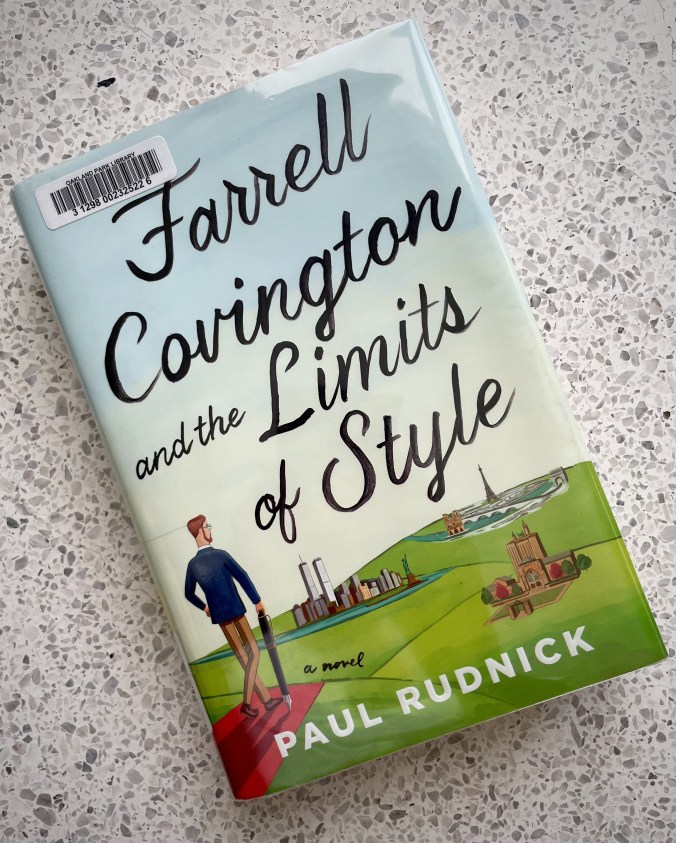
As I was perusing the new books at my local library, I spotted Farrell Covington and the Limits of Style, by Paul Rudnick. Normally, my local library will place a rainbow sticker on the spine of an LGBTQ+ novel. For some reason, this book was overlooked – so it’s not immediately apparent that it’s gay subject matter, increasing the likelihood that non-LGBTQ+ patrons may pick it up. No matter who reads it, though, the novel is like a walk through history, as it navigates the relationship of a gay couple and their circle of friends and politics over decades. It had drama, joy, humor, sadness – all of the human emotions that bind us together, no matter who one loves.
The lawn, though, didn’t care about our reading habits or the heat. It continued to grow and, as a result, needed constant mowing. Once a week, I dressed down in my lawn-mowing attire: blue bathing suit, faded blue golf shirt that’s never seen a golf course but has seen years of gardening stains, iPod set to my ‘80s playlist, wide-brimmed hat, and glaucoma sunglasses. (I don’t have glaucoma, but it’s my best option to keep the unrelenting sunlight from burning my corneas.)
On these mowing days, I was a hot mess by 9:00 am — and one morning, my very spry, thirty-something neighbor came walking by in his fashionably matched black shorts, black t-shirt, black sneakers, and air buds. My neighbor wasn’t sweating.
We smiled and waved to one another. He had calories to burn and I had a lawn to mow… and that lawn, I noticed, was looking more and more like a field of weeds. Had my if-it’s-green-it-can-stay lawn policy backfired? Am I reaping what I had not sown?
Well, sort of.
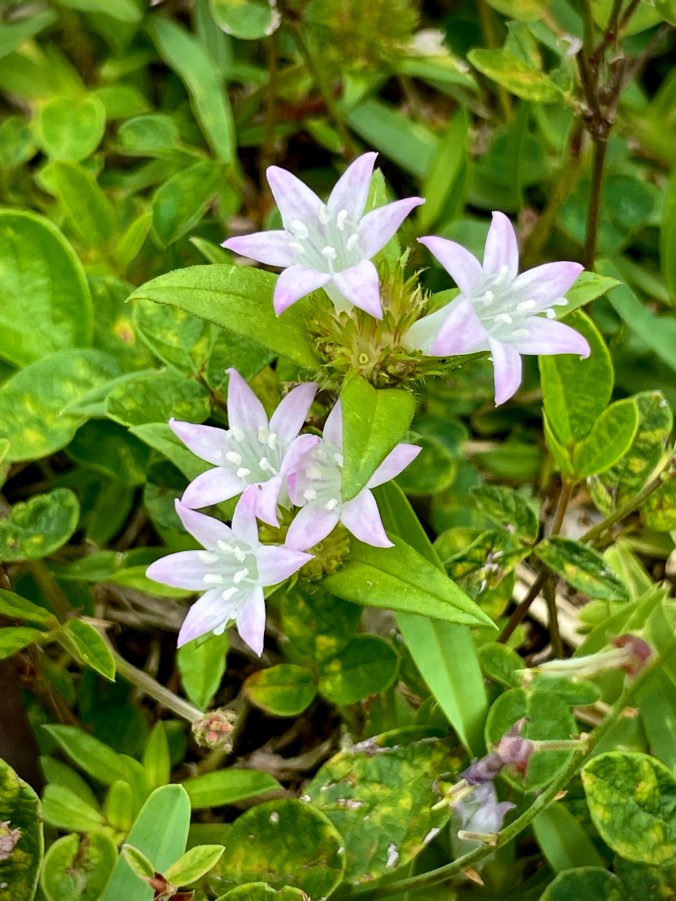
Florida Snow.
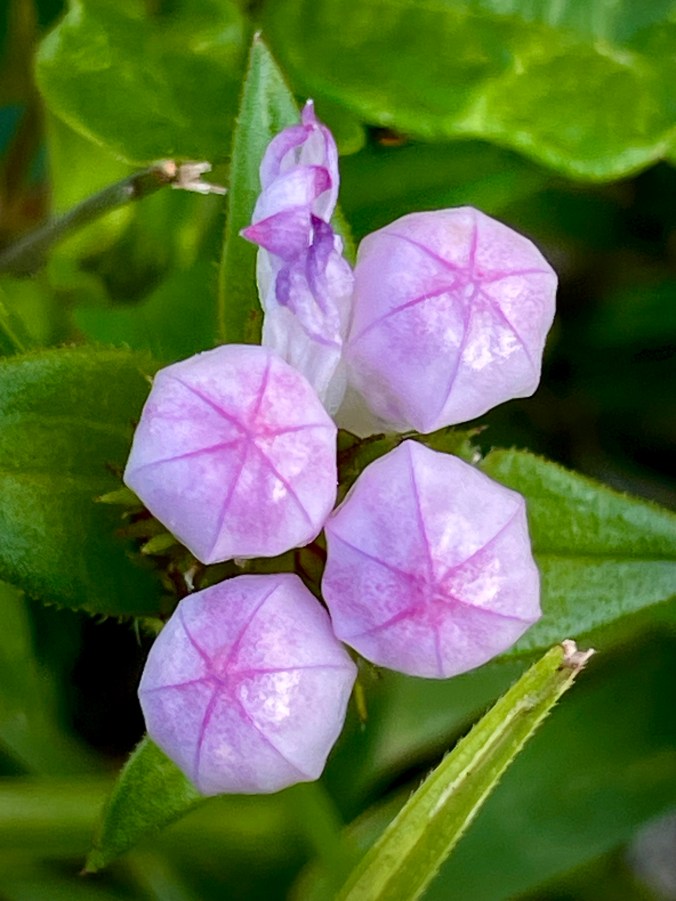
I really don’t know the names of the weeds in my yard, other than Florida Snow (pictured above and at the top of this post in its blossom stage), Richardia grandiflora, which blankets my lawn with pale lavender or white flowers. It’s also known as Largeflower Mexican Coneflower – and despite the locations in these two informal names, this low-growing, creeping plant is a South American native, introduced to Florida as an ornamental groundcover.
And cover the ground it has. Florida Snow and so many of the other weeds in my lawn have taken over. Swaths of weeds have become empires, intermingling at their edges – some are easily mown, while others have a tendency to pop up after the lawn mower passes, forcing me to do another pass.
I now knew my mission. Armed with the app, iNaturalist, on my phone, I decided to take stock of my weeds, to learn their names and their characteristics, and then to decide if they are worthy of my lawn policy.
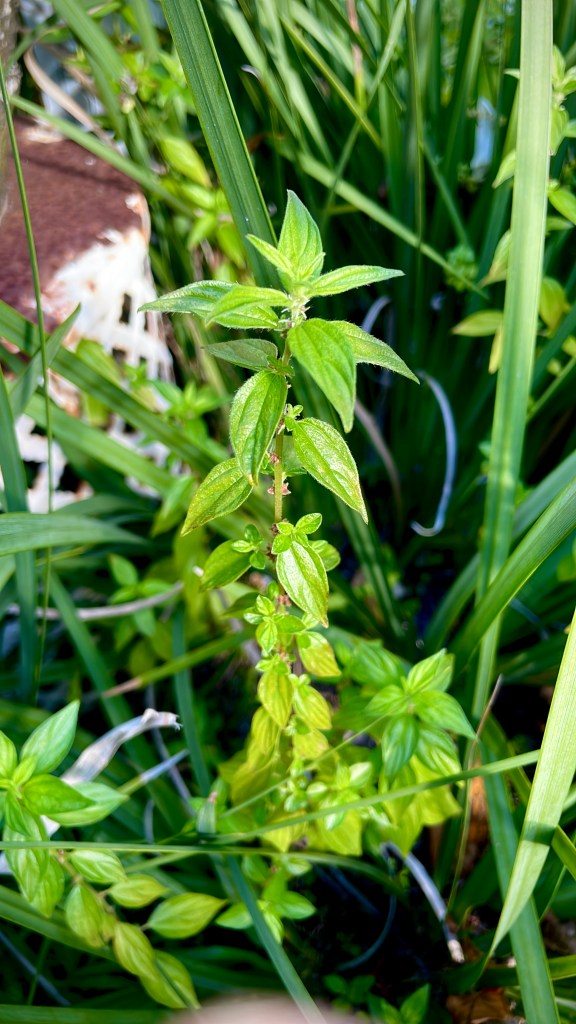
Ceylon Pouzolzia.
Ceylon Pouzolzia (Pouzolzia zeylanica), an invasive species, is a native of tropical and subtropical Asia and northern Australia, where its leaves and roots are eaten or used for medicinal purposes. In my yard, however, it’s relentless, growing through shrub beds and weaving its way through the branches on its quest for sunlight.
It also has a somewhat deep growing, orange-colored taproot or tuber and pulling this out has become a game for me. I dig my fingers below the soil level until I can grab onto the top of the root and slowly work the plant out of the ground. If I can’t get the whole thing, Pouzolzia comes back with more stems. If I remove the whole weed… nothing but satisfaction and glory!
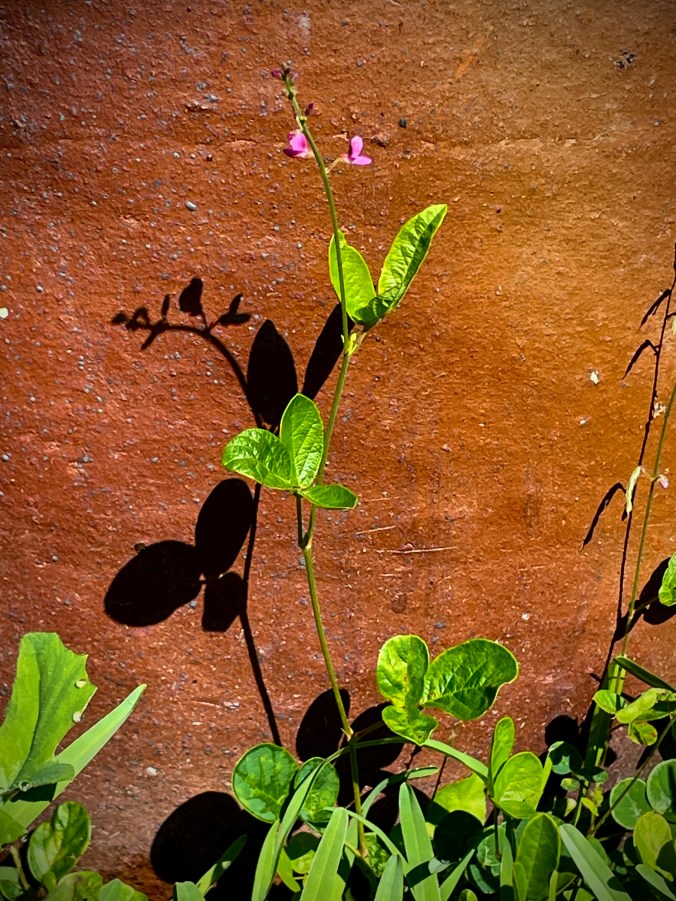
Creeping Beggarweed.
My least favorite of all of my weeds is Creeping Beggarweed (Desmodium incanum), another invasive species. Native to Central and South America, Creeping Beggardweed knows no bounds in my yard. As its name implies, its runners creep and weave their way through the lawn and beds, until the stems end in small magenta flowers.
It’s impossible to pull Creeping Beggarweed by hand, since its runners do one of two things – break or pull up plants that have grown over the runners.
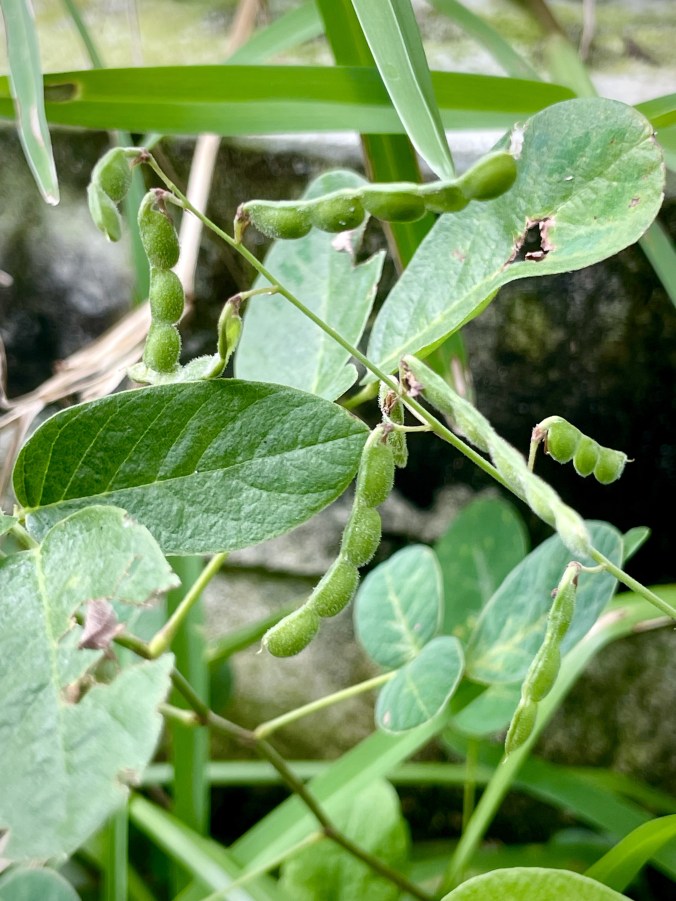
The sticky seeds of Creeping Beggarweed.
Even more frustrating are the sticky seeds (pictured below) that silently hitch a ride on my lawn-mowing clothes, sneakers, and skin, as well as the lawn mower’s blades and wheels. In caring for my lawn, I inadvertently spread the weed. (By the way, I’d also recommend keeping pets away from the sticky seeds. They can wreak havoc once attached to fur.)
Since researching Creeping Beggarweed, I’ve learned that it’s a part of the legume family and can help fix nitrogen levels. Still, that’s not enough for me to say, “Welcome. Make yourself at home.”
On the other hand, I would certainly say those words to Turkey Tangle Frogfruit (Phyla nodiflora), an actual Florida native. I’m not sure how it reached my yard, but I’m happy that it found a home here. Frogfruit has small white-to-pink flowers with purple centers that seem to float above the low growing, evergreen mat. Pollinators love it and it’s easy to manage with mowing. As I’ve learned more about it, I’m tempted to dig up some clumps and plant them in some of the beds as a groundcover.
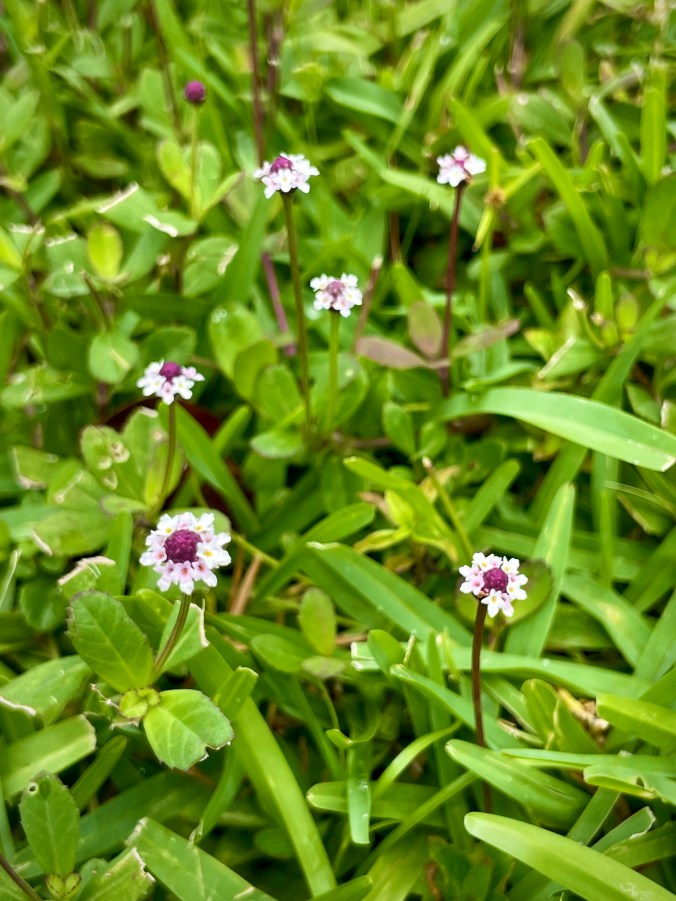
Turkey Tangle Frogfruit.
This is really just the start of my weeding assignment. There are so many more weeds to explore – and I think I’ll save that for a future post. (Speaking of future posts, my anxiety also amped up throughout the summer, primarily because of the current State of the Nation and the approaching midterm elections. I’ve tried to keep it in check, but it’s just below the surface. I may also explore this in a future post – whether or not I do, I encourage all Americans to utilize their right to vote.)
In the meantime, I haven’t reached the point of ripping up my entire lawn to create a wildflower meadow. I don’t think the city code enforcer who drives down my street several times a week would allow that. He and the city tend to like a neatly mown lawn, no matter what weeds are growing in it.
I also don’t think I’ve reached the point of chemical treatments to curtail weed growth. It actually doesn’t make economic sense to me, especially if animals, people, and wind can spread seeds from neighboring lawns that aren’t treated.
For now, then, it’s hand-based containment of the worst offenders. At best or at worst, I’ll have a bio-diverse lawn – and that’s something that makes the pollinators of the garden very happy.
And that’s the sort of happiness I’m holding onto.

