Elephant Ear Gives Birth — LIVE!


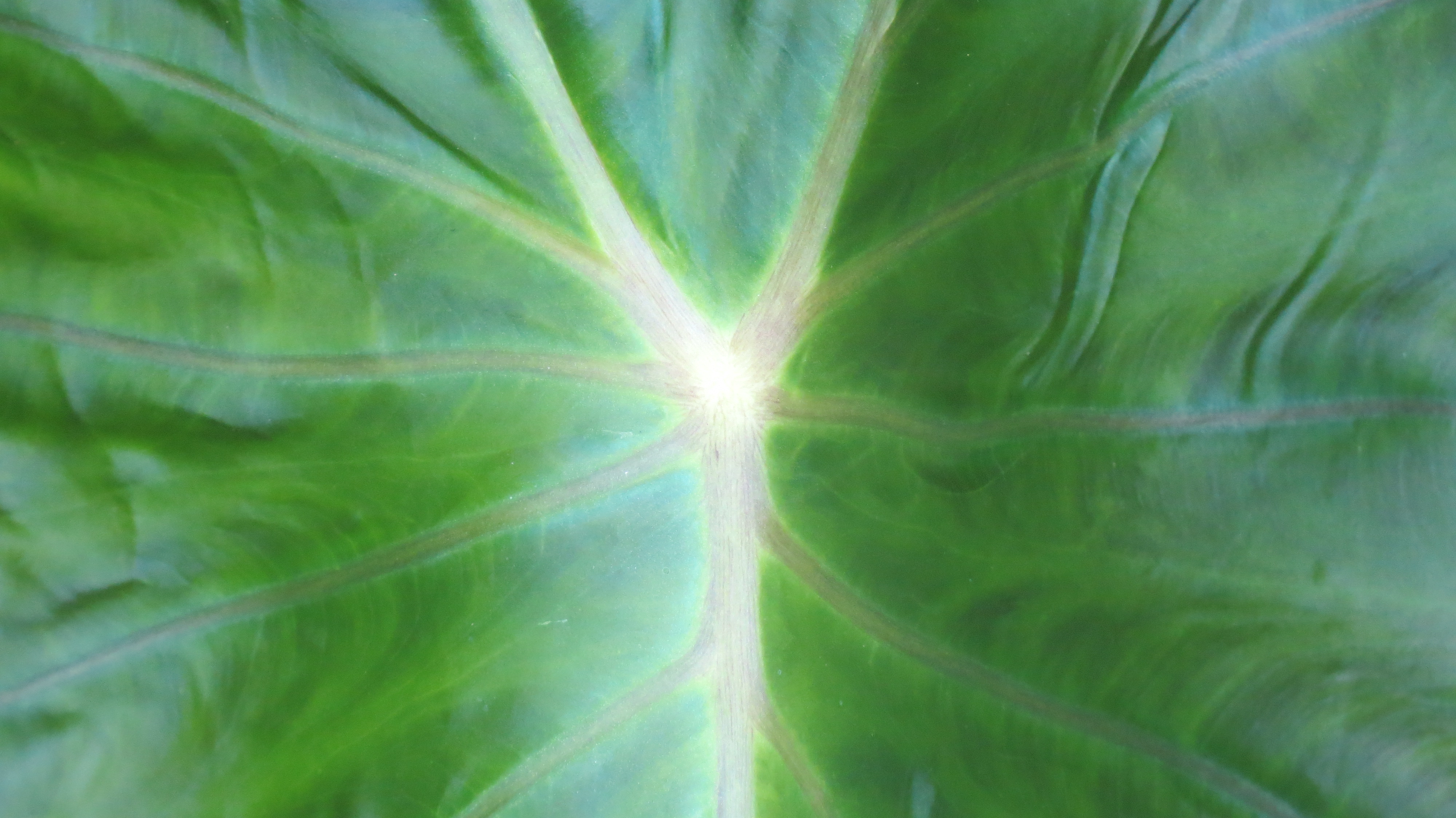
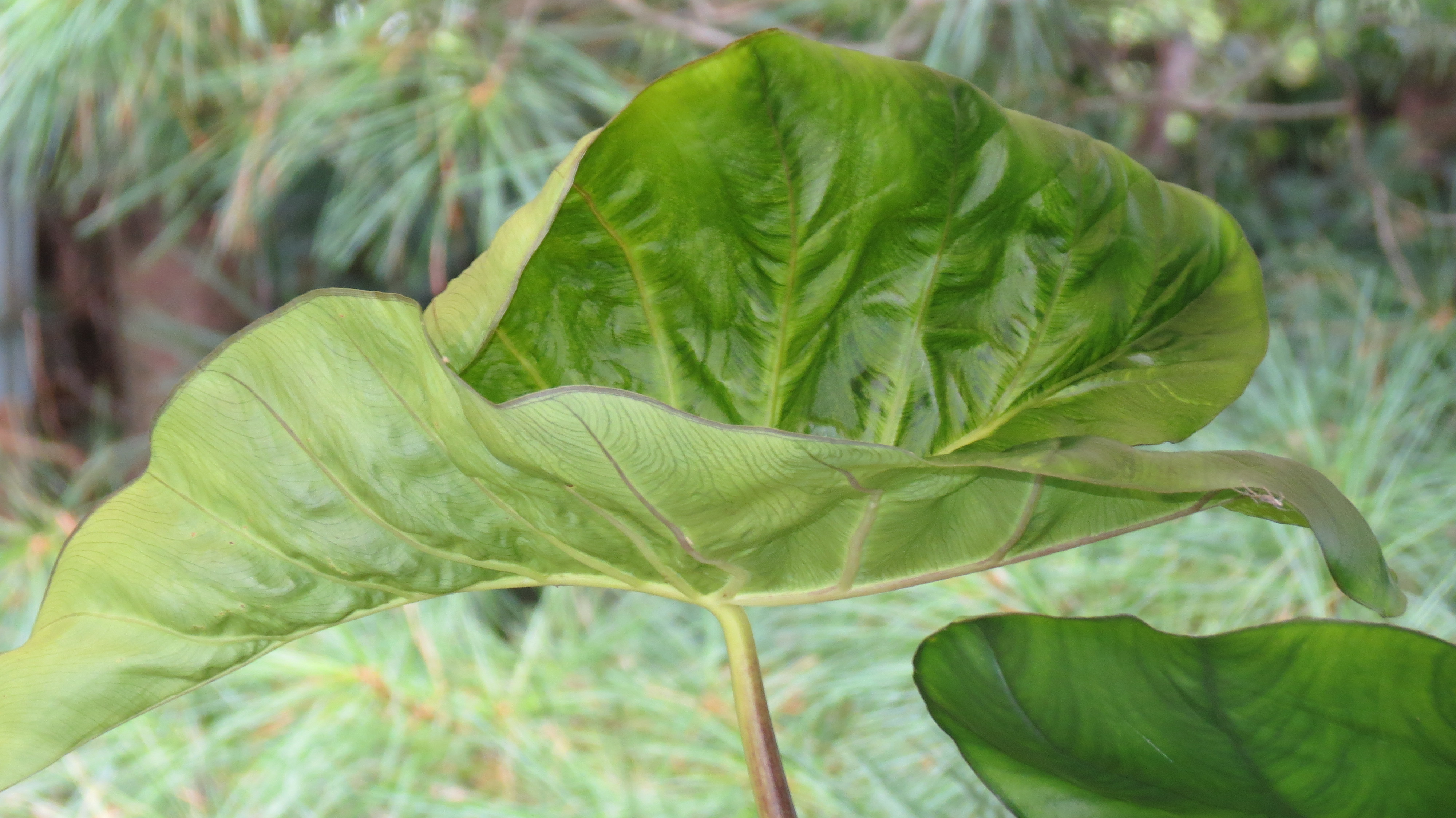
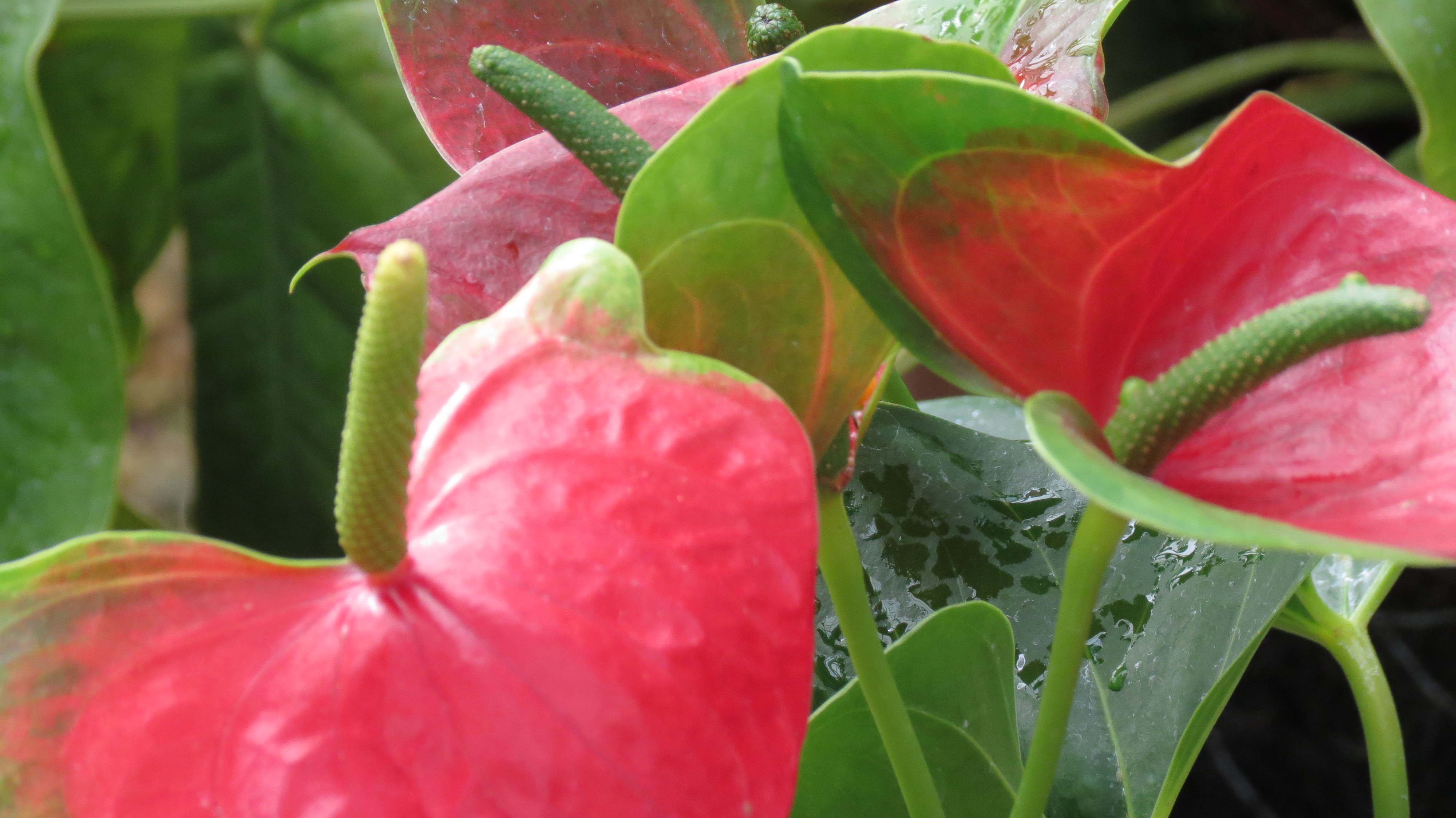
A close-up of one of one of the original Elephant Ears in the garden.

This post has been a long time in the making – months, as a matter of fact.

At the start of the growing season, I was strolling through one of the big box stores and found a corm for a red/purple/black leafed variety.  I had seen this same plant in many of the seed catalogs – but in this store, the price was more than right.  It was an elephant-sized bargain.

Once the plant began to grow, however, the only thing true about the advertised color was the stems – strong and purplish black.  The leaves, on the other hand, were greener (and smaller, by the way) – not the same bright green as my other Elephant Ears, but green with hints of darker tones.  In other words, they weren’t the red/purple/black on the packaging.

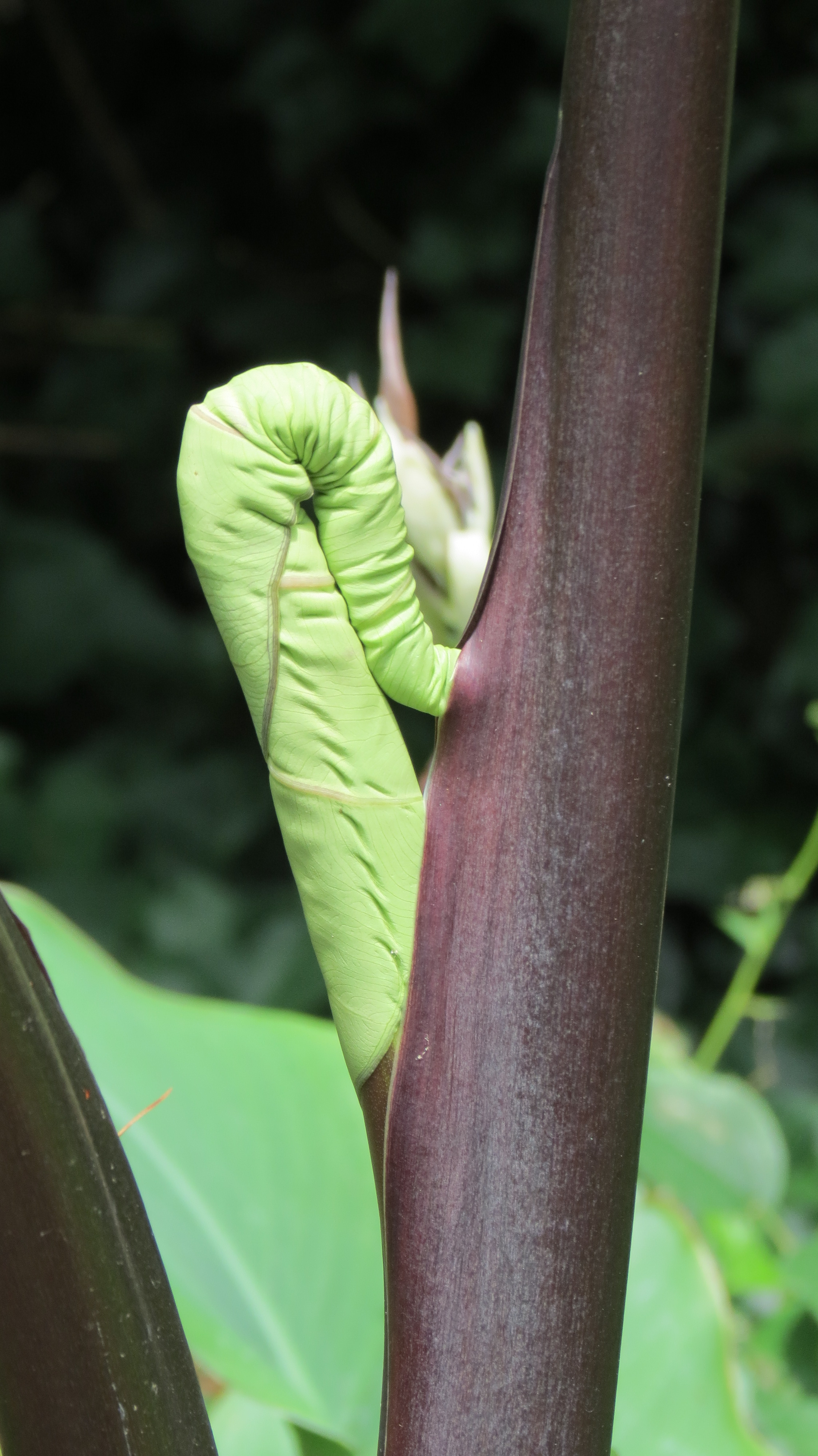
A close-up of the new arrival. It may not be as green as the original, but it still has its charms.

Although slightly disappointed with the result, I soon found myself drawn to my new plant, especially the glossiness of the leaves.  They were so shiny, in fact, that they looked fake, as if they stepped right off of the Munchkinland set in The Wizard of Oz.

And then I witnessed the miracle of an Elephant Ear leaf birth – the agonizingly slow unfurling of a new leaf emerging from the purple/black stem.

Over the next few weeks, I stood in the same spot to document the debut – like a proud papa tapping on the nursery window.

Weeks since it first emerged from the stem, the leaf is still stretching and growing to to its full size.  Whoever said they grow so fast these days, never had an Elephant Ear.

Happy gardening!

A Hummer Of A Summer Day


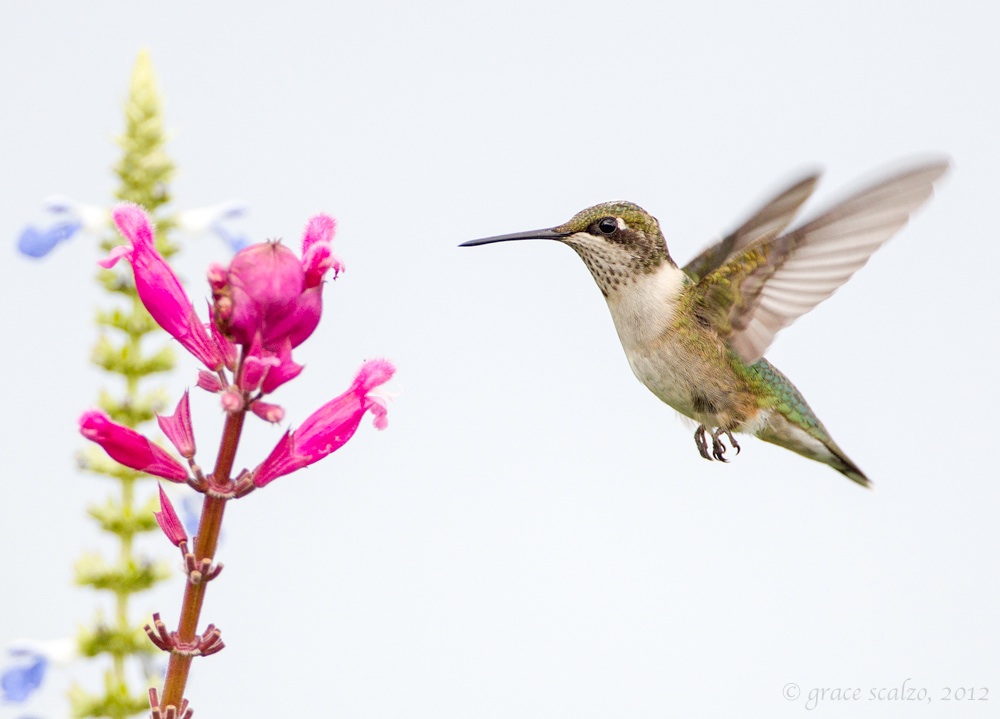
Photo courtesy of The Baiting Hollow Hummingbird Sanctuary

I don’t think I’m too far off when I say that most people are fascinated by hummingbirds.  Delicate yet swift, they confound gardeners, bird watchers, and photographers alike – all of whom wait patiently for one to appear.  And when one does, an excited whisper passes through the crowd, as if Beyonce has just walked up to the feeder.

“Oh, there she is.  She’s right there.  Oh, look at her . . .” Then, as quickly as a hummingbird appears, it zips away.

I haven’t seen a hummingbird since I was a child, but that certainly hasn’t dampened my fascination.  So when my friend Michele suggested a field trip to the Baiting Hollow Hummingbird Sanctuary, I jumped at the chance.  Would I see one?  Would I even be able to snap a picture?

Located on a bluff overlooking Long Island Sound, the Sanctuary is more than a labor of love for its founder, Paul Adams.  It is a passion.  His three-and-a-half acre garden is, at first glance, in a natural state – filled with native trees that provide perches and nest building materials for his guests of honor, hummingbirds that migrate from Mexico and Central America.

Then, all around, are splashes of sweet nectar and color, thanks to butterfly bushes, salvias, cardinal flowers, trumpet vines, honeysuckle, and a selection of tropical flowers to make the hummingbirds feel more at home.

There is a small, tree-shaded area for parking and, fortunately, I listened to Michele about wearing a good pair of walking shoes.  The ground is uneven, and there are some crudely built steps to help visitors negotiate the ups and downs of the garden.  And be sure to mind the hand-painted signs – all of which are there to help you safely explore.

The first stop for Michele, me, and two other friends, Jeannie and James, was a hollow, accessible by a tighly packed dirt steps.
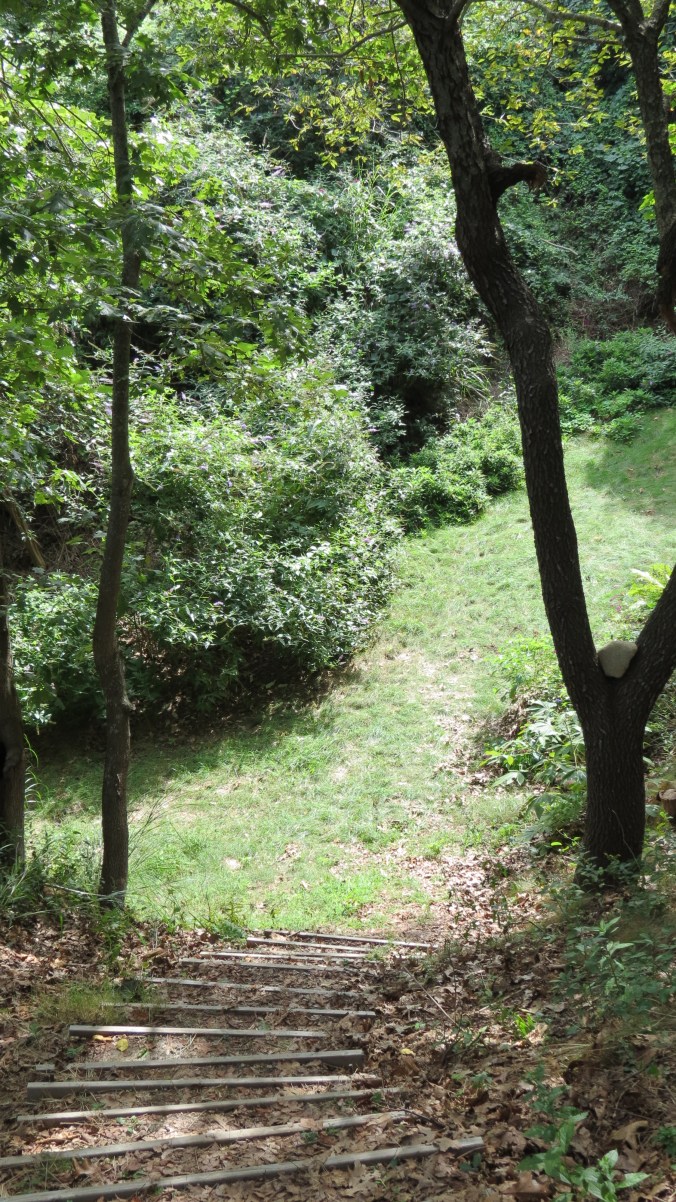
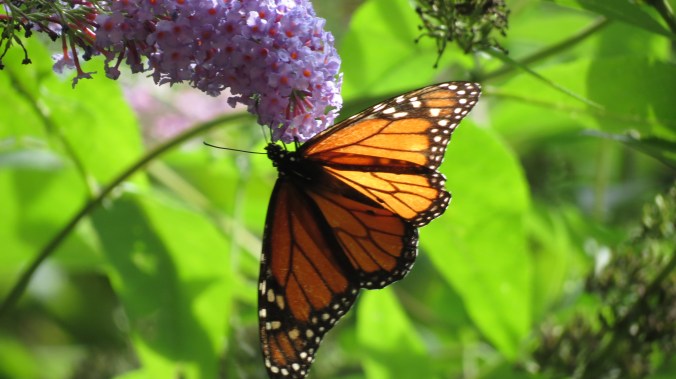
At the bottom, a large sign reminded us to be quiet – and it was like entering a church.  We were dwarfed by walls of butterfly bushes, accented with the stained glass hues of butterfly wings.

We then strolled under a canopy of wild cherry, oak, and beech trees, all the time keeping our eyes glued to the various feeders, hoping to catch a glimpse of a hummingbird.  My hands gripped the camera.

Eventually, we made it to the cottages, one of the most peaceful locations on the property.  Here, visitors sat patiently in Adirondack chairs, cameras in hand, waiting for a hummingbird to arrive by a feeder or to enjoy the nectar from any of their favorite flowers.
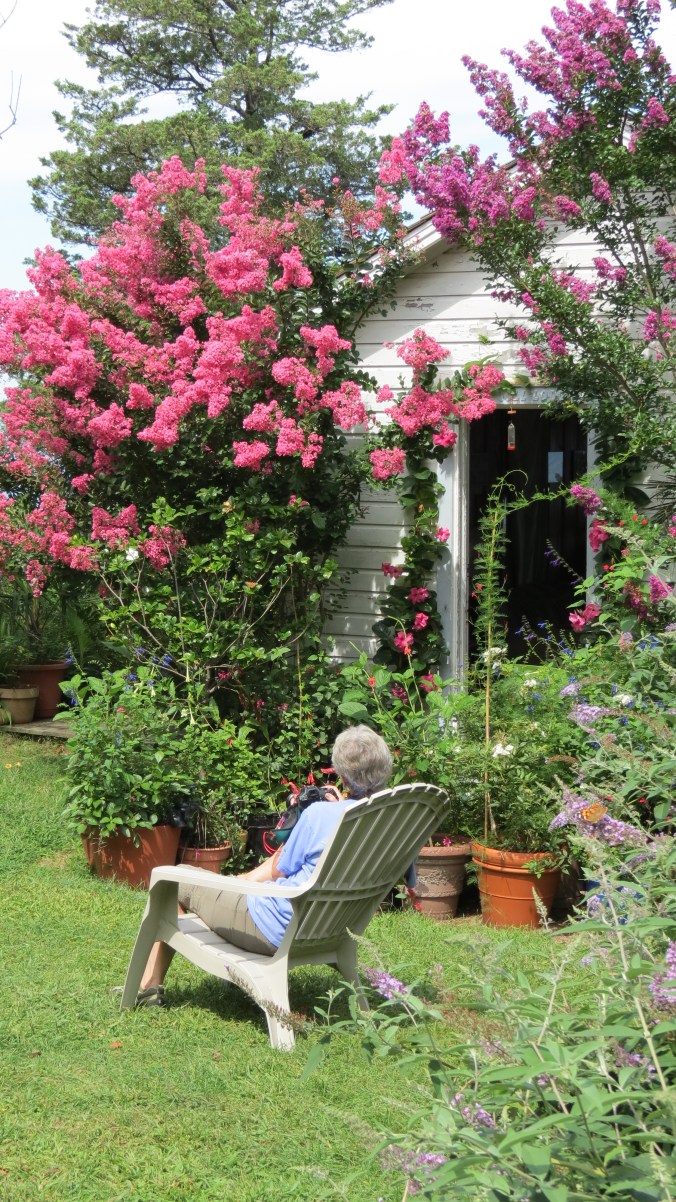
Behind the cottage closest to the bluff, there was an amazing view of Long Island Sound and the steady buzz of bees.  A hummingbird made a quick appearance, but then flew away faster than I could say, “Hum.”

We ultimately returned to the garden between the two cottages, one of which is where Mr. Adams spends his summer months.  The rest of the year, he’s a professor of neuroscience at Stony Brook University, on Long Island.  On this visit, we were his pupils, as he taught us about the life and habits of hummingbirds.  Then, in midsentence, he said, “There’s one at the feeder now.”

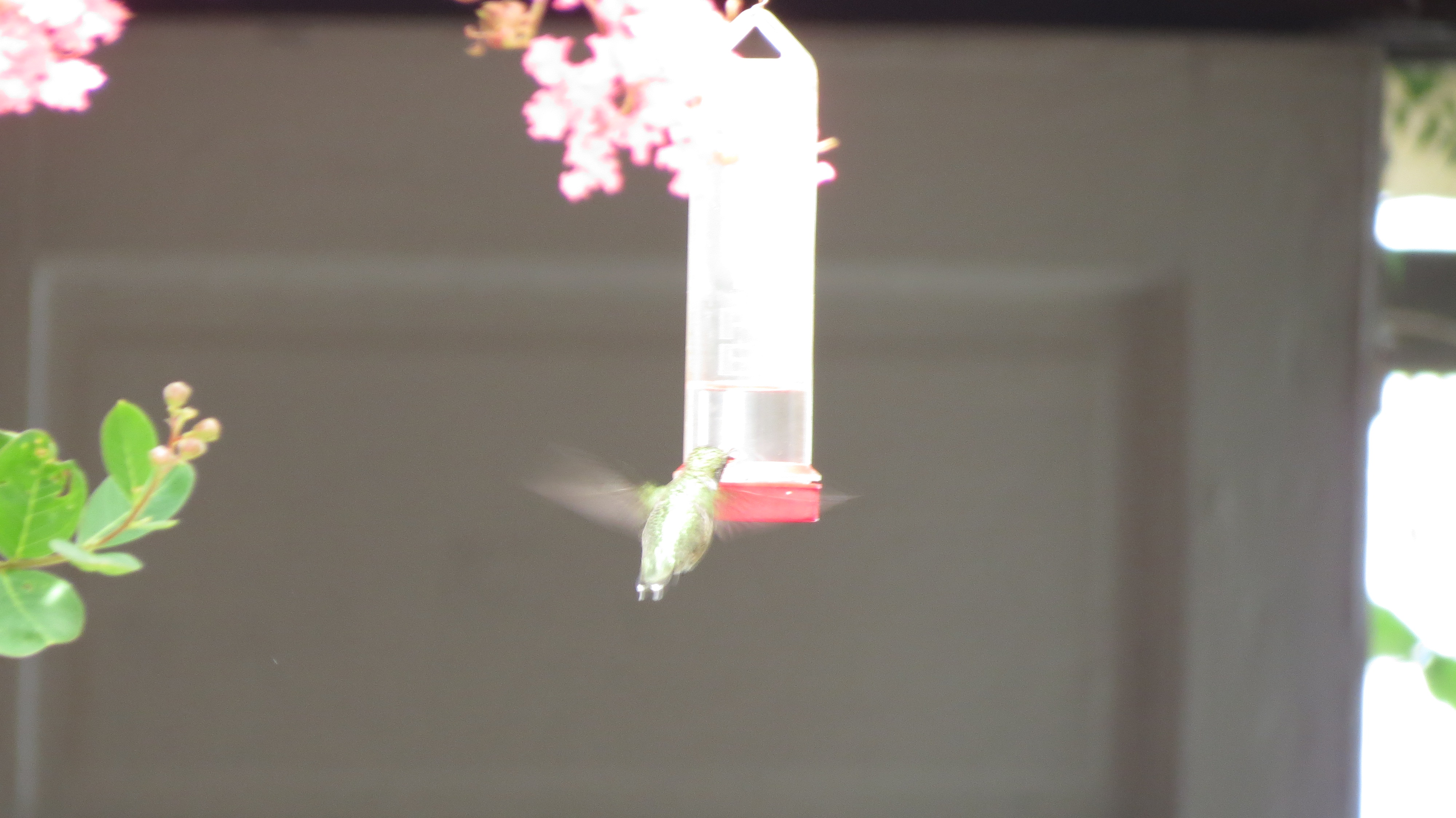
Every head turned and there was the collective whisper of awe.  Instinctively, I snapped a photo.  There was no time to zoom and I hoped the digital camera would be able to focus faster than a hummingbird’s wings.

At some point, I began to wonder if the hummingbirds were playing with all of us.  It’s as if they knew we were waiting to capture their image, and when they saw all of the cameras take aim, off they flew.  One even hovered above the deck where Mr. Adams was speaking to us, but as the cameras were lifted, so too did the hummingbird.  Gone.

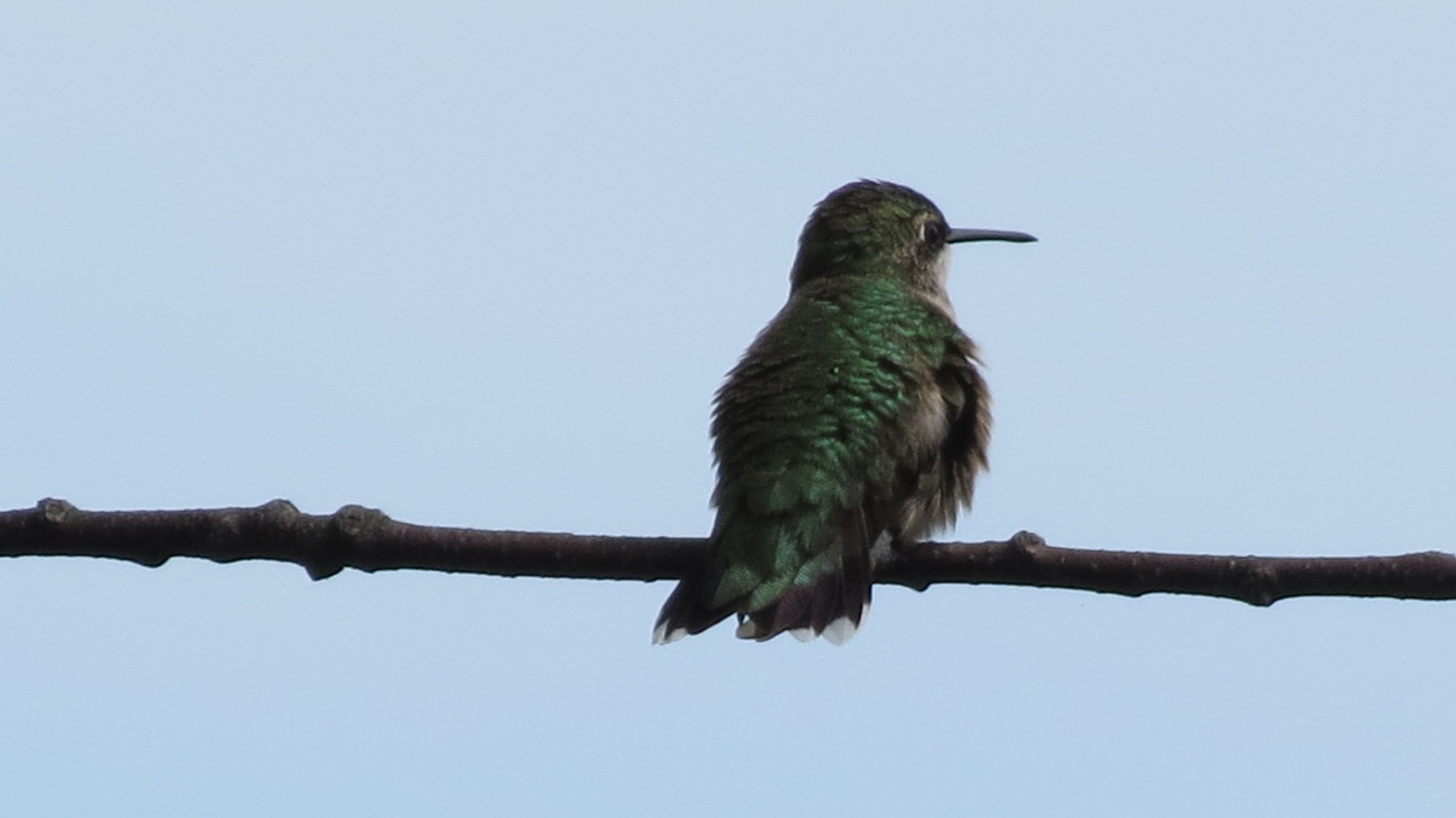
Just as I was about to pack up the camera, one hummingbird seemed to feel sorry for us and sat on a branch, preening and posing itself.

And I had my close up.  At last.

Not only is it remarkable to have seen a hummingbird in the wild, it’s an inspiration to meet a man so passionate about his love that he is willing to share it with the public for free.  Yes, you read that correctly.  The Sanctuary has no admission fee.  In fact, Mr. Adams will not even accept a monetary donation (his website encourages donations to other specified organizations), although sturdy old chairs and plants are always welcome.

The Sanctuary is only open in August.  For more information about the species, the Sanctuary, the battle to protect it from development, starting your own hummingbird-friendly garden, as well as days and hours of operation, please visit either the website or blog.

Bloomin’ Update 32: Lost In The Planting Fields


Anthurium

Gardening is a gift that keeps on giving – and this is especially true of the Planting Fields Arboretum, a jewel of a gift on Long Island’s Gold Coast.

William Robertson Coe, who made his fortune in marine insurance, built the mansion in 1921 in the style of a 16th century Elizabethan country home – but it’s the park-like 409-acre estate, designed by the Olmsted brothers, that brings gardening enthusiasts, walkers, brides, and myself back in time.

Continue reading

Book Review: Vegetables (A Biography)


I love my veggies.  I love them raw, steamed, roasted, grilled, sautéed and pureed.  I just don’t grow them.  In fact, other than the rare bonus packet of tomato seeds that comes with my annual seed order, I avoid growing vegetables.  There, I’ve said it.

Don’t get me wrong.  I love the idea of growing and harvesting my own food, and the whole locavore movement (although I do have issues with the word.  I think it sounds like “crazy eater.”) — it’s just that I’m more in love with the idea than the actual task.  And the sad part is, I know I’m missing out on something.  On many things.

Part of my aversion comes from the multitude of garden pests.  I know what they can do just in my flower garden – and squirrels have been known to push me over the edge.  I just don’t think I could handle a) the vigilantism of protecting my food from varmints and b) the disappointment of seeing my dinner on someone else’s plate.

I also feel that with vegetables, it’s either feast or famine – and both are ill-timed.  When I’ve tried to grow tomatoes in the past, there were very few for summer salads.  Instead, they all arrived at once at the end of the season – and let’s not forget the brown bags full of green tomatoes and an apple to help them ripen.  The same goes for strawberry.  Yes, strawberry – because that’s about all I was able to enjoy as a freshly picked dessert and I know I’m not alone.  Here is some proof from Tidy Gardens by Jane.

Continue reading

Field Trip: Brooklyn In A Box — And On A Bridge


If you should ever find yourself visiting Brooklyn, do yourselves a favor and walk — down boutique and café-lined avenues, tree-shaded streets and, by all means, across one of New York City’s most beloved landmarks, the Brooklyn Bridge.  The bridge, which links the boroughs of Manhattan and Brooklyn for walkers, bikers and drivers, was, at its opening in 1883, the world’s longest suspension bridge.  Its location provides visitors with spectacular views of the NY skyline. 

Looking from the bridge toward downtown Manhattan. The buildings under construction (just behind the cables) are part of the World Trade Center site. The one on the right (with two cranes on top in a V-shape) is the Freedom Tower.

While there are many people who jog and bike across the bridge, I prefer a slow stroll along the pedestrian promenade.

Visitors insist on leaving their mark. Rather than vandalizing the bridge, they now lock their messages to the bridge.

International visitors also join in.

As you face Manhattan and look right, you can get a view of the Empire State Building.

Look left, and it’s the Statue of Liberty.

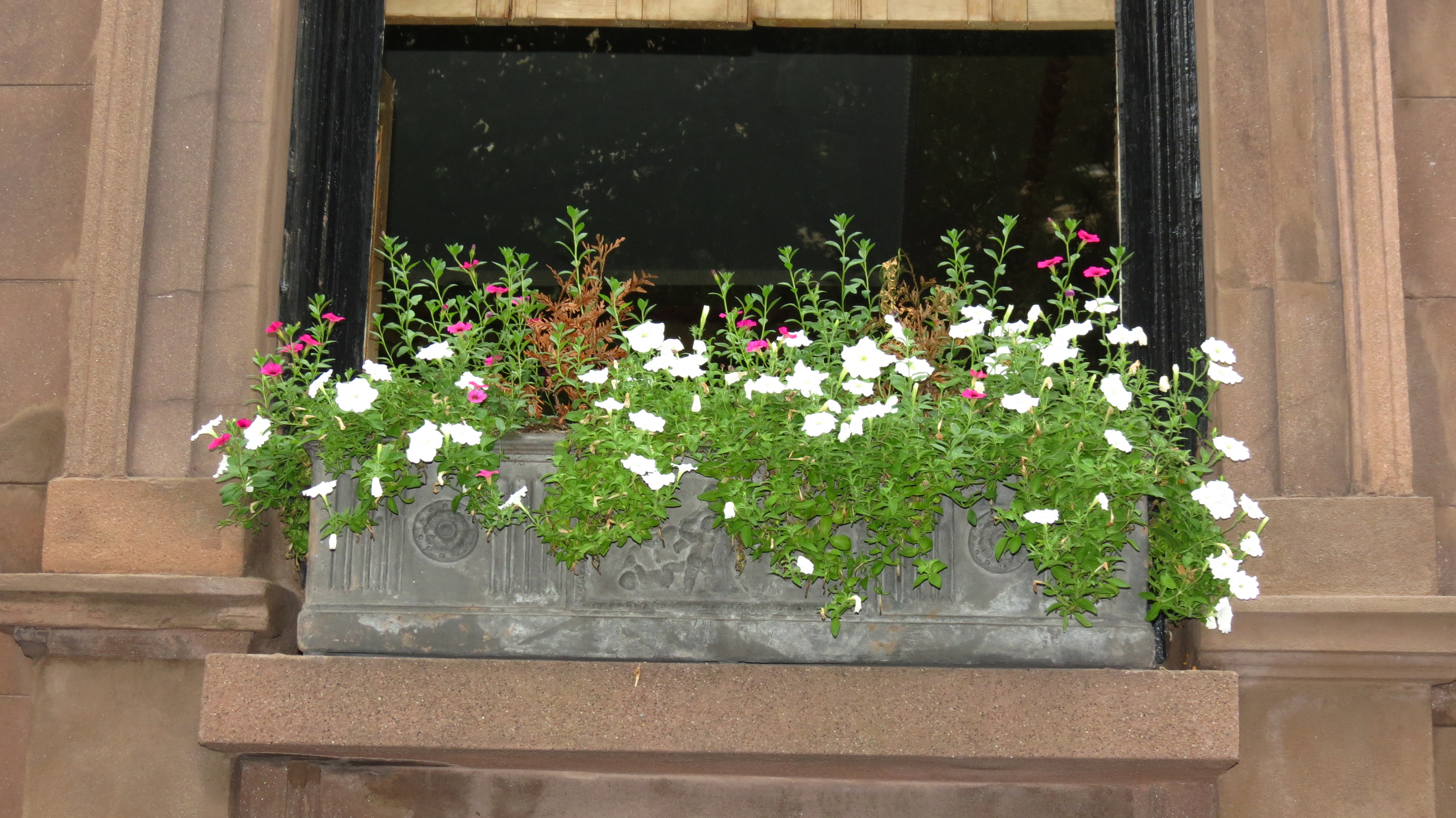
Arriving on the Brooklyn side of the bridge, you will be in Brooklyn Heights.  Here is a chance to wander off the main thoroughfare and get lost among the smaller streets and their dazzling show of window boxes.

When it comes to planting in pots or window boxes, I tend to keep the same plant in its own pot – and then group the various pots.  I never mix and match in the same pot – more out of a lack of confidence and fear that I will end up with a mismatched jungle.  Yes, window box planting is a skill of which I am truly in awe, and I am completely surprised by the variety that these Brooklynites have on display. 

There are grasses.

And tropicals.

And ferns.

And boxwoods.

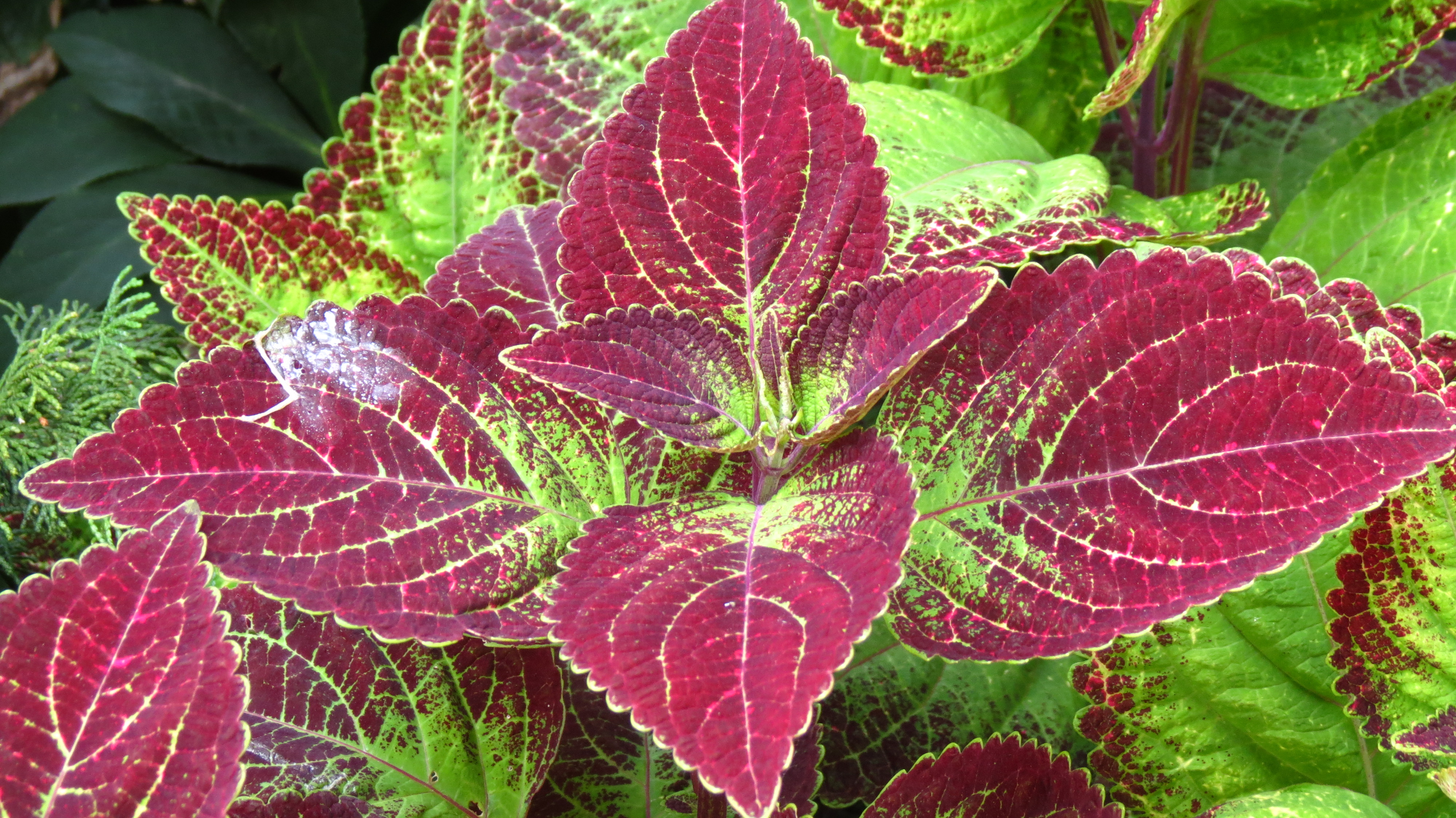
And colorful foliage.

And urns.

And an “A” for effort.

And an entrance that takes my breath away.

Clearly, all of this walking burns a lot of calories — but this is Brooklyn, one of the best boroughs in which to replenish those calories.  Although I didn’t take photos of our food, here is what and where Joe and I ate.

Lunch: Totonno’s in Coney Island for some thin-crusted pizza.  It’s a small place and certainly not fancy — but it is one of the pizza parlors that is always touted as the best among pizza afficionados.  You cannot order by the slice, so Joe and I ate a small pie — that’s four slices each and that kept us quite full.

Dinner: Still full from lunch, we opted for a small bite at Dellarocco’s in Brooklyn Heights.  An order of meatballs was perfect — but the tables around us were overflowing with pizzas and calzones.  Delicious!

Dessert:  Yes, there is always room for dessert — so we returned to Joe’s childhood neighborhood for some spumoni, which is an Italian ice cream, at L&B Spumoni Gardens.  YUM!

Yes, this was definitely a day worthy of an all-capital YUM.

Field Trip: A Greenhouse Hopes To Grow In Brooklyn


There is nothing quite like humidity in New York.  With its density and weight, it has a presence – and it likes to make its presence known, often making the blacktop-enhanced summertime heat seem that much more oppressive. 

And that kind of weather is perfect for a car-subway-walk field trip.  The idea was inspired by a recent article in the New York Times which focused on the Greenwood Heights neighborhood of Brooklyn, and its historic cemetery.
Situated on 478 acres, Green-Wood Cemetery was founded in the 1830s and is now the final resting place for more than 550,000 souls: politicians, soldiers, actors, dancers, freed slaves, designers, and journalists among them.  At one point in the 1850s, the cemetery, with path after path named after plants, even rivaled Niagara Falls as a tourist destination.

On this very hot and very humid day, there are few visitors approaching the ornate gateway.  The sedum in the iron birdbath seems to enjoy the heat, but the big-leafed coleus is much more content in the shade of the enormous archway.

The only noise is the squawks from above.  The bird call sounds familiar but out of place in Brooklyn – but there, nesting in the center spire of the gate, is a flock of parrots.

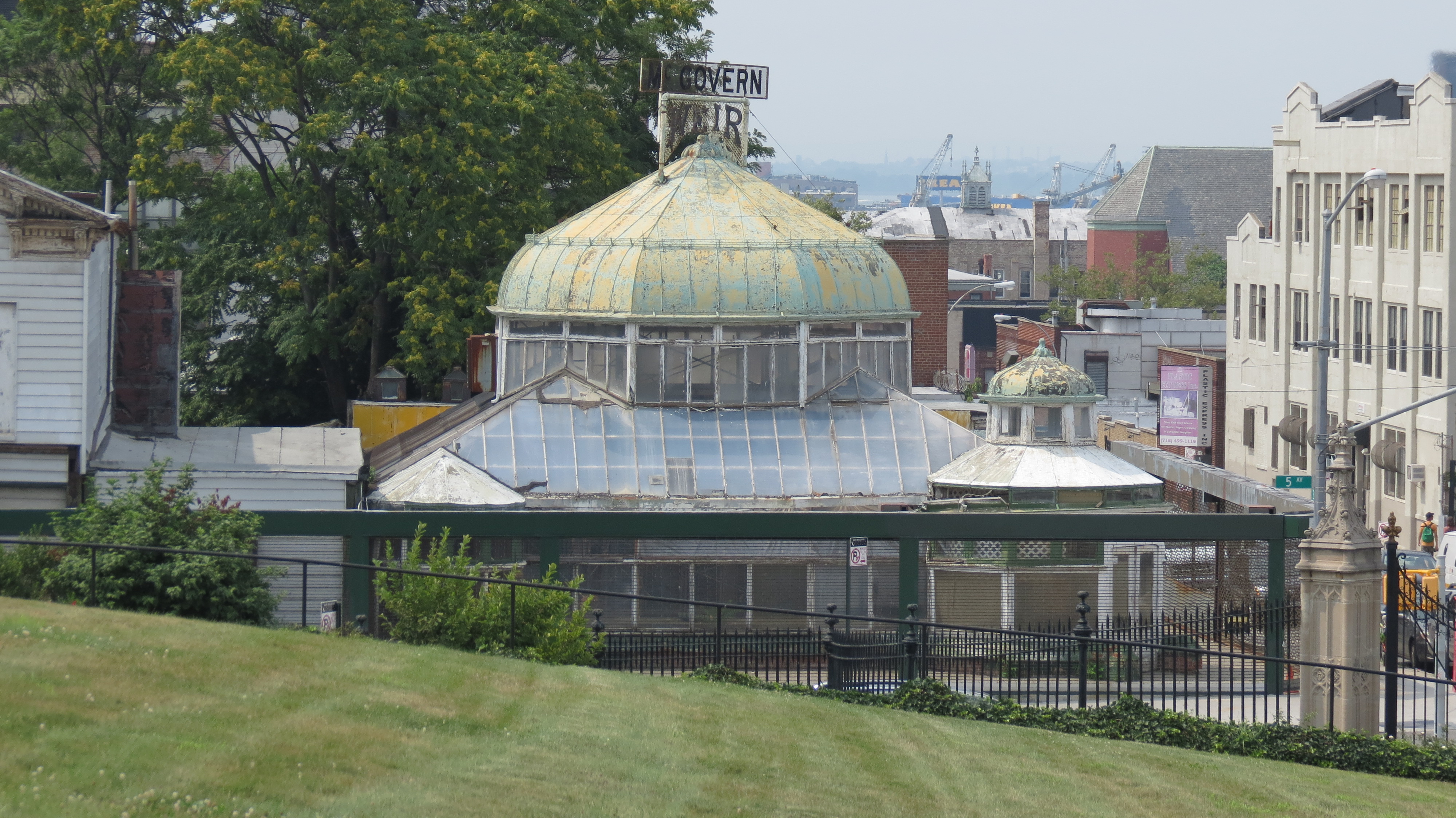
Just across from the cemetery’s main entrance are the remains of a wood-and-glass greenhouse. 

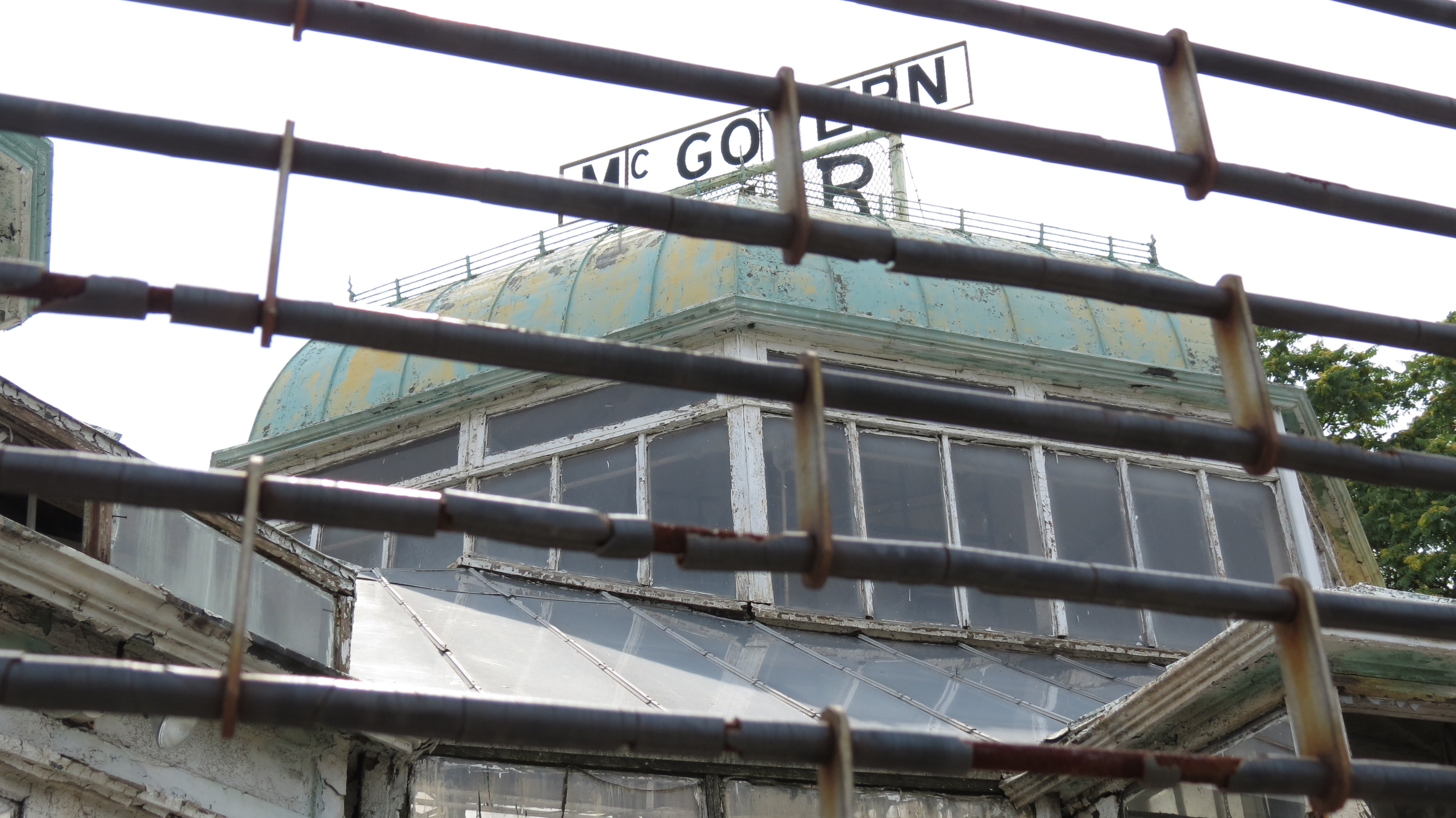
The greenhouse once belonged to James Weir, Jr., who had also built more than 20 other greenhouses and nurseries throughout Brooklyn.  In 1971, the McGovern family, also in the florist industry, bought the property.

Over the decades, the greenhouse, now considered a landmark as the only Victorian-era greenhouse still standing in New York, has fallen into disrepair, with peeling paint, rotting wood, crumbling foundations, and missing and broken panes of glass.  A year ago, however, Green-Wood cemetery purchased the greenhouse and is in the process of turning it into a visitors’ center.  And so, this relic now sits behind security gates, waiting to be reborn.

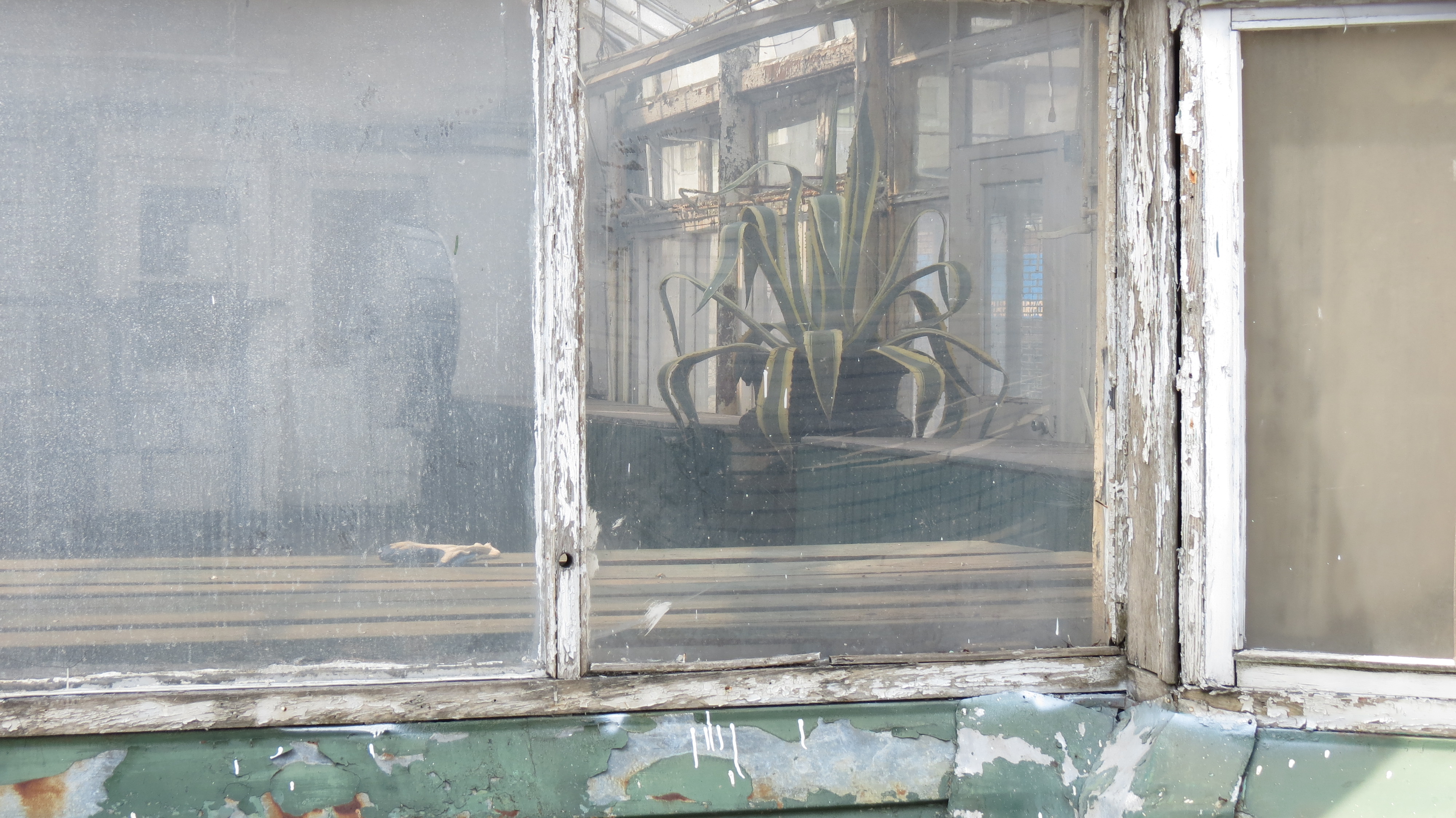
I’m not sure how long this agave has been here, but I like to think that as I look through the hazy glass, I am looking at the ghost of a plant from long ago.

Next Post: The Brooklyn walking tour continues with views from the bridge and a parade of window boxes.


What Not To Tell The Kids


I’m the first to admit it.  There’s a lot about gardening that I don’t know – so much so that I can’t even pretend.  What I do know, I have been able to gather from books, conversations, television shows, and, now, from fellow garden bloggers and reader comments.

None of this, though, is enough to stop me from the seasonal shake of my head when I pass some gardens and non-gardens and wonder, “What were they thinking — or not thinking, as the case may be?”  And once that ball gets rolling, my list of garden pet peeves gets longer and I can’t help but imagine the conversations that might be happening.

“Mommy, where does mulch come from?”

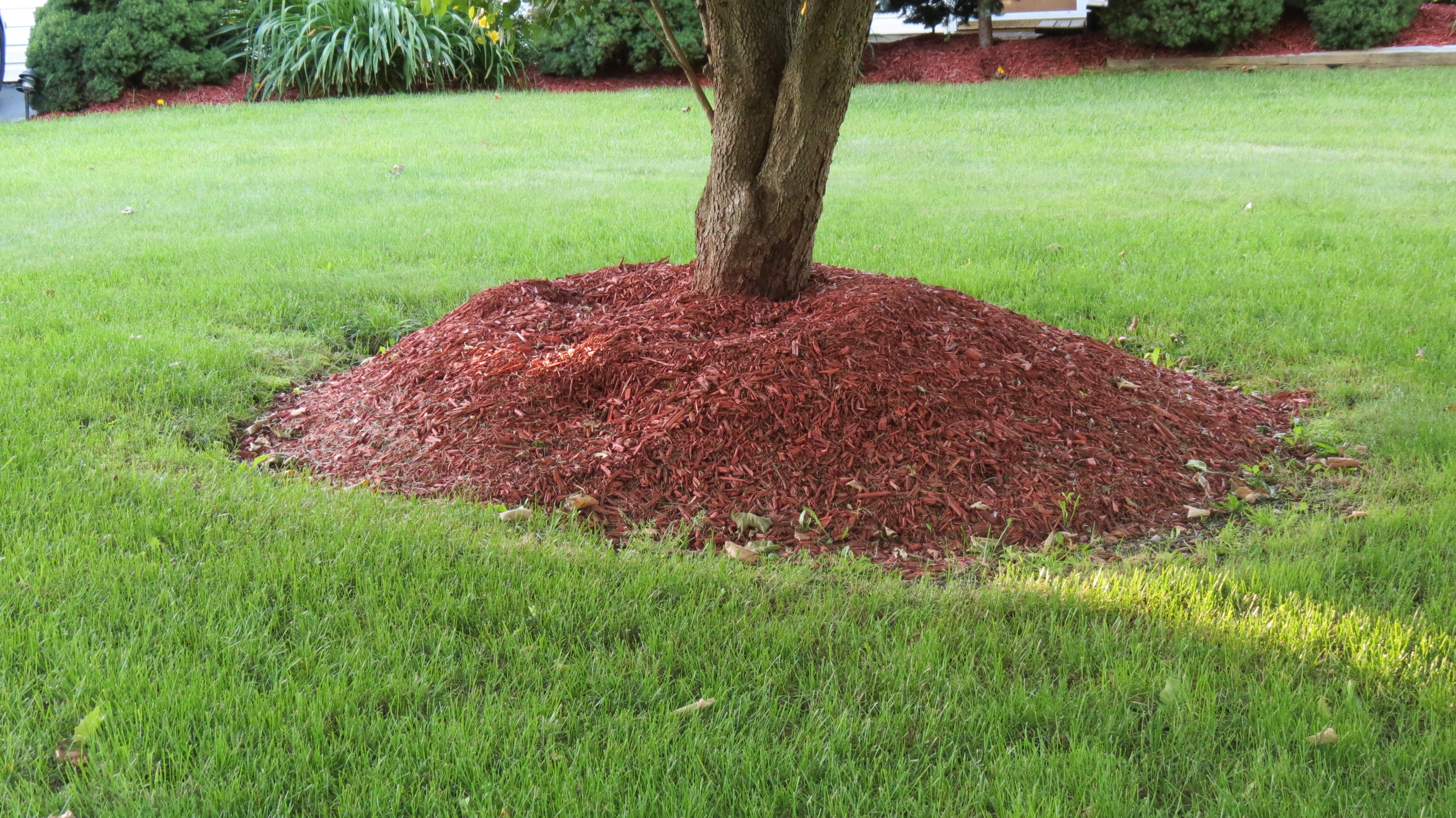
“Well, dear, deep in the center of the earth there is a hot core of molten mulch.  And each spring, as the air gets warmer, the molten mulch moves toward the surface – usually around the base of trees because their roots have punctured the mulch bubble.  Then, mulch pours from the ground around the tree, piling up higher and higher as it cools.”

So that would explain it – because I can’t think of any other reason to explain the appearance of cone-shaped mulch volcanoes that pop up each spring on residential and commercial properties alike.

I have always been of the mindset that mulch is good.  It’s decorative and practical, as it helps to keep roots cool in summer and warm in winter, as well as limiting weed growth and aiding in the soil’s moisture retention – but too much of a good thing can be bad.  Mulch that is too deep can have a negative effect on a tree’s bark and root functioning, and, therefore, on its overall health. 

Grab your rakes, America.  It’s time to save countless gardens and yards from these devastating mulch flows.

“Daddy, where does seedless watermelon come from?”

“Well, honey, um. . . . .”

Exactly.

When did “seed” become an ugly word?  The seeds are part of the fun that comes from eating a watermelon – that’s why spitting was invented.  The rest of the fun comes from the rich color and the sweet juice that I remember dribbling down my chin and onto my t-shirt.

Seedless is even used as part of the advertisement.  It says, “See how convenient I am.  No seeds here to take up your time.”  Now we have a generation that actually thinks seedless is a good thing. 

Maybe it’s me.  Maybe I just haven’t been fortunate enough to actually eat a delicious seedless watermelon – and I’m done trying.  Each time I sample some, I feel as if something is missing – more than just seeds.  When I finish eating a slice and look at my seedless plate, I start missing the way watermelon used to be – and, for that matter, how so many other things used to be.

Yes, in our quest to go seedless, we have lost something.  Color.  Flavor.  And a childhood memory.

Where, oh where, has my watermelon gone?  Oh, where, oh where can it be?

“Mommy, why are our flowers melting?”

“Not now, sweetheart.  Just eat your seedless watermelon so we can go watch daddy and his mulch volcano.”

If I remember my high school biology, plastic is not organic and so it cannot reproduce – and yet, more and more plastic flowers are appearing in gardens, window boxes, and flower pot displays.  Even the anole in the above photo looks perplexed — or at least as perplexed as an anole can look.  In fact, I have even turned it into a bit of a game – I spy. . . plastic tulips in the privet hedge.

Is there ever a good excuse for using plastic flowers in the landscape?  Maybe it has to do with conserving water – you know, using plastic for greener living.  Or, maybe it has to do with finding the perfect flower strong enough to withstand summer’s heat and/or winter’s cold – but at some point, even plastic daffodils need a rest. 

My fellow gardeners, we must put a stop to these plastic pushers.  If not, I fear we are witnessing the dawn of a new invasive species – one that cannot be composted away. 

And now that I’ve gotten all this off my chest, I’m gazing upon a fourth peeve: the naked yard.  One of my neighbors has nothing planted , and I can only imagine how they explain that to the kids.  Hmmmm.

Bloomin’ Update 31: The Good, The Bad, & The Ugly


Before I get into this post, I wanted to send out a special thanks to those of you who took the time to add a caption to the previous post.  Your creativity and humor were  wonderful treats after I arrived home and logged in to catch up on blog duty.  I’m still smiling and LOL-ing!

I’m not a fan of the Western.  I have always found the film genre too gritty, too violent, and too filled with underhanded, unsavory characters.  I like comedy, drama, melodrama, a soundtrack, and always a happy ending.

But when Joe and I arrived home at 3:00 a.m. after a marathon drive from Fort Lauderdale, we entered the house as if we were a couple of sun-baked cattle rustlers in our own Western.  Unshaven.  Sweaty.  Delirious.  Exhausted.  Even our mouths were tired as we spoke to on another with jaws that were just shy of clenched.  Ironically, our newly repaired covered wagon — I mean the car — was in better shape than we were!  Any thoughts or worries about my garden would have to wait until daylight — or at least until I was prepared to see daylight.

The forecasters, however, had other ideas about daylight.  It seems that the next few days would be filled with heavy thunderstorms, strong winds, and possible hail.  What’s a gardener in search of a happy ending to do? 

Continue reading

Heading Home — And It’s All Write By Me


Hooray!  The car is fixed and we’re finally heading home.  Since I am out of wireless and Internet range, I’m leaving the post writing to you.  Remember, keep each other entertained until I get home. 

We had a visitor the other day.  At first, from the corner of his eye, Joe thought it was a rock.  I thought it was a helmet — because, well, it makes perfect sense that a helmet would randomly appear outside the front door, right?  I know.  A definite “duh” moment.

In any event, the rock/helmet came to life with legs and a head.

Continue reading

Repost: The Sounds of Summer


 I’m still in South Florida, waiting for my car to be fixed.  The mechanic informs me that the transfer casing needs to be replaced and there is only one brand new part in the entire country and GMC cannot locate it.  There is, fortunately, a used part in Orlando that has arrived and just needs to be installed.

My mind is worried about my New York garden and the clean-up that is waiting for me there.  Three weeks is an awfully long time to be away, and I’m sure that there is mowing and weeding and staking to be done.

And my heart and prayers are in Colorado.  It seems silly, doesn’t it?  To be worried about car repairs and gardening when there is so much pain and absolute sadness surrounding the tragedy in Aurora.  With each news update, I long for simpler times.  Innocent times.  Times  when evil didn’t walk into a movie theater — or a school or a mall or a military base . . . and the only sounds to be heard came from life.

It’s positively steamy outside. I’m watching the sprinkler water the zinnias on the far side of the pool, and completely drowning out the sound of running water is the non-stop, rapid-fire droning chirps of the Cicadas. Some might consider the sound a nuisance or torture, but I find the chirping can trigger memories and it sparks my imagination.

As a kid, we always incorrectly referred to these buzzers as locusts — but no matter what we called them, no sound reminds me more of the dog days of summer than the Cicada’s song. It’s like a sizzling sound effect, perfectly accentuating the sun’s rays scorching the garden. A never-ending sizzle, that forces me to stand as still as the hot, humid air. As one chorus whines to an end, another starts up, and so on and so on.

Continue reading