10 Reasons I Love Elephant Ears


Have you ever sat under an Elephant Ear leaf?  I’m not sure what made me even think to do this, other than my curiosity to see one of my favorite plants from a whole other perspective, but as I looked at the leaf’s underbelly, I reflected on all of the reasons that make me love Elephant Ears.

1. Well, there’s the simple fact that I can lay on the ground and look up at the leaf.  It’s a great place to take an afternoon nap, enjoy the shade, and look at the play of sunlight hitting the leaf’s upper surface.  From below, it glows, much like stained glass does when its illuminated.

2. The color.  Look carefully at an Elephant Ear leaf, top or bottom, and see the swirls of shades of green.  It looks as if it’s painted, and the greens always look refreshing.

3. They’re waterproof.  Each morning it’s a treat to see pearls of dew gathered in the folds of the leaves, or perhaps what’s left from an overnight rain.  When the morning light hits the beads, they look like drops of mercury or silver.  I often think that if I find myself on “Survivor,” I would roof my shelter with Elephant Ear leaves, or at least use one as an umbrella.

4. Size matters.  As the season progresses, leaves unfold larger and larger.  One leaf can measure 3 feet.  I have found that when I keep the plants in a pot, they remain stunted.  Plant them in the ground, and they let their presence be known.  Similarly, one large leaf placed in a vase can be just as dramatic in the house.


5. Taste of the tropics.  As a Zone 6 or 7 gardener, depending on the specifics of the Cold Hardiness map, I like to create a tropical feel in the yard.  Elephant Ears are more than able to create the illusion that my Long Island garden is in South Florida.

6. Easy care.  As much as I dislike fall clean-up, it’s necessary when it comes to Elephant Ears.  Right around the first frost, I’ll cut back the leaves, dig up the bulbs, and let them cure for a few days.  I’ll try to shake out much of the excess dirt.  The dug bulbs are then placed in paper bags and covered with peat moss.  Lately, I’ve also tried plastic bags, and this also seems to work, as long as I keep the bag open.  Either way, I place the bag in a cool, dry place, such as the cement bunker that is behind a bedroom closet and under the front steps.  In the spring, I’ll bring out the bulbs, pull off the dead roots and tops, plant them in pots with the tip just below the soil (maybe even peaking out slightly), place them in a sunny location, and give them lots of water.  Once they sprout, in the ground they go.  Elephant Ears are slow to start, but with water and heat and humidity, they take off. 

7. They bleed.  I learned this the hard way during my first fall clean-up of Elephant Ears.  After cutting the stalks, I noticed that my clothes became stained with a rusty red color.  I then noticed the ends of the stalks with the same color.  The stains are permanent, which means that I now have work clothes specifically for Elephant Ear cutting, and they are stained with memories of previous prunings.

8. They multiply.  I started with a single bulb, and now I have enough to fill one bed, and more to intersperse with hydrangeas that have not reached full height.  In fact, I was so overwhelmed with babies, that I brought the extras to work and shared some Elephant Ear love.

9. They’re fun.  The leaves almost bounce in the wind.  I will often walk by them and tap each leaf like a drum to make them bounce.  Besides, visitors will always smile when they see them, especially the larger leaves.

10. Have you ever seen a new leaf?  They emerge from the stalk of an older leaf, like a tightly wound sword.  And then they open, like a sail unfurling.  The larger the leaf, the greater the opening.

 That’s it for now.  Happy Gardening!

Bloomin’ Update 9: Hydrangeas Hate Hurricanes


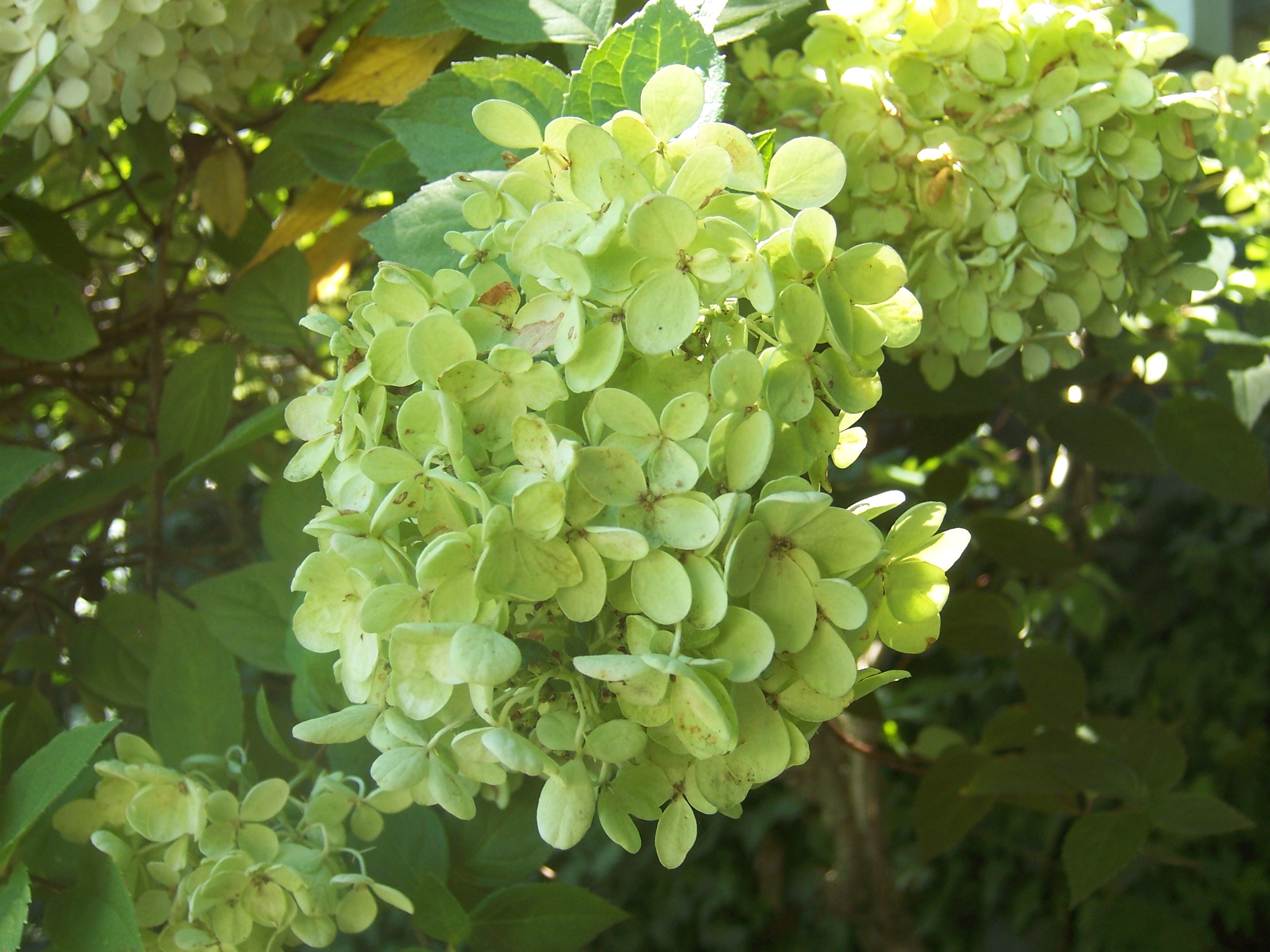
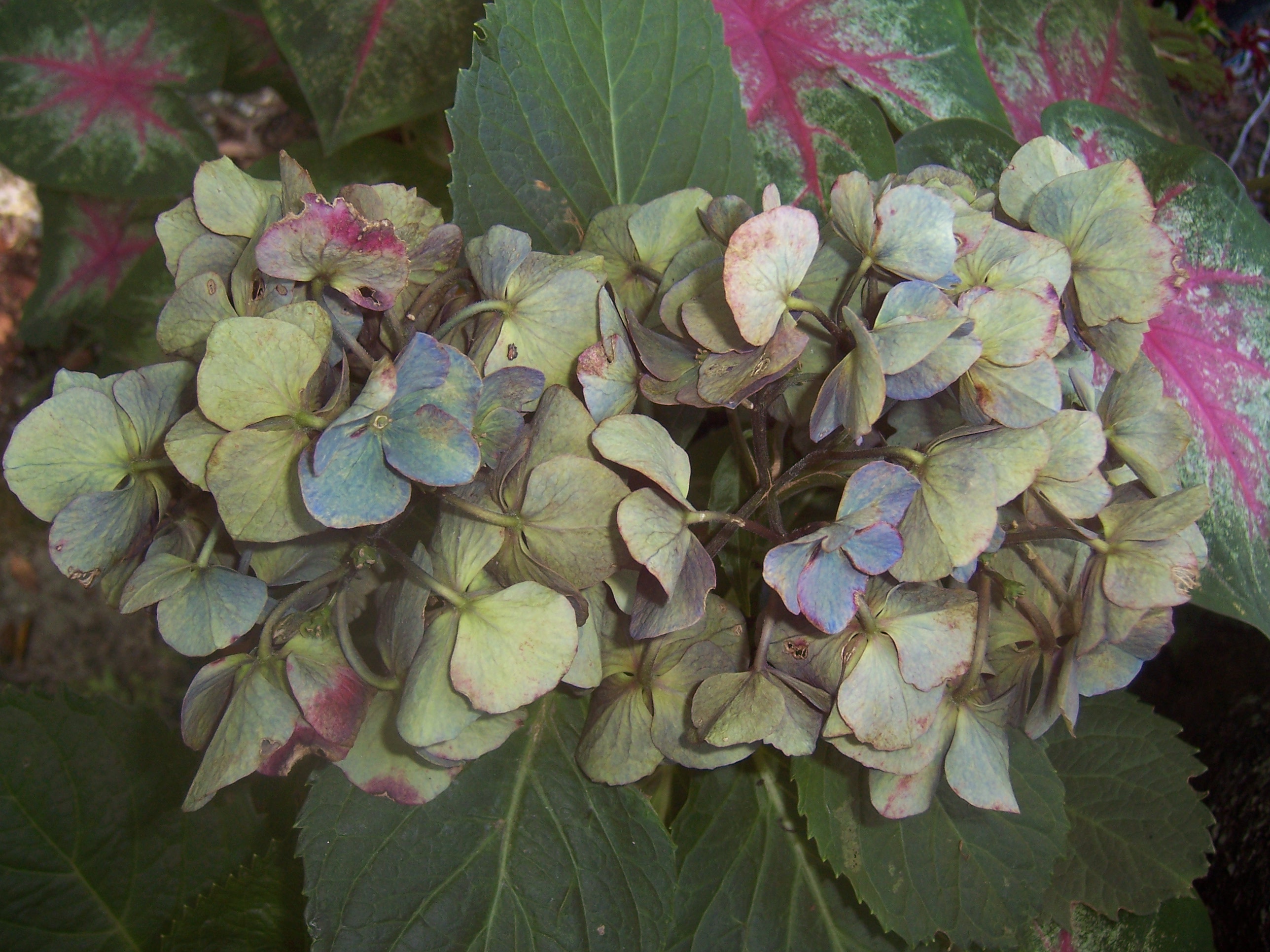
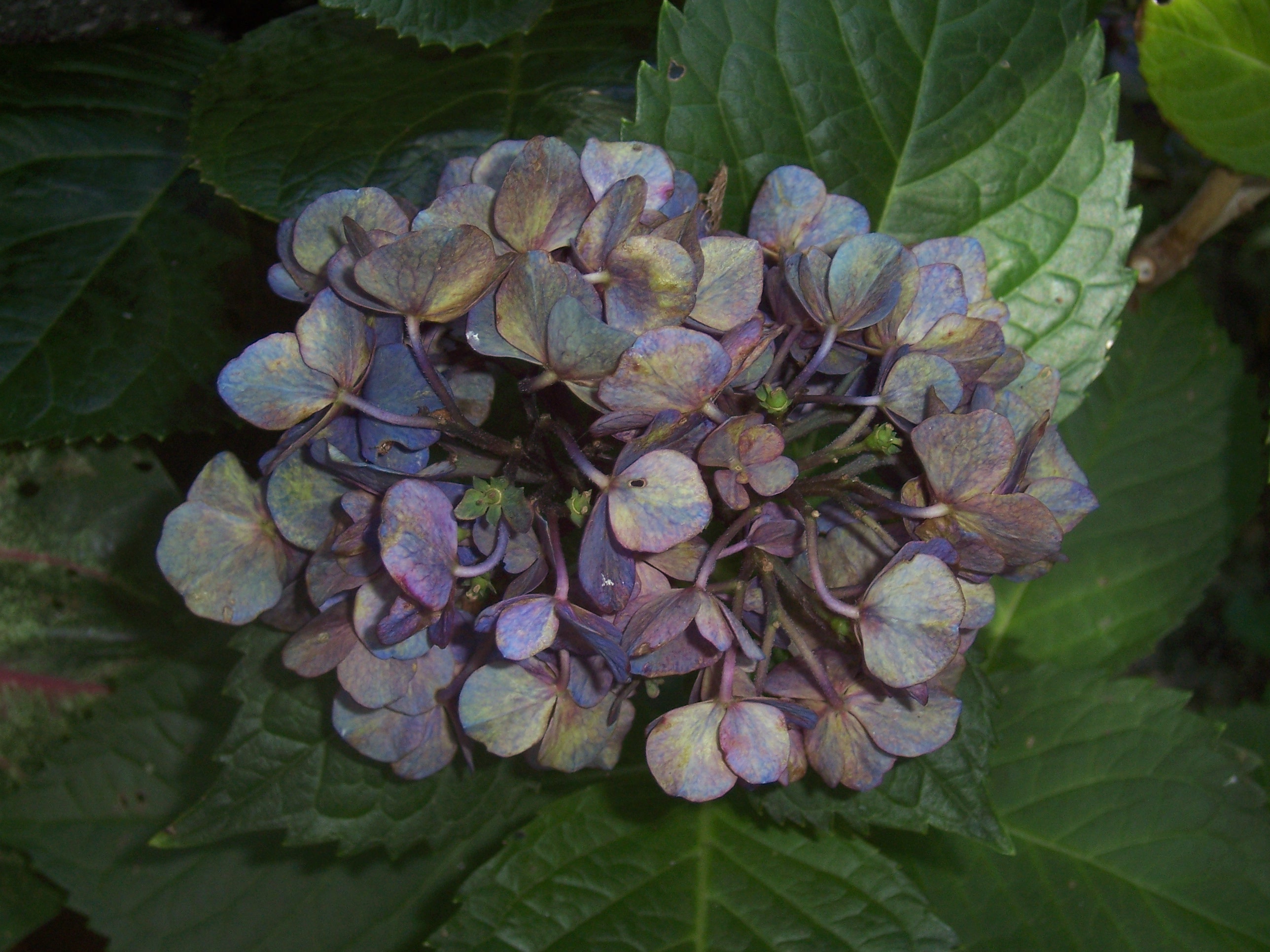
It’s the day before Hurricane Irene is forecasted to slam into Long Island.  I took advantage of the calm before the storm to give my plants a little pep talk.  I wanted to prepare them for what Jim Cantore and the folks at the Weather Channel said we could expect.  I wanted to encourage them to stand strong against the wind and the rain, that we would get through this together, and to rest easy that sunny skies will return.  I was especially impressed with the Hydrangeas, all of which put on an outstanding show this summer.  That’s why they were featured so heavily in many of the “Bloomin’ Update” posts.

Hydrangeas are my favorite flowering shrub.  I love the fullness of their blooms, the variety of their colors, the look and the feel they bring to the  landscape, and the length of time they hold onto the stem until their glory fades away.  Now, in the waning days of summer with a hurricane breathing down our necks, I offer you a  last look at some of my Hydrangeas, their vibrant colors now antiqued and slightly withered.  We should all be fortunate enough to age this gracefully.

I know this post is about Hydrangeas, and this is a Zinnia -- but with Hurricane Irene on its way, there wasn't enough time to argue with a flower that wanted a moment in the spotlight.

 
For anyone dealing with the hurricane, please stay safe.  Like I told my plants, we’ll get through this together and sunny skies are around the corner.  At least that’s what Jim Cantore keeps saying.

Bloomin’ Update 8: Summer Finale


At this stage of the summer, I feel as if I am as exhausted as the plants in the yard.  In fact, I am hard-pressed to find blooms that have not already been photographed and posted in previous “Bloomin’ Updates.”  But the task was not completely impossible, thanks to some friends, some surprises, and some guests.

This Pineapple Lily was given to me by friends, Catherine & Robert, when they arrived for dinner. I had never heard of a pineapple lily, but after reading up on it, I learned that they are from South Africa and require little care. In my cold hardiness zone, however, I will have to bring it indoors for the winter, and then restart the growing in the spring. I'll keep you posted on this new project.


Last year, I planted a bed of Celosia "China Town." This year, I was treated to this surprise, self-sown, and very proud of its hot red stem. Yes, I could have weeded this out, but if a seed has managed to live against all odds, then it deserves the chance to live its full cycle. That being said, I think I'll plant them again next year. A full bed of red leaves, red flowers, and red stems truly looked gorgeous.


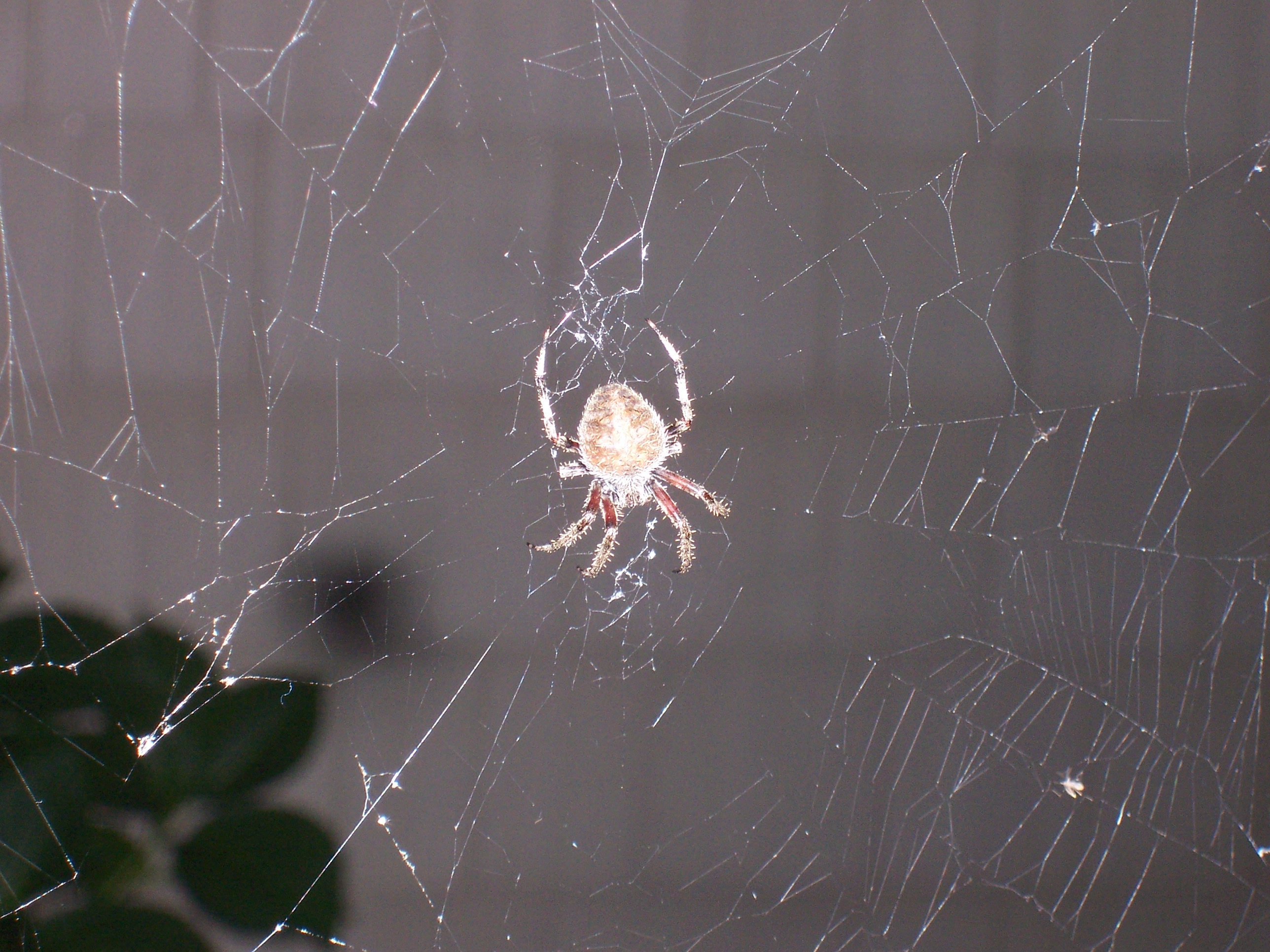
I know this is technically not a bloom, but try explaining that to this guy. This spider creates a web each night. Joe and I tried to get a photo, so between my camera flashing and Joe's holding a flashlight, this is what we captured. The spider and the web seem to sparkle.


Never mind Broadway's "Spiderman: Turn Off the Dark," this spider is probably telling us to turn off the light.


We turned off the light, and surprised ourselves with this photo. Actually, I'm okay with spiders, as long as they keep their webs away from where I have to walk. There's nothing like walking to the car and going face-first into a web.

Searching For Peace On Common Ground


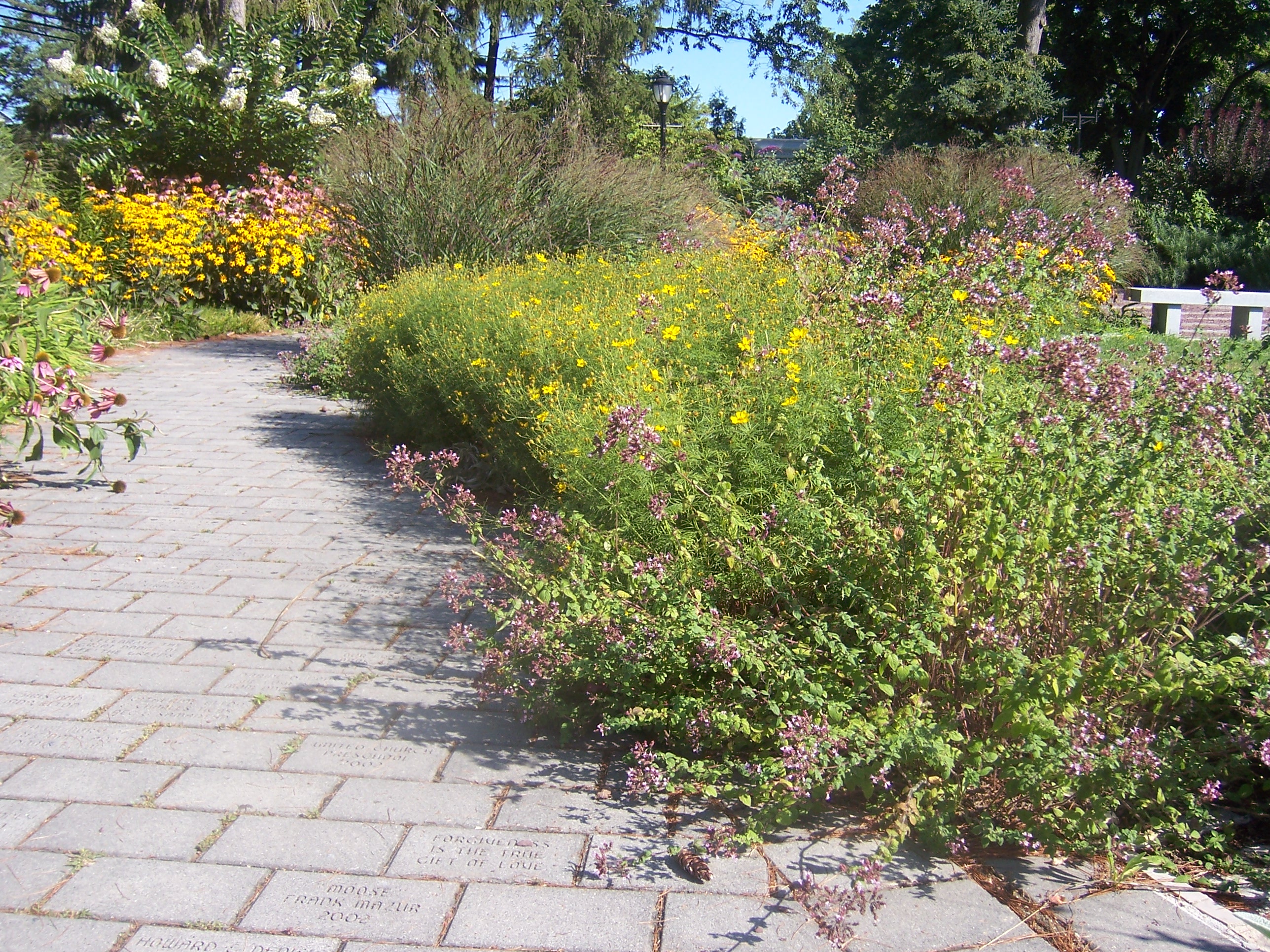
The path leading to the Peace Labyrinth.

I was Googling the other day, looking for information on labyrinth gardens and I was surprised to find one practically in my backyard.  I took the short drive to visit The Common Ground, a community garden in Sayville, NY.  Its philosophy is simple: “A place where getting to know your neighbor is as easy as a walk in the park.”

Through the efforts of volunteers, grants, and donations, the park is a social-cultural haven for the  local community.  Nestled in a quiet residential neighborhood, the garden was born in the wake of September 11, 2001, when local residents wanted

The Peace Labyrinth at the Common Ground Garden in Sayville, NY.

to create something positive for the larger community.  As more and more people and local organizations became involved, and with the help of fundraising, the little-used Rotary Park became a centerpiece for all.  Today, the garden welcomes visitors to enjoy yoga, concerts, and movies.  

If the pavilion in the center of the park is its crown, then the Peace Garden Labyrinth is the jewel.  The brainchild of Marianne Fulfaro, who designed, laid out, and funded the project in memory of her parents, the labyrinth is constructed of paving stones and red gravel.  To reach it, visitors walk down a paver path that is lined with shrubs

Echinacea along the path to the Peace Labyrinth.

and flowering perrenials, all planted by volunteers under the guidance of local master gardener Nancy Angermaier.  At the labyrinth’s start is a plaque with instructions on how to walk the circuitous path.

With a history dating back thousands of years, the labyrinth is symbolic of life’s journey.  While a maze has dead ends, the labyrinth offers the traveler a neverending path.  As the journey begins, the walker is faced with twists and turns, each one bringing the individual closer to the center and then sending them further away. 

I especially liked the blue of the evergreen and the yellow of the Black-Eyed Susans.

Ultimately, the center is reached.  The goal is that through a meditative walk, a visitor will feel more calm and centered, maybe even walking away with a solution to something that has weighed heavily upon his or her mind.

 The Common Ground Park and Peace Labyrinth is a true testament of what a community park can and should be.  For more information, please visit their website.  To find a labyrinth garden in your area, check out World-Wide Labyrinth Locator.  Special thanks to Suzanne Robilotta, this year’s Common Ground president, for helping me to fill in the gaps.


Bloomin’ Update 7: Before & After


I can never tell which I enjoy looking at more: the unopened bud or the full bloom. 

There’s something very exciting about looking at an unopened flower.  There’s promise and wonder and anticipation.  It’s like staring at a gift with your name on it that’s been sitting under the Christmas tree for weeks — only you can’t shake it or pry open the wrapping paper to get a peak.  But you know in your heart, that tied up in that puckered green bundle is a treasure of pure beauty: the flower that you always wanted. 

Since it is better to give than to receive, may I present two buds and the two ensuing blooms in the mid-August garden.

Before: Teddy Bear Sunflower


After: Teddy Bear Sunflower


Before: "Vancouver" Dahlia


After: "Vancouver" Dahlia


Bloomin’ Update 6: Glad To See Ya


There’s a lot happening in these early days of August, and here are some photos to prove it.

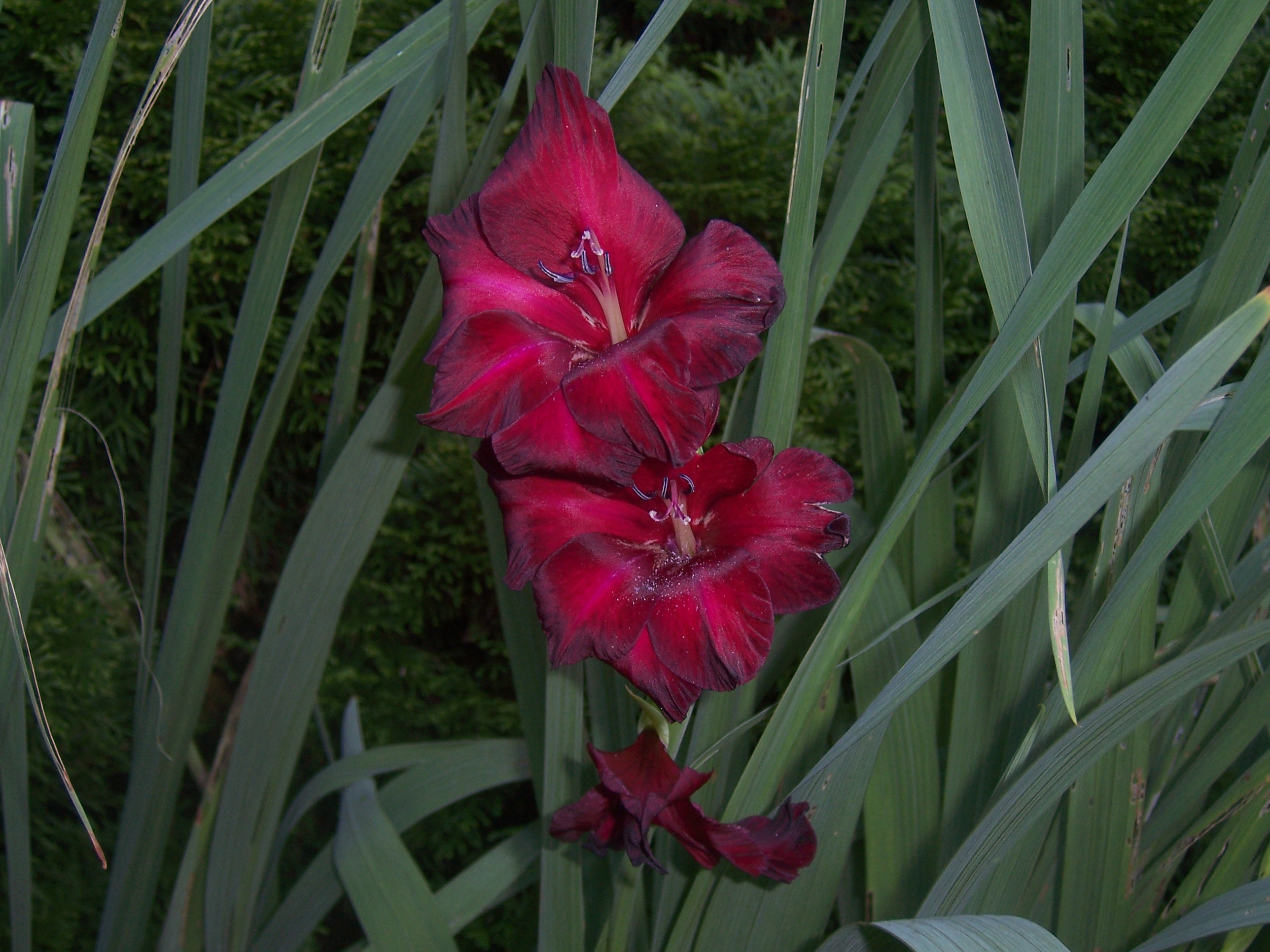
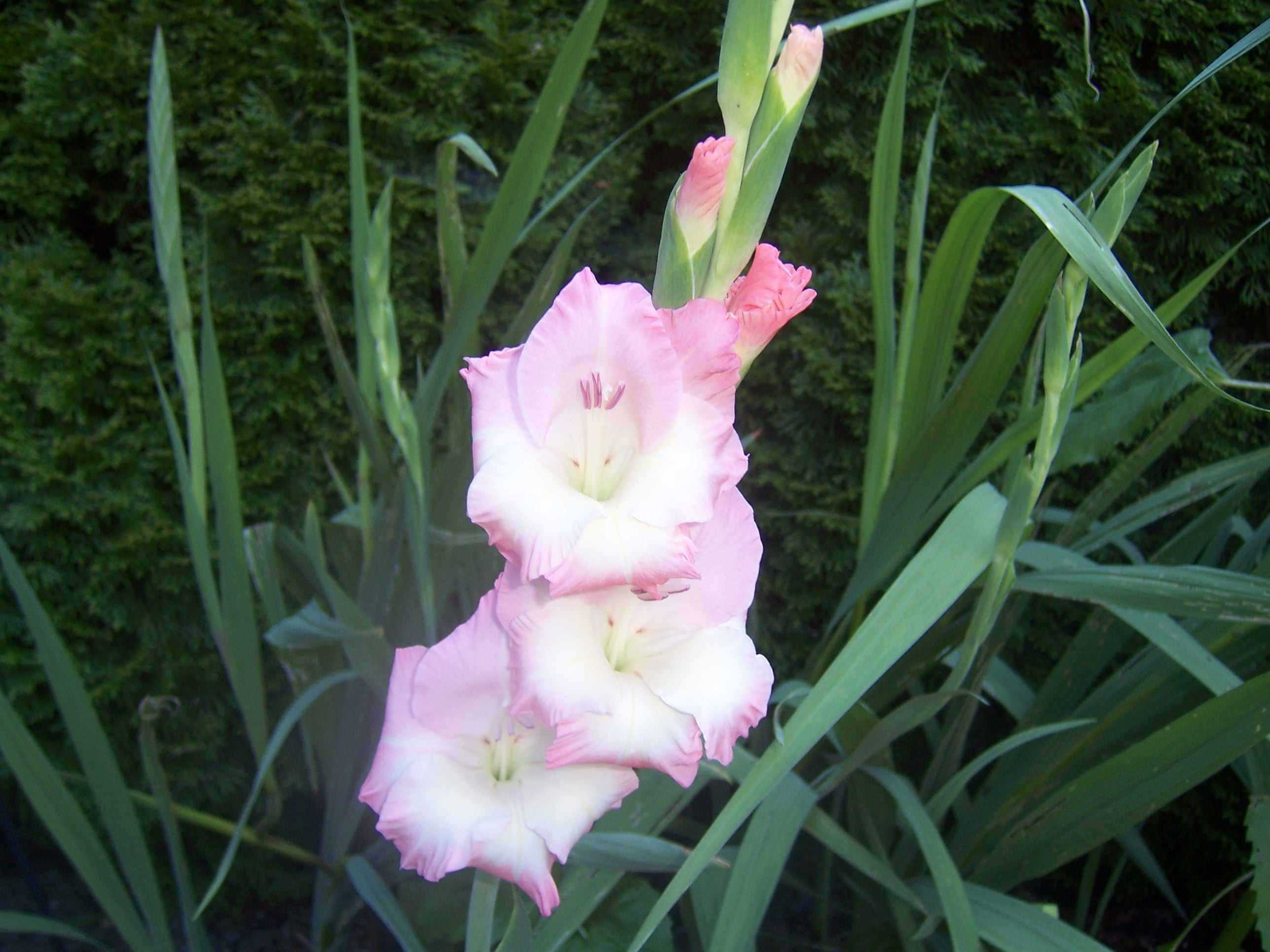
Gladioli Take The Stage:

I Canna Live Without You

My favorite Canna of them all: red leaves and red flowers.

   Continue reading