Here’s One For Dad


A few posts ago, I wrote about mowing the lawn and now that it’s Father’s Day, I’d like to revisit it. 

My father is the one who taught me how to mow the lawn.  It was an orange, gas-powered model, and my father taught me how to pull the cord, adjust the throttle, pour the gas, and the all-important mowing pattern.  The idea was to mow the perimeter, and then to continue in smaller and smaller circles until  I reached the middle of the yard.  In reality, it was a rite of passage; a passing of the torch.

My mother and my father had different approaches to gardening.  My mother planted flowers and filled pots and worked at making the yard and home look pretty and appealing.  My father, on the other hand, was the gardener.  He did the digging and turning of soil.  He pruned the trees and shrubs, including the blue hydrangea in the backyard.  This is still a sore point, because it never rebounded.  It may be why I’m hesitant to cut any of my own hydrangeas.  I know there are those that bloom on old wood, and those that bloom on new wood — but for me, there will be no hydrangea pruning, thank you very much.

My father organized and planted the family’s vegetable garden.  It was filled with tomatoes, carrots, pole beans, bush beans and so much more.  What my father didn’t realize is that he planted more than vegetables in that garden.  It was the family garden, our garden, and each one of us participated in the planting and caring of our small home garden.  We weeded and harvested and told Dad of any pests that were getting too comfortable in it.  And although it was small, for us it was “the lower forty.”
Continue reading

Say What?


Gertrude Jekyll

“The love of gardening is a seed once sown that never dies.” — Gertrude Jekyll

Long before I started writing about gardening, there were lots of other people who had a way with words.  Fortunately for all of us, the Internet is a fine resource where their words are not only documented and preserved, but they can also be shared.

When you do some research, it’s amazing to discover just how many quotes there are about gardening.  It kind of makes me wonder, “What does it take to be someone whose words live on?”  A friend of mine once said that gardening is like a natural surprise party.  At the time when she said it, we laughed about it.  But you know what?  Nearly two decades later, I still say it each season.  Usually I say it when a yellow zinnia blooms in a flat of red ones.  Surprise!  It’s one of those phrases that takes the edge off of any frustration in the garden, and it makes me smile.  I think that’s why my friend’s simple sentiment resonated with me.

I started this quest for gardening quotes after my chairperson told me she was retiring and asked me to organize her retirement party.  She gave me strict orders that I was not to have a retrospective slide show of her career.  But since she’s a gardener, and the theme of the party was a garden party, I created a slide show of gardening quotes and photos.  

As I searched the Internet for quotes,  I harvested them, savored them, and added them to photos of flowers and vegetables and gardens.  Each one seemed to speak of my chairperson’s passions; each one seemed to speak to what I feel and think inside — only that someone else was smart enough, poetic enough, and prolific enough to write it down.  And I am — we are — all the better for it.

And now, I’d like to share the slide show with you. 

I hope you enjoy it.


Special thanks to macmanx for guiding me through the embedding process.

June Is Busting Out All Over


This is the start of a very hectic week for me, so my writing time is limited.  I hate when that happens, since writing is one way that I like to unwind from a busy day.  In light of this, as well as the fact that I can’t figure out how to post a PowerPoint on the blog, I thought a walk around the yard and some photos would do me some good.  Besides, it gives me a chance to play around with a different kind of post.

 The truth is that this walk was an inventory of what still needs to be done.  The beds are mulchless, and a weekend of rain and cool weather seems to have washed away most of the flowers and turned the lawn into a jungle.  By the way, the cool weather was a bit of a shock, since last week was stifling hot.  But that’s how the weather is on Long Island these days.

Nevertheless, the walk was a nice breather.  And now, without further delay, are some photos of what’s blooming.

Here is Gazania (above), which I started from seed a few months ago.  I was thrilled with the colors, and I’m looking forward for more of them to bloom.

This is a lace cap hydrangea (above).  I picked it up a few years ago from Home Depot because it had red or burning in its name.  To me, that meant it would have red flowers.  In actuality, the branches have a hint of red.  As you can see, it’s covered with blooms, but I’m never quite sure that I like it — since I was really hoping for red flowers.  But when I see it covered with this:

then I have to admit that I love it.  What’s especially nice is that as the flowers age, they seem to glow in the dark at night.  It’s truly magical.

When I look at these photos, I’m stressed and relieved all at the same time.  Stressed because there are those days and weeks when life takes us away from what we truly love and enjoy.  Relieved because somehow, nature takes care of itself and it allows me time to stop and smell the roses.

No Sunflowers, Ever!


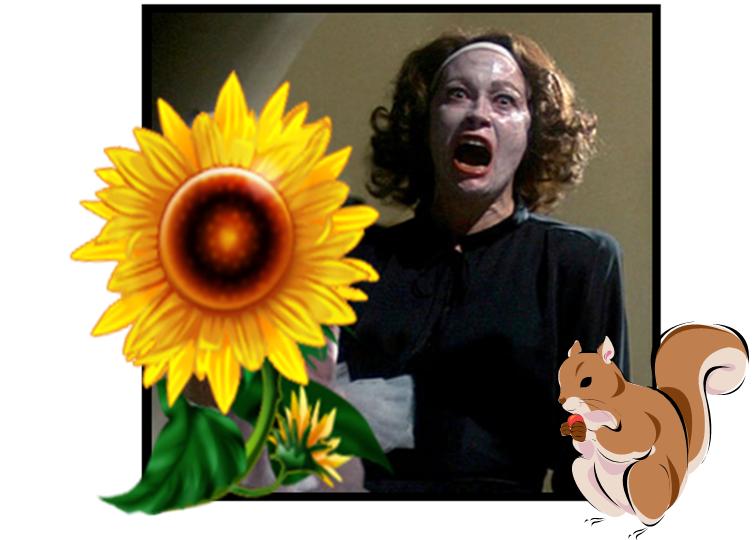
In my last post, I made brief mention of my Mommie Dearest moment — a not-so-proud incident that clearly illustrated the ugly and, yes, comedic side of gardening.  I had asked people to remind me to tell the story, and they have.  So here it is.

Once upon a time, a long time ago, in a backyard not so far away, there lived a young gardener, me.  Joe and I had recently purchased his parents’ home, and the yard presented us with a blank canvas.  I had always enjoyed gardening as a kid, but that was usually relegated to the family’s vegetable plot.  Now, I had a whole yard and a big vision and no money.  The layout in the back was pretty basic.  There was a large built-in pool with red and green patio blocks surrounding it.  To the east, there was an area of pebbles and stones, and this led to a small lawn.  The rocks were held in place by a low wall of cinder blocks, all placed on their sides.

I decided to start small one year, and I planted marigolds in each of the cinder block openings.  They did quite well, thriving on neglect and heat.  The following year, though, I saw on Martha Stewart’s early television show that she grew gigantic sunflowers and would harvest her own home-grown sunflower seeds.  Then, in true Martha-style, she would even hang some of the flower heads in the trees to feed birds and squirrels.  The whole idea sounded like an eco-friendly winner.

Continue reading

No Plant Left Behind


Rudy -- the movie.

I have always been a sucker for the underdog.  In the movies, I love the story where the weakling, the geek, the wallflower, the fill-in-the-blank, comes of age, achieves self-realization, and conquers against all odds.  It’s like in the film Rudy, in which Daniel Ruettiger is told that he is too small to play football for the University of Notre Dame.  Everyone has to root for the guy.  That’s probably part of the reason I chose my profession, school social work.  You really can’t ever give up.  You just have to keep finding new ways to help, so that everyone can have their moment when they can be hoisted onto the team’s shoulders.

The same philosophy has followed me into the garden.  As soon as seeds begin to sprout in the greenhouse or ground, the experts say it’s time to weed out any plants that are not keeping up.  Huh???  Doesn’t everyone need a chance or two or three?  Maybe some plants are slow growers.  Maybe they need some extra time to reach their full potential.  Maybe they could flourish with some differentiated propagation.

Believe me, I am no Mother Teresa of the yard.  I have had my moments when I have lost it with a plant.  Remind me to tell you about the sunflowers and the squirrels — definitely a Mommie Dearest moment.  It’s just that there are times, many times, when I attribute human emotions to plants.  Who wants to have a legacy of never bloomed?

Continue reading

A Bird In The Head Is Worth. . .


A lot has been written here and on other blogs about the peace and tranquility of gardening.   But let me tell you, there’s some stress growing out there.  Am I watering too much or not enough?  Too much sun?  Just how dappled should dappled shade be?  Who will water while I’m away? 

And if that weren’t enough worries to cloud my sunny day, now it’s this.  There is a bird’s nest in one of the white pines that line the back of my property.  Very early in my gardening life, I realized that I was creating my own ecosystem.  As soon as everything bloomed, it seemed my yard became a resort for butterflies and bees and even a praying mantis.

But now there is a bird’s nest.  Blue Jays to be exact.  What’s surprising is that the nest is only about 7 feet off the ground, so Joe and I can get a pretty clear look at the goings on.  And if we can, so too can the local varmints.  Now, I’m on guard for any intruders.  I am like a mother hen, although I haven’t quite perfected the whole regurgitation of food thing.  But when Mom and Dad are away gathering food for the youngins, I feel obligated to bird sit.

I happen to like birds.  I especially like hearing them when I spend some time in the yard in the early morning hours.  But if truth be told, I’m also a little bit edgy around them.  I wouldn’t call it a fear of birds — it’s more like a fear of getting hit in the head with one.  I can hear you saying, “Kevin, how common can that be?”  In my world, it’s pretty common.  My head has been a bird target — not a bird poop target, but an actual bird target — three times!

Continue reading

Three Cheers For The Red, White, and Blue


Memorial Day.  I really struggled with writing something to post in honor of the day and in honor of gardening.  Every newscaster is quick to point out that today marks the unofficial start of summer, which in my world means that all of May has gone by and I have yet to get everything in the ground.  As I worked outside this holiday weekend, digging, planting, weeding, pruning, and barbecueing, my first instinct was to take a couple of photos around the yard and post them — you know, a red, white, and blue motif. 

Red, white, and aaaahhhhhh blue.

Then I had a second thought.  It seemed disrespectful toward the true spirit of the holiday.  So I went online to look for something that I could comment about, something about veterans and gardening.  There was plenty of information on Victory Gardens from World War 2, as well as healing and therapeutic gardens for returning soldiers and older veterans.  One website, though, captivated me.

Continue reading

Honey, The Plants Are Home


They’re baaaaaack.  I don’t know if this happens where you work, but at my job, co-workers are carrying out their potted plants to return them to the yard after a winter in office exile.  For me,  it means loading up crates, cleaning the office, and hoping that the plants will reacclimate themselves to outside living.  Right now, they all look pale and sparse and leggy — sort of like me after a long winter’s night.

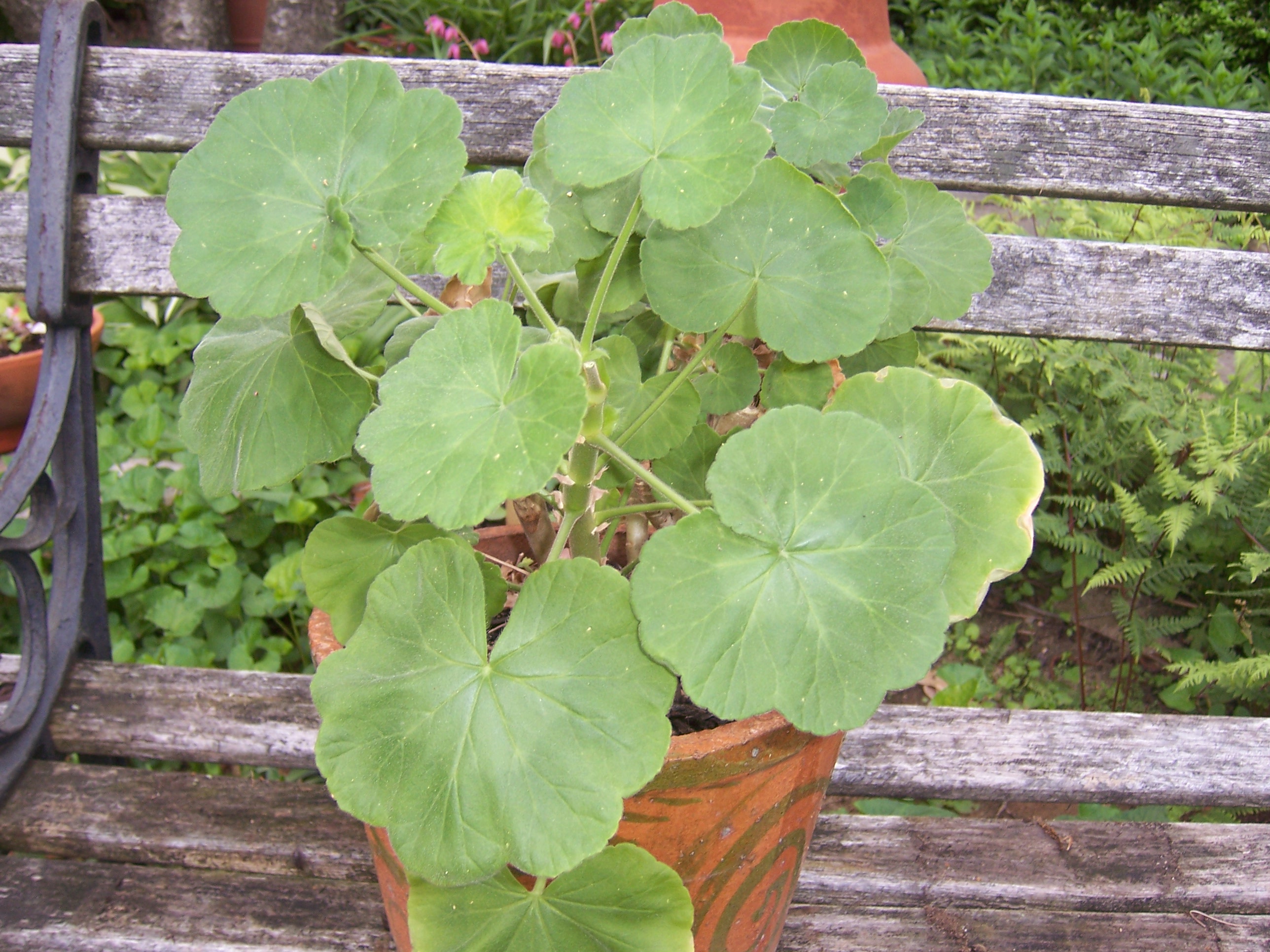
This is the geranium I grew from seed several years ago. It is now sitting in the backyard, getting ready for summer blooms.

The question, though, remains.  Why do northern gardeners go to such great lengths to save their plants?  For some, it might be the value of the plant, or the challenge of being able to cheat cold temperatures of their delicate herbaceous victims.  For me, it’s more about the story behind the plants that I save each year.  So here is a piece of my story, as told by my plants.

First, there’s the philodendron which I have had since I was a pre-adolescent!  This plant actually came from a cutting  from a plant that my mother had in the kitchen of my childhood home.  I think I had decided at some point that I wanted a plant in my bedroom.  I thought it was pretty cool that I could take a piece of this plant, place it in a cup of water, and then watch the roots grow.  Since then, the plant has traveled with me from my parents’ house to the current home I share with Joe to my office and to the backyard.  We’ve been through so much together, it seems kind of cruel to leave it outside at the end of the growing season.  Continue reading

Carnivorous Plant Devours Long Island


The other day, my friend Rachel presented me with a gift: a carnivorous plant.   In my mind, carnivorous plants could only be found in two places: a primordial soupy rain forest swamp or a sci-fi film (think Little Shop of Horrors or The Day of the Triffids).  In all honesty, it’s kind of cool to have a carnivorous plant in the yard.  It’s also a little intimidating.  Does this mean I have to barbecue steaks for me, Joe, and the plant?

Eric Kunz is the man behind Wowflowers, Long Island’s largest supplier of carnivorous and unique water plants, as well as the only licensed grower of these endangered and protected species in all of New York State.  He is passionate about his plants.

According to Mr. Kunz, the plant I own is “Jersey Girl,” a type of Sarracenia purpurea, or purple pitcher plant.  The plants are native to North America, and can be found living in bogs throughout New England and along the Canadian border.  He also assures me that caring for these other worldly perennials is easy.

Continue reading

Peony, When You’re Not Strong


When I woke up this morning, I saw that one of my peony plants had bloomed overnight. 

Then, I saw the rain.

It’s safe to say that I have a love – hate relationship with rain, very unlike my love relationship with peonies. 

I actually look at most rainy days with a sigh of relief, especially today’s since it’s been dry for a whole week.  It means that I have a day off from watering.  (In the same way that I’m one of the last hold outs in the lawn mowing department, I also drag a hose and sprinkler all over the yard.  That’s a whole other post.)  So I bring all the flower pots out from any sheltered areas and let them soak up the moisture, because a good rain is much more quenching than my Gunga Din efforts. Continue reading